

INVESTIGATION
SKYE BANK IN FRESH CRISIS

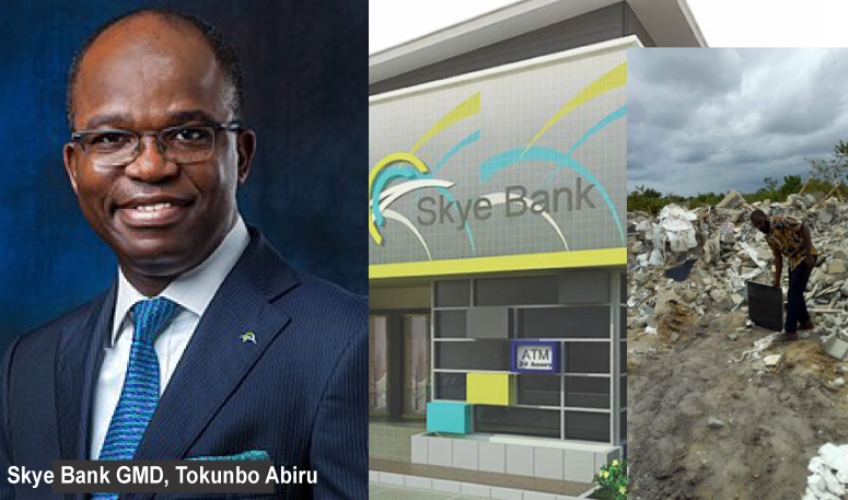
- Again, lender fails to declare accounts to regulators
- Customers, shareholders express anxiety
- As financial experts call for sack of GMD
These are not the best of times for the Tokunbo Abiru-led Skye Bank Plc as the lender is said to be currently embroiled in a fresh crisis.
Investigation by THE WITNESS revealed that the struggling financial institution has again failed the statutory requirements to file its results and accounts for the period ended June 30, 2018 with the Nigerian Stock Exchange (NSE).
A top management staff of the bank who spoke to our correspondent on condition of anonymity lamented, “Of a truth, all is not well with the bank. It is really struggling to stay afloat and the new management is doing nothing about it. Though they met the problem on ground, one expects that by now things should have changed. People are resigning every day because of uncertainties showing up in every of its departments.”
Recall that on July 4, 2016, the Central Bank of Nigeria intervened in the management of the bank by reconstituting the board of directors, shoring up the bank with N100bn capital injection, and accordingly, the apex bank gave the board a clear mandate to turn the institution around positively.
Ironically, two years after the CBN intervention into the affairs of the bank, the fortunes of the financial institution have continued to dwindle.
This, THE WITNESS gathered, is not unconnected with the poor results of the bank due to lack of trust customers now have with the lender triggered by the lack of administrative experience and expertise of the new management led by Mr. Tokunbo Abiru. More so, weak asset quality, rising funding costs and increased customers’ wariness about the safety of their deposits have conspired to squeeze out the bank’s balance sheet and tear profit figures of the lender.
The development became worrisome to shareholders and customers of the bank as the lender last filed its accounts to the NSE in 2014. In a statement to the NSE in March 2017, Skye Bank had attributed the failure to file its 2016 accounts to the CBN’s intervention. Consequently, the Exchange tagged the lender MFR (Missed Regulatory Fillings). This is in contravention of Rule 1.1.4 of The Exchange on Filing of Accounts and Treatment of Default Filing, Rulebook of The Exchange, which requires listed companies to file their AFS.
A visit to the lender’s headquarters located at 3, Akin Adesola Street, Victoria Island, Lagos, will tell how its branches operate – in a low-key setting. The once-bubbling branches of the bank have now become a shadow of themselves as many depositors of the bank have started closing their accounts.
It would be recalled that prior to the sack of the Ayeni-led board, Skye Bank used to visit the discount window frequently.
With the current situation, the few depositors left are beginning to wonder if it is not back to square one for them, as they insist that the bank would have filed its account if there were indeed no problems.
A document obtained from the NSE unveiled Skye Bank as one of the financial institutions likely to be penalized by the NSE along with other organisations.
According to the document from the NSE, such default is marked out by the Exchange as a corporate governance failure, which attracts monetary fines, “naming and shaming” tag, suspension of shares from trading and delisting in incurable cases of default.
A source further confirmed that the Exchange “would apply relevant rules” in dealing with the defaulters.
The NSE regulatory deadline was on July 30. Under the rules, a late submission attracts a fine of N100,000 daily for the first 90 calendar days of non-compliance, another N200,000 per day for the next 90 calendar days and a fine of N400,000 per day thereafter until the date of submission.
Though, the CBN recently extended the tenure of Skye Bank directors for an additional two-year term, customers of the bank, financial experts have called for the sack of the bank chief to be replaced by a more competent and experienced hand to manage the financial institution.
A customer of the bank, one Mr. Oguntade Charles, while speaking with our correspondent said: “I don’t know what exactly is happening to Skye Bank. I have been banking with them for the past 7 years and it has never been this bad. Most of their ATM machines are always out of service; even their USSD banking code *889# is nothing to write home about, the same service which I enjoy seamlessly on my accounts with other banks. Most times, when I try to transact with it, it always fails. It’s either it brings error or no response at all. I have been to their bank several times to complain but still, no way. Their services are now so poor,” he lamented.
A financial expert, Mr. Adebayo Faleti who spoke to our correspondent argued that if no drastic steps are taken by the CBN concerning the bank, the worse may still come.
All efforts to reach the Corporate Affairs Manager of the bank, Mr. Rasheed Bolarinwa for the lender’s angle proved futile as calls and text messages placed to his mobile number were not responded to as at press time.
Credit: The Witness


INVESTIGATION
Ibom Multi Specialty Hospital Lies Underutilised as Gov. Umo Eno Commits N105bn to New Medical City Project

By Onoja Baba
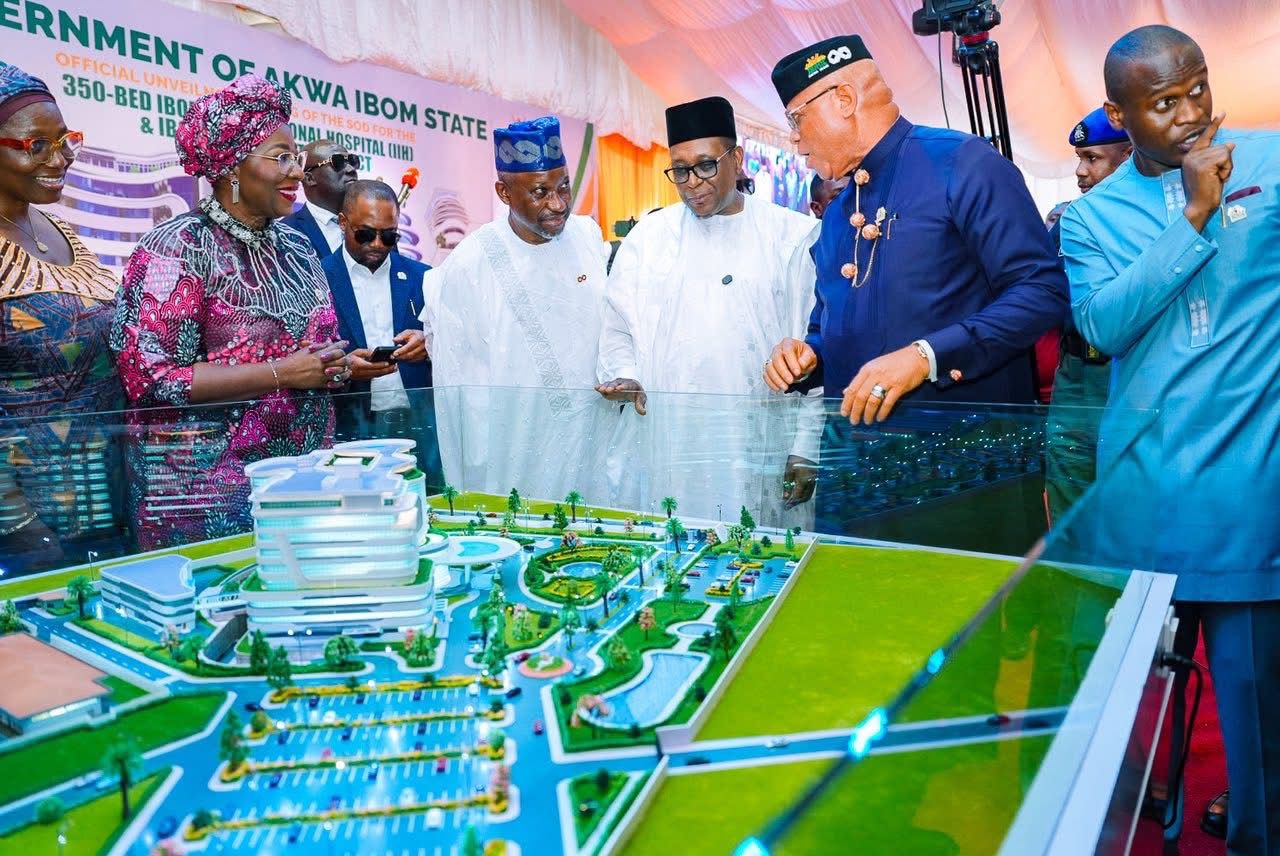
As Governor Umo Eno prepares to unveil the Ibom International Hospital as the flagship project of the proposed Ibom Medical City in Uyo, questions are mounting over the fate of the existing Ibom Multi Specialty Hospital, a multi-billion-naira healthcare facility established to achieve many of the same objectives now being advanced for the new project.
The Ibom International Hospital, scheduled for unveiling on June 24, 2026, has been presented by the Akwa Ibom State Government as a transformative healthcare initiative designed to reduce medical tourism and position the state as a regional destination for advanced medical care.
According to government officials, the proposed facility will feature 350 beds, robotic surgical theatres, advanced oncology services, PET-CT scanning equipment, 3-Tesla MRI systems, transplant units, spinal surgery centers, cancer treatment facilities and research institutions.
The Commissioner for Information, Dr. Aniekan Umanah, has described the project as a healthcare revolution capable of attracting patients from across Nigeria and other African countries while reducing the need for overseas medical treatment.
However, an investigation by SecretsReporters has uncovered lingering concerns about the state’s existing flagship healthcare facility and whether lessons from that project have been fully addressed before embarking on another major investment.
A N41 Billion Vision
Less than a decade ago, Akwa Ibom State reportedly spent about N41 billion constructing and equipping the Ibom Multi Specialty Hospital in Uyo.
Commissioned in 2015 during the administration of former Governor Godswill Akpabio, the hospital was similarly promoted as a world-class healthcare institution that would reverse medical tourism and provide specialist services previously unavailable in Nigeria.
Located along the Uyo–Ikot Ekpene Road corridor, the hospital was designed as a 302-bed tertiary healthcare facility equipped with specialist diagnostic and treatment units. At the time of commissioning, it was described as one of the most advanced medical facilities in West Africa.
Yet nearly a decade later, investigations suggest the hospital has struggled to fully realize that vision.
Unfinished Sections, Unmet Expectations
Findings by SecretsReporters indicate that significant sections of the facility remained incomplete years after commissioning.
During visits to the hospital, this reporter observed areas with unfinished works, exposed installations, missing fittings and sections that appeared not to be fully operational. Sources familiar with the facility’s development also alleged that some specialized components contained in the original project design were either incomplete or never fully deployed.
Multiple sources within the health sector claimed that parts of the hospital were commissioned before all planned infrastructure and services had been completed.
Although these claims require official clarification, they raise important questions about the extent to which the facility has achieved the objectives for which it was established.
Governor’s Admission
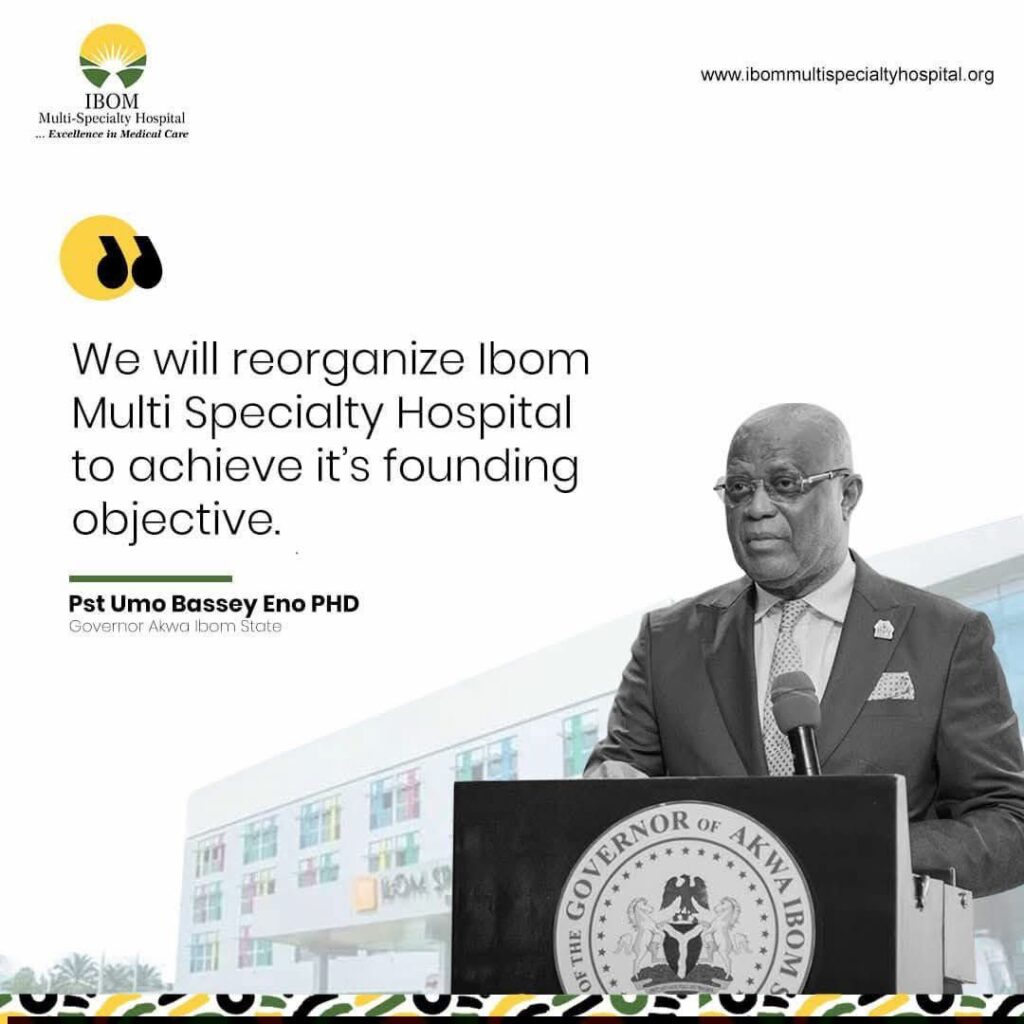
Concerns about the hospital’s performance gained further attention when Governor Umo Eno acknowledged that the facility had not fully achieved its founding objectives.
In his 2025 New Year broadcast, the governor announced plans to reorganize the Ibom Multi Specialty Hospital as a standalone institution and stated that the facility would be repositioned to fulfil the vision behind its establishment.
“We will reorganize Ibom Multi Specialty Hospital to achieve its founding objective,” the governor stated.
The governor’s remarks, which remain reflected on the hospital’s official platform, have been interpreted by observers as an acknowledgement that the hospital has yet to fully deliver on its original mandate more than a decade after commissioning.
Another N105 Billion Commitment
Despite the unresolved issues surrounding the existing facility, the state government has committed substantial resources to the proposed Ibom Medical City project.
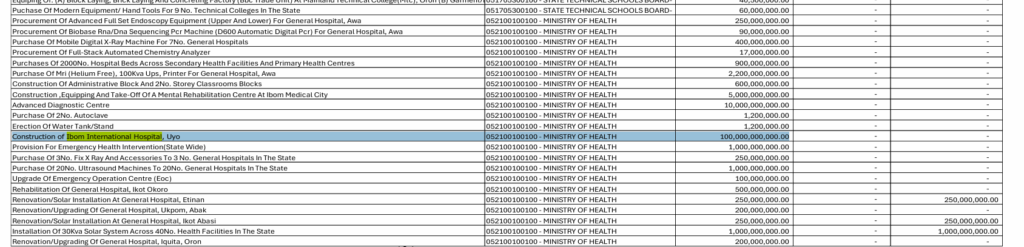
Documents reviewed by SecretsReporters from the Akwa Ibom State 2026 Approved Budget indicate that N100 billion has been allocated for the construction of the Ibom International Hospital under the Ministry of Health.
An additional N5 billion has been earmarked for the construction, equipping and take-off of a Mental Rehabilitation Centre within the broader Medical City framework.
The allocations form part of the state’s N1.584 trillion 2026 budget and represent one of the largest single health infrastructure commitments in the state’s history.
Accountability Questions
The emergence of the new project has triggered questions about the future of the existing hospital and the utilization of previous investments.
If the Ibom Multi Specialty Hospital was originally established to reduce medical tourism, provide advanced specialist care and position Akwa Ibom as a healthcare destination, why is another N100 billion hospital being developed around similar objectives?
What is the current operational status of the specialized units installed at the existing facility?
How much has the state spent on maintaining, upgrading and operating the hospital since its commissioning in 2015?
To what extent have the hospital’s original targets been achieved?
Would completing and expanding the existing facility provide a more cost-effective alternative to constructing a new hospital complex?
These questions remain unanswered.
Experts Raise Concerns
Health policy analysts who spoke to this newspaper noted that major healthcare investments are most effective when governments maximize the value of existing infrastructure before embarking on new capital-intensive projects.
According to them, Nigeria’s public sector has often struggled with sustaining large-scale projects, resulting in underutilized facilities and repeated spending on similar initiatives.
While state officials maintain that the Ibom Multi Specialty Hospital is not being abandoned and will coexist with the proposed Medical City, concerns remain over whether substantial portions of the existing facility are being fully utilized.
The Need for Transparency
For many residents, healthcare stakeholders and public finance advocates, the central issue is accountability.
Before committing another N105 billion in public funds to a new medical complex, stakeholders argue that government should provide a comprehensive public account of the Ibom Multi Specialty Hospital’s development, including the total amount spent, facilities delivered, current operational status, outstanding challenges and plans for optimization.
Such transparency, they contend, would help the public assess whether the new investment represents an expansion of healthcare capacity or an attempt to address shortcomings in an earlier project.
As preparations continue for the unveiling of the Ibom International Hospital, the debate is likely to intensify.
Whether the new facility becomes a transformative healthcare milestone or raises further questions about public infrastructure planning may ultimately depend on how government addresses the unresolved concerns surrounding the hospital that came before it.
INVESTIGATION
Built for Athletes, Occupied by Strangers: The Untold Story of NIS’s Abandoned Hostel – Part One
Secrets Reporters
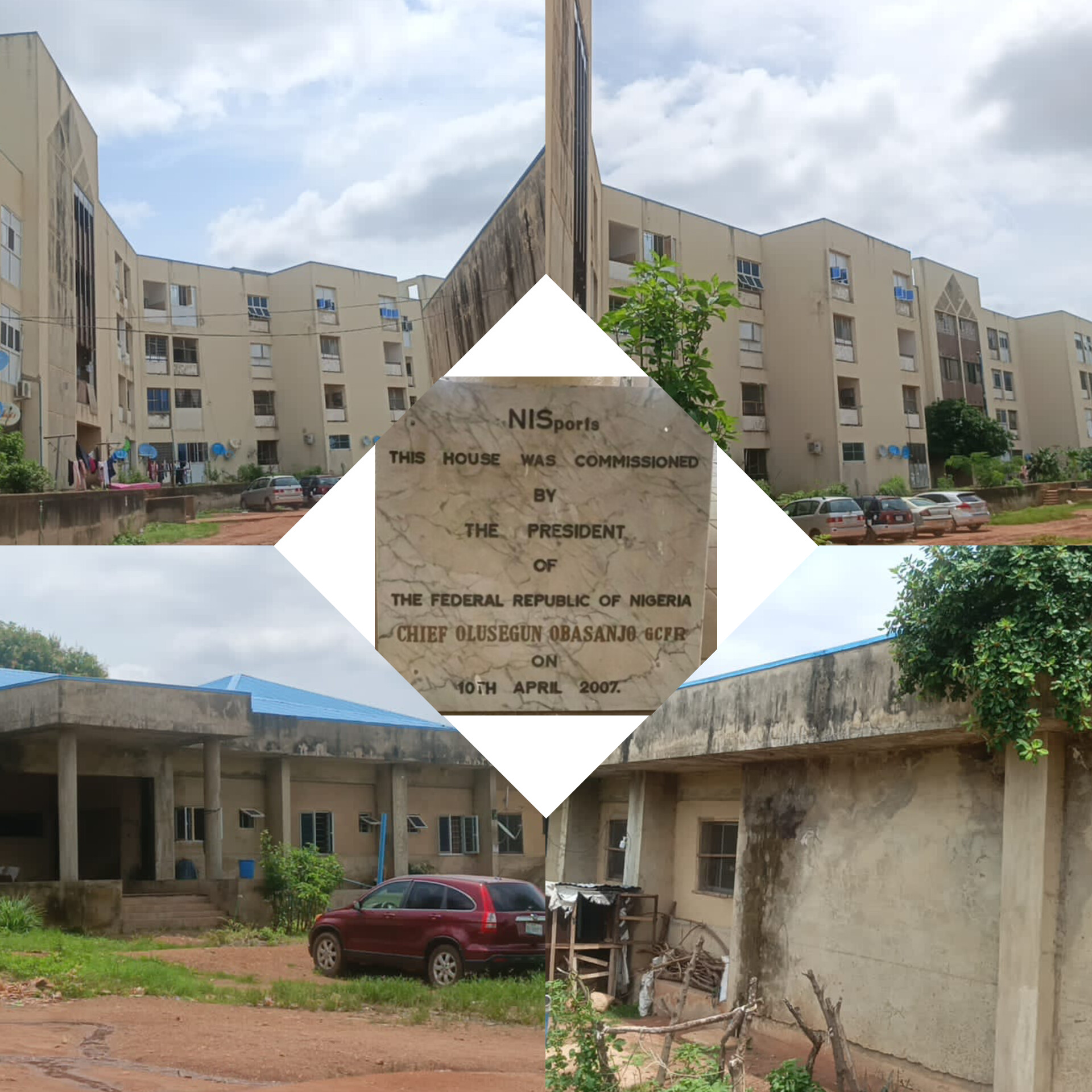
Inside the National Institute for Sports (NIS) in Abuja stands a massive 200-bed hostel originally built to accommodate coaches, referees, sports officials and paramedics expected to drive Nigeria’s sporting development.
Nearly two decades after its construction, however, the facility remains at the centre of a mystery that raises troubling questions about government assets, accountability and the management of public infrastructure.
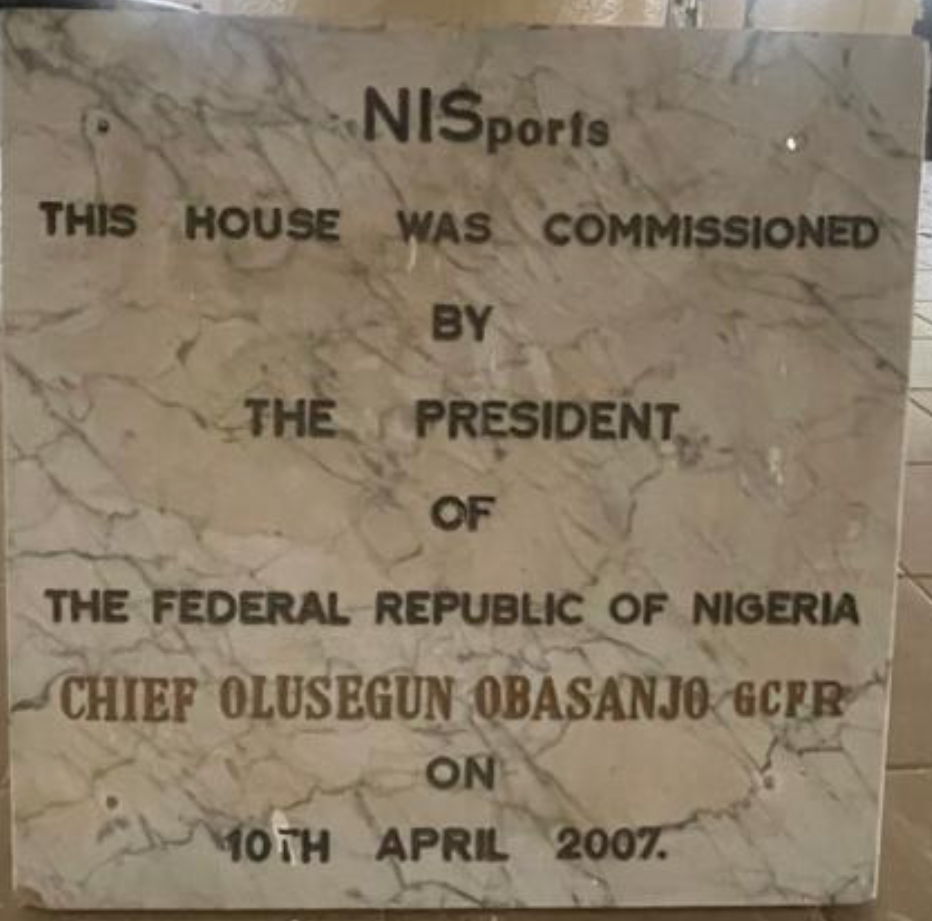
Findings by SecretsReporters reveal that the hostel was among projects scheduled for commissioning on April 10, 2007, during the administration of former President Olusegun Obasanjo.
While the Athlete Development Centre within the institute was commissioned during the visit, the hostel was not.
Nineteen years later, no publicly available explanation has emerged as to why the facility was excluded from the commissioning ceremony.
Today, the building tells a different story.
Rather than housing athletes and sports personnel, the facility is occupied by dozens of residents who say they moved into what was once an abandoned structure after years of neglect.
NIS: Occupants Are Not Authorized
During a visit to the institute, a media aide to the current Director-General of NIS told this reporter that the hostel remains the property of the institute and that its current occupants are not authorised tenants.
According to him, the facility was left uncompleted and unoccupied for years, creating an opportunity for people to move into the building.
The aide said the occupants have since been directed to vacate the premises.
He further claimed that the inability of NIS to utilise the hostel for its intended purpose has forced the institute to incur additional costs in accommodating athletes elsewhere.
According to him, NIS has had to partner with external organisations, including the Nigeria Judicial Institute, to provide temporary accommodation for athletes during training programmes and events.
The official also alleged that some occupants had been making payments to unidentified persons or groups for access to the facility.
However, he acknowledged that the institute had not established who was allegedly receiving such payments.
Occupants Tell A Different Story
When this reporter visited the hostel, some residents rejected claims that they were paying rent for the facility.
Instead, they narrated how they allegedly gained access to the abandoned building.
According to several occupants interviewed, they paid N100,000 each before moving into the hostel between two and three years ago.
They claimed the building had become a hideout for suspected criminals who allegedly stripped parts of the structure and used the premises for unlawful activities.
Some residents said they took significant risks by moving into the abandoned facility despite security concerns.
According to them, the building lacked basic infrastructure, including access roads, electricity and water supply.
They alleged that they contributed personal funds to make parts of the facility habitable.
Several residents also claimed that they later received a request to collectively raise N5 million monthly, which they said was shared among occupants at approximately N23,000 per room.
According to their accounts, the payments were made for a limited period before they stopped after receiving information that the Federal Government intended to reclaim the property.
The residents further alleged that the initial N100,000 payments were made into a private account, although they declined to disclose the account details.
Management Denies Collecting Rent
To verify the claims, this reporter met officials of Package B Management, the entity responsible for overseeing the facility.
The management however denied collecting rent from the occupants.
Instead, officials argued that allowing people to occupy parts of the building was a practical response to worsening security challenges around the abandoned structure.
According to the facility manager, criminal elements had turned the hostel into a base for illegal activities, posing a threat to nearby sports infrastructure.
The manager maintained that security personnel were consulted before some individuals were allowed to reside within the premises.
He further stated that the N100,000 contribution mentioned by residents was intended to fund access roads, electricity and water connections rather than rent payments.
According to him, management did not receive the money.
The manager also disclosed that a former police officer in charge of the area allegedly obtained written undertakings from occupants agreeing to vacate the property whenever the government required it.
Efforts by this reporter to obtain a copy of the undertaking were unsuccessful. Police officials said the officer had since been transferred and no copy of the document could immediately be located.
Questions Without Answers
The investigation uncovered conflicting narratives but few definitive answers.
Was the hostel completed before the 2007 commissioning exercise?
Why was it left out of the inauguration programme?
Who authorised the occupation of the building?
Were payments collected from occupants and, if so, by whom?
Why has a public facility built for athletes remained unavailable for nearly two decades?
These questions remain unanswered.
For now, one fact is undisputed: a hostel built with public funds for Nigeria’s sports development has not served its original purpose since construction began almost 20 years ago.
In Part Two, this investigation follows the money trail behind payments allegedly made by occupants and examines who may have benefited from the occupation of the government-owned facility.
Secrets Reporters
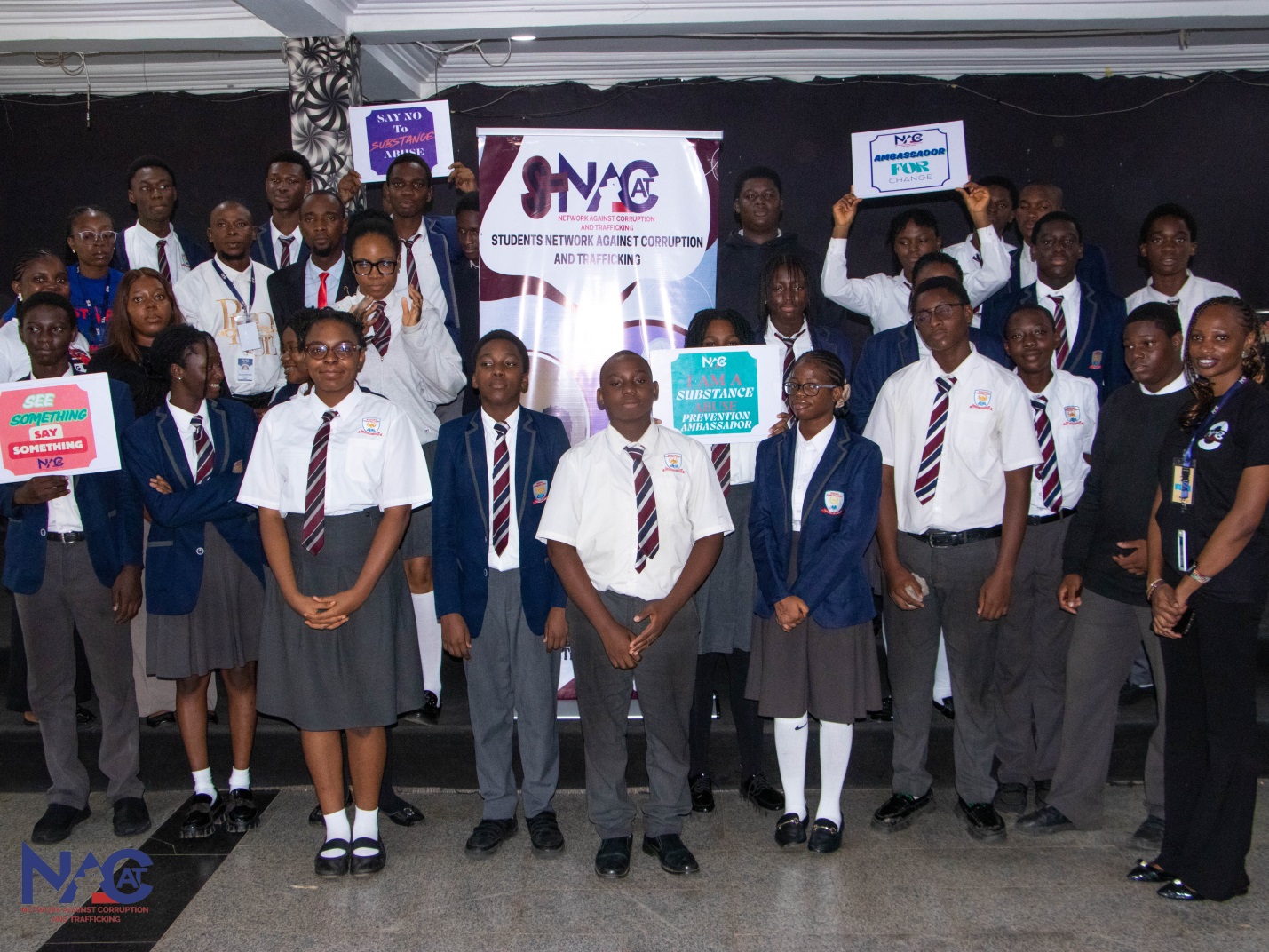
The Network Against Corruption and Trafficking (NACAT) on Monday intensified its campaign against substance abuse among young people with a sensitisation programme held at Benford International School, Abuja, where students were educated on the dangers of drug abuse and the importance of making responsible life choices.
The awareness programme, organised as part of activities to promote a drug-free society, brought together students, teachers, and school administrators for an interactive session focused on the growing threat of substance abuse among adolescents and the role of peer influence in driving the trend.
Speaking during the event, NACAT’s Operations Manager, Stanley Ugagbe, described substance abuse as one of the most serious threats confronting young people today, warning that the menace has continued to destroy lives, derail academic ambitions, and rob many youths of their futures.
Addressing the students, Ugagbe stressed that drug abuse extends beyond the use of illicit substances such as cocaine and heroin, noting that the misuse of prescription medications, including cough syrups containing codeine and other controlled substances, also falls within the category of drug abuse.
He explained that many young people unknowingly begin a dangerous journey through seemingly harmless experimentation. Using practical examples, he illustrated how a student struggling with examination pressure could become dependent on stimulants introduced by friends under the guise of improving concentration and academic performance.
The NACAT official warned that the consequences of substance abuse are far-reaching, affecting physical health, mental stability, academic performance, behaviour, and future opportunities. According to him, drug abuse can lead to brain damage, mental health disorders, declining grades, indiscipline, criminal activities, and even expulsion from school.
“Drugs do not just destroy bodies; they distort destinies,” he told the students, urging them to remain vigilant against influences that could compromise their dreams and aspirations.
Ugagbe also highlighted peer pressure as one of the leading factors driving substance abuse among young people. He noted that many teenagers are introduced to drugs not through personal curiosity but through the desire to gain acceptance from friends or fit into social groups.
He explained that peer pressure often manifests subtly through statements such as “Everybody is doing it” or “Just try it once,” adding that many youths make regrettable decisions because they fear rejection. He reminded the students that popularity should never come at the expense of their future.
To help students navigate such situations, Ugagbe shared practical strategies for resisting peer pressure, including learning to say “No” confidently, avoiding unhealthy environments, choosing friends wisely, developing exit strategies when confronted with risky situations, and seeking guidance from trusted adults such as parents, teachers, and counsellors.
He further encouraged the students to place a high value on their future ambitions, reminding them that every young person possesses enormous potential that could be destroyed by poor choices. He urged them to remain disciplined, focused, and committed to living drug-free lives.
Earlier in the programme, NACAT’s Programme Manager, Joy Tomo, captivated the audience with real-life accounts of individuals whose lives were negatively impacted by substance abuse. Her presentation highlighted the devastating personal, social, and economic consequences suffered by victims and their families, further reinforcing the dangers associated with drug use.
In his vote of thanks, the Principal of Benford International School, Mr. Mika Nuhu, commended NACAT for bringing the sensitisation programme to the school. He described the initiative as timely and impactful, noting that the lessons shared would help students make informed decisions and avoid behaviours capable of jeopardising their future.
The event concluded with a renewed commitment by students to remain drug-free and become ambassadors of positive values among their peers, as NACAT reiterated its determination to continue engaging schools and communities in the fight against substance abuse and other social vices.
-
 STRAY BULLET10 years ago
YOU ARE A THIEF SO YOU CAN’T PROBE A THIEF: ANOTHER UK NEWSPAPER WRITES BUHARI
-
 LATEST NEWS10 years ago
PREACH AND DIE: FOR DARING EARLY MORNING PREACHING IN ABUJA, MUSLIMS HACK TWO PASTORS TO DEATH
-
 LATEST NEWS9 years ago
BREAKING: TYRANNICAL NIGERIA PRESIDENT, MUHAMMADU BUHARI DIES IN LONDON HOSPITAL, BUT PRESIDENCY KEEPS SEALED LIPS
-
 SPECIAL REPORT10 years ago
MISS ANAMBRA CUCUMBER SAGA: HOW ANAMBRA BROADCASTING SERVICE DIRECTOR, UCHE NWORAH LEAKED SEX VIDEO TO THE PUBLIC FOR HER REFUSAL TO CONTINUE SEXUAL AFFAIR WITH HIM (PART ONE)
-
 SPECIAL REPORT10 years ago
EXCLUSIVE: HOW STEPHEN KESHI AND WIFE WERE KILLED BY HIS OWN BROTHER
-
 SPECIAL REPORT9 years ago
POWER GAME ALMOST OVER: OSINBAJO UNDER PRESSURE TO HAND OVER TO SARAKI AS VP IN ANTICIPATION OF THE UNKNOWN
-
 STRAY BULLET10 years ago
DESPITE HUNGER IN NIGERIA, BUHARI ALLEGEDLY DONATES 500 MILLION DOLLARS TO HILARY CLINTON’S FAILED PRESIDENTIAL ELECTIONS AS NIGERIANS PRESSURE HIM TO CONGRATULATE TRUMP
-
 SPECIAL REPORT10 years ago
EAR INFECTION SCAM: BUHARI JETS TO LONDON TO SECRETLY NEGOTIATE WITH NIGER DELTA AVENGERS