Health
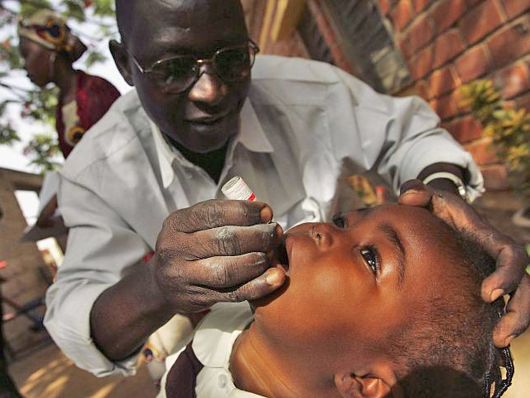
PROGRAMMED TO DIE: FMC ABUJA BEGINS SELLING OF IMMUNIZATION THAT SHOULD BE FREE TO KIDS TO STOP POLIO.
Secret Reporters
Nigerian kids in Abuja will soon begin to die in drove if the Minister of Health fails to wield into an ugly incident currently going on.
Polio which has been a great killer of kids is soon to rear its ugly head, as parent cannot afford to pay for immunization to their children in Abuja.
The vaccine which is provided free by the Federal Government is currently paid for by parents at the Federal Medical Centre; Abuja formerly called Federal Staff Hospital
According to our source parents are forced to pay N7,500 each time they come to the hospital for the vaccine
“The future is not guaranteed again if we can’t make immunization available free of charge”, our source stated
Health
Federal Medical Centre Onitsha Awards ₦45.2 Million To Newly Registered Company Suspected To Be Looting Conduit
Secrets Reporters
The Federal Medical Centre Onitsha has come under scrutiny after disbursing a total of ₦45,231,488.37 to Ebonyshield Solutions Limited, a company that had been in existence for only about a year at the time of the transactions.
The beneficiary, Ebonyshield Solutions Limited, received seven separate payments from the agency in 2025, all linked to the provision of security services.
On 24 November 2025, the Federal Medical Centre Onitsha paid Ebonyshield Solutions Limited ₦6,517,883.72 for the provision of security services for August 2025. The transaction was processed under Payment No. 1001351372-6, with Payer Code 0521027058.
We gathered that on 13 May 2025, the agency paid Ebonyshield Solutions Limited the sum of ₦6,124,186.05 for security services rendered in February 2025. The transaction was processed under Payment No. 1001287121-4, with Payer Code 0521027058.
Fast forward to 25 July 2025, we gathered that the agency again made another payment to Ebonyshield Solutions Limited, this time amounting to ₦6,517,883.72 for security services rendered in April 2025. The transaction was processed under Payment No. 1001302701-4, with Payer Code 0521027058.
We further gathered that on 15 August 2025, the agency paid the same company ₦6,517,883.72 for security services for May 2025. The transaction was processed under Payment No. 1001310257-1, with Payer Code 0521027058.
Fast forward to 28 October 2025, the agency made another payment of ₦6,517,883.72 to the same company for security services rendered in July 2025. The transaction was processed under Payment No. 1001341669-7, with Payer Code 0521027058.
We gathered that on 19 December 2025, the agency paid the same company ₦6,517,883.72 for security services for September 2025. The transaction was processed under Payment No. 1001362224-6, with Payer Code 0521027058.
Finally, on 31 December 2025, we gathered that the agency again paid the same company ₦6,517,883.72 for security services for October 2025. The transaction was processed under Payment No. 1001374492-20, with Payer Code 0521027058.
Corporate records indicate that Ebonyshield Solutions Limited was registered on 3 November 2024. This timeline is notable, as it places the company’s incorporation just about a year before the first of these payments was made.
Under the Public Procurement Act 2007, companies seeking federal government contracts are required to provide evidence of tax payments for the preceding three years, alongside audited financial statements covering the same period. These provisions are designed to ensure that public funds are awarded to entities with verifiable operational history and financial credibility.
What emerges, therefore, is not merely a record of payments but a set of questions relating to due process, compliance, and the gaps that may exist between regulatory requirements and actual practice.
Health
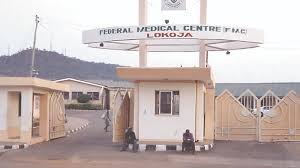
FG Spends ₦74 Million on Faeces Evacuation at FMC Lokoja in 2 Years Amid Code of Conduct Violations
By Onoja Baba
A company owned by Audu Jeremiah Okpanachi, who is affiliated with the Department of Management Sciences at the Nigerian Defence Academy’s Postgraduate School (Ribadu Campus) in Kaduna, secured multiple high-value contracts for the evacuation of solid and liquid waste from the Federal Medical Centre (now Federal Teaching Hospital) in Lokoja, Kogi State, between 2018 and 2019. Records show the firm, Ochija & Co Ltd (RC 270266), received repeated payments for what appears to be routine sanitation services at the federal health facility, raising serious questions about conflict of interest and potential violations of Nigeria’s Code of Conduct for Public Officers.
Ochija & Co Ltd, incorporated on April 23, 1995, as a private company limited by shares with its address at 3 Old Kano Road, Zaria, Kaduna State, lists Jeremiah Audu Okpanachi and Jeremiah Audu Sunday Okpanachi as directors and major shareholders. The company’s primary activity is listed as general contracting, importing, exporting, and merchant business. Corporate records indicate the firm is now classified as inactive as of mid-2024, yet it was actively awarded and paid for federal contracts years earlier. Okpanachi’s affiliation with the NDA Postgraduate School places him in the category of a public officer, where engaging in private business that supplies goods or services to other government agencies is strictly regulated.
Payment records from the Federal Medical Centre, Kogi, reveal a pattern of frequent transactions specifically for “evacuation of solid/liquid waste”, commonly referred to in local parlance as “pheuses” or sewage management. Between October 2018 and November 2019, Ochija & Co Ltd received at least 12 separate payments for this service, with each backed by distinct payment voucher numbers, suggesting they were treated as individual transactions rather than a single ongoing contract.
The amounts were remarkably consistent, hovering around ₦6.2 million per payment:
October 8, 2018: ₦6,219,540 (voucher 1000515358-3)
November 2, 2018: ₦6,201,540 (voucher 1000523143-1)
November 29, 2018: ₦6,201,540 (voucher 1000531448-1)
December 22, 2018: ₦6,201,540 (voucher 1000540240-1)
February 2, 2019: ₦6,201,540 (voucher 1000549925-1)
April 4, 2019: ₦6,201,540 (voucher 1000567037-1)
May 1, 2019: ₦6,197,940 (voucher 1000575831-1)
July 3, 2019: ₦6,197,940 (voucher 1000596394-1)
August 1, 2019: ₦6,197,940 (voucher 1000602663-1)
August 30, 2019: ₦6,197,940 (voucher 1000608023-1)
October 8, 2019: ₦6,197,940 (voucher 1000616840-1)
November 4, 2019: ₦6,197,940 (voucher 1000624960-1)
These 12 payments alone total approximately ₦74,414,340 for waste evacuation over roughly 14 months. In 2018, four payments amounted to about ₦24.82 million; in 2019, eight payments totaled roughly ₦49.59 million. Additional sanitation-related contracts to the same company during the same period included fumigation of the hospital’s internal and external environment (e.g., ₦20.5 million in April 2019 for arrears covering 2017–2018 and ₦5.1–5.1 million in mid-2019) and external cleaning services (₦15.15 million in September 2019 for March–August 2019 arrears). Each carried unique payment references and payer codes (primarily 0521027031 or 521027031), indicating they were processed as discrete awards despite covering recurring services at the same facility.
The scale of spending stands in stark contrast to the dire conditions at the Federal Teaching Hospital Lokoja. A March 2025 investigative series by PUNCH Healthwise described the facility, upgraded from Federal Medical Centre, as a “death house” plagued by obsolete equipment, crumbling infrastructure, severe shortages of basic medical supplies (such as dialysis tubings and bicarbonate), overworked staff, and frequent medical errors leading to avoidable deaths. Doctors reportedly struggle daily with outdated facilities, while the hospital lacks modern working tools and adequate manpower. Broader environmental challenges in Lokoja, including poor solid waste management, flooding, and indiscriminate sewage disposal, have been documented in academic studies and local reports, yet the hospital continued to allocate tens of millions to a single contractor for waste evacuation during this earlier period without apparent improvements in overall sanitation or infrastructure.
Legal experts note that Okpanachi’s dual role appears to breach core provisions of the 1999 Constitution. The Fifth Schedule (Code of Conduct for Public Officers) explicitly prohibits public officers from engaging in any private business or trade that could conflict with their official duties or involve direct or indirect contracting with government agencies. Paragraph 1 bars arbitrary acts prejudicial to others, while the broader code, enforced by the Code of Conduct Bureau, forbids full-time public servants from running companies that supply services to the federal government.
This is reinforced by the Public Service Rules, which restrict civil servants and academic staff in public institutions from private practice except in limited cases such as farming, and by procurement guidelines under the Public Procurement Act that demand transparency and competitive bidding to avoid favouritism. Such arrangements can also attract scrutiny from the Independent Corrupt Practices Commission (ICPC) for abuse of office.
General News
₦72 Million Syringe Scandal: Cleaning Firm and Inactive Company Bag Multi-Million Naira Health Contracts Amid Inflated Prices
Secrets Reporters
The Nigerian health sector has once again been thrown into the eye of the storm as revelations emerge over eyebrow-raising contracts awarded by the National Primary Health Care Development Agency (NPHCDA). At the heart of the matter is the award of more than ₦72 million for the supply of just 900 syringes—a deal many observers have likened to paying for gold but receiving mere plastic.
Documents show that in March 2022, the NPHCDA awarded two separate contracts to supply 450 pieces each of 0.5ml auto-disable syringes to Borno and Ogun states. But instead of following the straight and narrow path of due process, the deals were handed to companies whose records raise more questions than answers.
For Borno State, the contract went to Yuhaz Merchants Company Ltd, a firm officially registered in 2013 as a cleaning and waste disposal service provider. Despite its profile showing no trace of pharmaceutical experience, it was entrusted with a health supply contract worth ₦36.378 million. The syringes were to be stored at the North-East Cold Store in Bauchi.
Curiously, a related company—Yuhaz Pharmaceuticals Limited—surfaced on the Corporate Affairs Commission (CAC) website, registered only in July 2022, barely three months after the syringe project appeared in the NPHCDA’s approved budget. Though inactive, the timing has fueled speculation about whether the firm was created as a backdoor conduit for the contract or was just an uncanny coincidence.
The second leg of the deal went to Biomatrixx Healthcare Nigeria Limited, a company incorporated in 2014 as a pharmaceutical outfit but flagged as inactive by CAC records. This firm was handed ₦35.955 million to deliver another 450 syringes for Ogun State, with the supplies routed to the South-West Zonal Cold Store in Lagos.
When placed side by side with market reality, the contracts appear grossly inflated. A standard 5ml syringe sells for between ₦175 and ₦300 at retail value, and industry experts stress that bulk procurement typically comes at a discounted rate. Yet, even at the upper retail ceiling of ₦300, the agency’s allocations translate into millions of naira far beyond reasonable pricing.
Analysts argue that this yawning gap between market price and contract cost is a red flag for cost inflation—one that often occurs when contracts are handed to companies with little or no track record in the sector.
Beyond the staggering figures, the development cuts to the bone of Nigeria’s immunization programme. Syringes are indispensable tools in vaccination campaigns, from polio eradication to routine child immunizations. Experts warn that mismanagement in this area could slam the brakes on life-saving public health initiatives.
Procurement guidelines are explicit: contracts must not be awarded to firms without relevant registration or competence. Yet, in this case, both an inactive firm and a cleaning company walked away with plum deals in the name of public health.
Public finance specialists point to weak enforcement of procurement laws as the crack in the system. “When companies are allowed to secure contracts outside their registered scope, suspicion naturally follows, and in the worst cases, projects are abandoned,” one analyst noted.
Observers warn that unless transparency and accountability are put at the driver’s seat, Nigeria’s health sector risks dancing on quicksand—where inflated contracts become the norm, and the lives of citizens hang in the balance.
-
STRAY BULLET10 years agoYOU ARE A THIEF SO YOU CAN’T PROBE A THIEF: ANOTHER UK NEWSPAPER WRITES BUHARI
-
General News10 years agoPREACH AND DIE: FOR DARING EARLY MORNING PREACHING IN ABUJA, MUSLIMS HACK TWO PASTORS TO DEATH
-
General News9 years agoBREAKING: TYRANNICAL NIGERIA PRESIDENT, MUHAMMADU BUHARI DIES IN LONDON HOSPITAL, BUT PRESIDENCY KEEPS SEALED LIPS
-
SPECIAL REPORT10 years agoMISS ANAMBRA CUCUMBER SAGA: HOW ANAMBRA BROADCASTING SERVICE DIRECTOR, UCHE NWORAH LEAKED SEX VIDEO TO THE PUBLIC FOR HER REFUSAL TO CONTINUE SEXUAL AFFAIR WITH HIM (PART ONE)
-
SPECIAL REPORT10 years agoEXCLUSIVE: HOW STEPHEN KESHI AND WIFE WERE KILLED BY HIS OWN BROTHER
-
SPECIAL REPORT9 years agoPOWER GAME ALMOST OVER: OSINBAJO UNDER PRESSURE TO HAND OVER TO SARAKI AS VP IN ANTICIPATION OF THE UNKNOWN
-
STRAY BULLET10 years agoDESPITE HUNGER IN NIGERIA, BUHARI ALLEGEDLY DONATES 500 MILLION DOLLARS TO HILARY CLINTON’S FAILED PRESIDENTIAL ELECTIONS AS NIGERIANS PRESSURE HIM TO CONGRATULATE TRUMP
-
SPECIAL REPORT10 years agoEAR INFECTION SCAM: BUHARI JETS TO LONDON TO SECRETLY NEGOTIATE WITH NIGER DELTA AVENGERS