
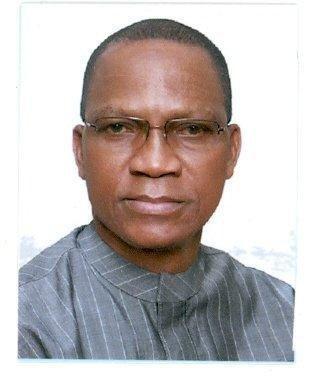
 By
By Despite the fall in crude oil prices, which has made it imperative for government to source for funds, experts argue that borrowing locally to meet long and short-term needs is inappropriate. The alternative is to seek foreign facility because of the rising interest rate, which has raised the cost of domestic loans. With loans available to private sector affected by public borrowing, these are indeed tough times, writes COLLINS NWEZE.
Just when many Nigerians were beginning to cheer the rising prices of crude oil, where the country derives over 85 per cent of her revenues, the prices slumped to a new low last week.
Oil prices had crossed $50 per barrel late July, before dropping significantly last week to $41.80 per barrel. Fueling the oil price decline is the worry that the net Chinese oil imports will weaken this year, and with global and domestic demand for oil on the decline, the prices of crude oil are bound to fall.
Rebalancing the oil market has proved to be long and frustrating as oil-exporting countries, including Nigeria, are hit hardest by the 2014 and 2015 price slump. The countries are counting their losses.
Oil prices had declined by more than 70 per cent from about $115 in June 2014 to $27 in February, this year. Since 1973, this reverse oil shock is matched only twice: in the 1980s,when oil prices fell below $10; and in 2008 to 2009, when it fell from about $147 to about $40, but proved short-lived.
With oil prices still down, the impact on revenues, the government’s ability to deliver on major developmental projects remains challenging. The way out remains to borrow from the right places to fix Nigeria’s infrastructure needs.
The Debt Management Office (DMO) Director-General, Dr. Abraham Nwankwo, believes borrowing to fix the country’s infrastructure should come from outside.
He explained that in contrast to external borrowing, domestic borrowing would not be appropriate because of some reasons. First, Nwankwo says, is high average cost of domestic debt, which is significantly higher than the average cost of external debt.
He said in the public debt portfolio, the domestic debt ratio against external debt ratio of about 85:15 needed to be changed towards 60: 40 mix.
According to him, such mix is appropriate in Nigeria’s Medium-Term Debt Management Strategy formulated by the DMO.
“Significant additional domestic borrowing would exacerbate the domestic debt service revenue ratio, which has already become unacceptably high. To avoid crowding out the private sector, the government domestic borrowing should be minimised. Specifically, as the government provides the policy and infrastructure environment for rising economic activity, the private sector is expected to respond by playing the lead role in direct production in the real sector,” he said.
Eurobonds
According to DMO, beyond the more attractive multilateral and bilateral borrowing sources, the quantum of money required and the various projects to be financed dictate that Nigeria should also establish a programme for issuing Eurobond in the international capital market, to tap the market repeatedly over the next three to five years.
Nwankwo explained that although global market conditions and local economic challenges have become quite tough since mid-2014, the country can still take advantage of its experience of successfully issuing Eurobonds in 2011 and 2013.
The debt to GDP ration with the proposed additional borrowing will be about 17.8 per cent by the end of next year. More importantly, because of the long-tenor and low interest on the external debts, the new borrowing will not impact significantly on the debt service-revenue ratio.
On the other hand, significant additional domestic borrowing would push the debt service burden over the cliff. Therefore, overall, it could be recommended that an additional $15 billion per year could be sustainably borrowed over the next four years to build a strong economy.
Moreover, in the context of financing a de-recession and structural transformation programme of an economy, distinction should be made between conventional debt sustainability, which is essentially static, and structural debt sustainability which is based on a forward view of the economy.
For many weak economies forced into recession by exogenous commodity-based or other shocks, and in need of recovery, it would be expected that their public debts are not sustainable; hence it would not be reasonable to expect that with sizeable additional borrowing, their debts would be sustainable, when the assessment is based on the macroeconomic indicators.
West African Institute for Financial and Economic Management (WAIFEM), Director-General Prof. Akpan Ekpo argues that with declining government revenues from oil, budgetary allocations alone may not be enough to finance the infrastructure deficit in the country.
Prof. Ekpo admitted that the debt option is still the most viable at this time. He said Nigeria’s rebased $510 billion Gross Domestic Product (GDP) economy gives it more room to borrow more to bridge infrastructure gap.
To Ekpo, Nigeria could borrow up to 40 per cent of its GDP externally, adding that the DMO has in the past, demonstrated good negotiation skills in dealing with the country’s debt matters, either with internal or external creditors.
He believes the viable option for the government to take is to borrow from the World Bank or African Development Bank (AfDB) to fund the key developmental projects. The government can also borrow internally to achieve the feat, but disclosed that internal borrowing is short term while external borrowing has longer tenor.
Besides, the Nigeria Trust Fund with the AfDB can be used as a leverage while borrowing from the bank, adding that borrowing from the International Monetary Fund (IMF) will be expensive because Nigeria is classified as a Middle Income Country on the Fund’s list.
Funding projects with borrowed funds
The DMO captures the benefits of using debts to fund projects more succinctly. “If you want to build a railway from Lagos to Aba, there are two options. Firstly, you can save up the money for 10 years, before starting the project. The second option is to borrow and build the railway, and within 10 years, generate enough revenues to offset the debt,” DMO’s Head, Policy Strategy and Risk Management, Joe Ugolala said.
He sees the second option as more plausible as it captures the benefits of borrowing to build infrastructure that is in the interest of the economy. He explained that for one to borrow, there must be that inherent capacity to repay, whether the debt came from internal or external sources.
He explained that the Federal Government has the capacity to borrow from outside to fund budget, and support specific projects including infrastructure.
He said that despite challenges with external and internal economic volatility, the DMO is committed to supporting opportunities for employment generation. “We are more than ever committed to doing what we know how to do best, democritisation of public debt. We need to use debt to tackle poverty. We are committed to employment generation. Now that things are tight, we need to show that we are resilient people,” he said. “We need to reassure ourselves that we have what it takes to achieve a sustainable growth”.
Deployment of funds
According to Nwankwo, the proceeds of the external loans will be used for capital projects (physical and social infrastructure), programmed to achieve turnaround, generate self-sustaining growth with maximum employment, and guarantee repayment of the debts. Rigorous prioritisation, sequencing and justification guide will determine the capital allocation.
He explained that given the size of the borrowing required, the coverage and mix of prospective lenders, and the need to ensure that the loan proceeds are available as programmed, the loan negotiation efforts will need backing at the highest level of the political leadership.
Besides, Nigeria’s diplomatic capabilities and instruments will need to be deployed to complement the financial and technical efforts towards obtaining the loans. Therefore, the Ministries of Finance, Industry, Trade and investment, National Planning and Foreign Affairs will need to work closely.