 By
By Bulmun Dakwal
For residents of Russau, a quiet community tucked behind Students Village Hostel in Farin Gada, Jos North Local Government Area of Plateau State, crossing from one side of the community to the other is more than a daily routine, it is a gamble with life especially during the rainy season.
When the rains come, the small river separating Russau from neighbouring Angwan Jarawa swells into a dangerous torrent. Residents, including schoolchildren, traders and market women, are left with two difficult choices: attempt to cross the flooded river or take a much longer route through Farin Gada to reach their destinations.
For years, the community has hoped that the construction of the Russau Bridge would finally bring an end to the dangerous crossings that have claimed lives and disrupted economic activities. Instead, the project has become another example of a government promise that exists more on paper than on the ground.
An investigation by SecretsReporters shows that despite repeated budget allocation and assurances from successive administrations, the bridge remains incomplete, leaving thousands of residents to contend with the same risks they faced years ago.
The story of the Russau Bridge dates back to 2021, when the Plateau State Government, through the Ministry of Works, budgeted 1 million naira for its construction. Although, the allocation raised hopes among residents, little changed on the ground.
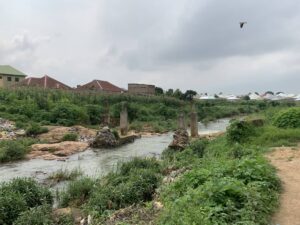
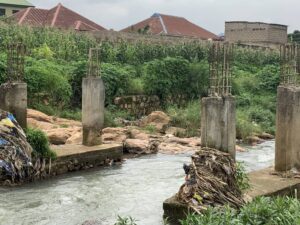
The following year, the project resurfaced in the 2022 budget, this time with a significantly increased allocation of 500 million naira, suggesting renewed government commitment to finally delivering the long awaited bridge.
However, when the project site was visited, the findings painted a different picture.
Rather than a completed bridge, investigators found an abandoned structure standing across the river. Concrete works had begun years earlier but had long been left unfinished. There were no workers on site, no construction equipment and no visible signs that work was ongoing or completed.
For residents, the abandoned structure represents more than an unfinished project, it represents years of broken promises.
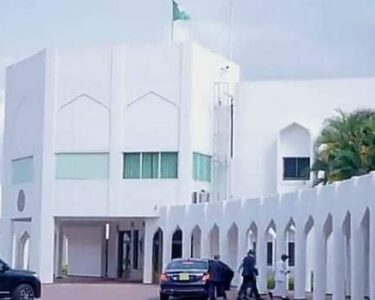
“We as the community executive went to the Government House,” said Amune Peter, the youth leader of Russau Community.
“We met with the Deputy Chairman and spoke to him about the bridge. He promised us it would be included in the 2022 state budget. We waited to see the project executed, but till today nothing has been done. We have also received promises from previous political aspirants, but nothing came out of them.”
According to him, the bridge currently standing across the river was never a government project.
Instead, it was initiated by a philanthropist, Pastor Ekwas, who funded the construction before his death in 2019.
“The construction you are seeing there today was done by Pastor Ekwas,” Peter explained.
“He died in 2019, and since then the project stopped. That was when we realised the community could not complete it on its own, so we approached the government for assistance.”
Residents say the bridge has become increasingly important as population continues to grow around Students Village and surrounding communities.
Without it, movement between Russau and neighbouring communities remains difficult, especially during the rainy season.
Mr Peter also warned that the community could face an even bigger challenge in the future.
“We really need the bridge because the other entrance through Farin Gada passes through land belonging to Hausa residents, and they have been threatening to block that road,” he said.
“If that happens, our situation will become even worse.”
For Fidelia Chukwuemeka, who owns a pharmacy within the community, the consequences of the abandoned bridge are felt almost every rainy season.
According to her, crossing the river has become so dangerous that she has completely abandoned the route.
“During the rainy season, people find it difficult to cross into Angwan Jarawa,” she told UDEME.
“I have fallen inside that water several times. Now whenever it rains, I don’t even use that road anymore. I go through Farin Gada into Students Village before returning to Russau, even though it is much farther.”
But distance, she says, is not the biggest problem, safety is.
“That road connects not only Angwan Jarawa but also Farin Gada Market,” she explained.
“Whenever there is a crisis and the Farin Gada road becomes blocked, residents have no alternative. Those who attempt to cross the river sometimes fall into the water, and others have drowned.”
According to her, several market women have lost their lives over the years while trying to cross the flooded river.
Their deaths, residents say, could have been prevented if the bridge had been completed.
Beyond the obvious danger to human life, the abandoned project has continued to affect economic activities within the community.
Traders transporting goods to Farin Gada Market spend more time and money navigating alternative routes. Residents seeking healthcare, education or other essential services are forced to travel longer distances. During periods of heavy rainfall, some parts of the community become virtually cut off.
For many residents, these daily struggles make the repeated appearance of the project in government budgets difficult to understand.
If funds have been allocated for the bridge over the years, they ask, why has construction remained stalled?
Why has the community continued to rely on an unfinished structure initiated by a private individual years ago?
And when will the promises finally translate into a completed bridge?
The questions have become even more pressing as the project continues to appear in Plateau State’s budget documents.
While earlier allocations were made in 2021 and 2022, the project resurfaced in subsequent government spending plans. Budget documents reviewed by SecretsReporters show that in 2025, another 100 million naira was earmarked for the “Construction of Russau Bridge and Road to Students Village, Farin Gada”, following an earlier allocation under the state’s road construction programe. Yet residents say they are still waiting to see sustained construction activity capable of delivering the bridge they have long been promised.
For accountability advocates, the recurring budgetary allocations raise important questions about project implementation and public expenditure. They argue that budgeting for infrastructure should ultimately result in completed projects that improve the lives of citizens, rather than repeated appropriations with little visible progress.
For the people of Russau, however, the debate is not about budget figures, it is about survival. Every rainy season brings fresh anxiety, heavy downpour reminds parents that their children must cross a dangerous river to reach school, market day presents another risk for traders trying to earn a living and every new government promise is met not with celebration, but cautious hope.