Connect with us

General News

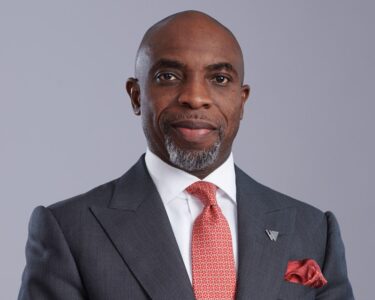
Exclusive: Living Lavida Loca: How Nestoil Boss Ernest Obi Jackson Took Banks Loan To Fund Company But Acquired N6.3 Billion US Home

Published

on

Stanley Ugagbe

The illusion of corporate patriotism and industrial ingenuity has been shattered by personal greed and financial recklessness, as an explosive property document obtained by SecretsReporters uncovers the startling, lavish lifestyle of Nestoil Limited boss Ernest Azudialu-Obiejesi (popularly known as Ernest Obi Jackson) at a time when Nigerian financial institutions are gasping for air under the crushing weight of bad debts.

While his corporate empire threatens to pull down the pillars of the Nigerian banking sector, Jackson has been living the ultimate lavida loca lifestyle in the United States, shielded by extreme luxury funded under highly questionable circumstances.

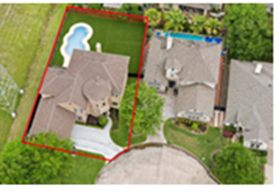
The property document obtained by SecretsReporters details a real estate masterpiece located at 11703 Bistro Ln, Houston, Texas 77082. Sitting on a sprawling 0.41 acres within the prestigious Royal Oaks Country Club enclave, the single-family residence is an architectural monument to opulence. Boasting 5 massive bedrooms, 7 luxurious bathrooms, and a staggering 10,894 square feet of premium living area, the two-story estate features an elevator, a private pool, a game room, an outdoor kitchen, and a four-car garage.

Picture of the house

In local currency, this jaw-dropping estate is comfortably worth N6.3 billion Naira based on current market dynamics. Industry experts point out that Texas is a US market known for relatively low property prices compared to elite coastal hubs. Had a home of this massive magnitude and specification been acquired in luxury hotspots like Florida, New York, or California, it would have easily commanded a valuation well over N15 billion Naira.

The official ownership timeline reveals that Ernest Azudialu-Obiejesi took absolute possession of this residential paradise on October 31, 2011, via a Warranty Deed. The document explicitly registers the owners as Azudialu Ernest Obiejesi and his wife, Obiejesi Maryann (also known in corporate circles as Nnenna Obiejesi).

The timing of this multi-billion Naira luxury acquisition is not just suspicious; it is damning. The years 2010 and 2011 represented a period of unprecedented cash flows and massive capital mobilization for Jackson’s flagship companies, Nestoil Limited and Neconde Energy Limited.

Between 2010 and 2011, Nestoil Limited secured major gas pipeline and offshore facility contracts from the Nigerian National Petroleum Corporation (NNPC) and the Shell Petroleum Development Company (SPDC). Chief among these was a significant portion of the massive $1.1 billion Nembe Creek Trunkline (NCTL) Replacement Project, where Nestoil was handed contracts to construct varying diameters of pipes across challenging riverine and swampy terrains in the Niger Delta.
During this exact same window, on August 31, 2010, Jackson’s Nestoil secured the NGC-Alaoji and Owaza Gas Pipeline Projects from the Nigerian Gas Company (NGC), an NNPC subsidiary. The project, meant to supply gas to National Integrated Power Plants (NIPPs), was commissioned in May 2011. Concurrently, Nestoil acted as a subcontractor for the Nembe Creek Offshore Field Logistics Base (FLB), delivering 13 complex support buildings for offshore workers, commissioned in November 2010.

As state funds poured into Nestoil for infrastructure development, Jackson’s second corporate vehicle, Neconde Energy Limited, was making massive waves in the banking halls. In 2011, the very same year the Houston megamansion was acquired, Neconde Energy secured an astonishing $558 million loan and debt facility, alongside an additional $150 million bridge financing arrangement.

This colossal financial war chest of over $700 million was strictly approved to fund the acquisition of a 45% stake in Oil Mining Lease (OML) 42 from Shell, Total, and Nigerian Agip Oil Company.

With billions of Naira flowing in from national oil contracts and hundreds of millions of dollars being pulled from commercial banks under the guise of corporate expansion, Ernest Obi Jackson’s personal real estate portfolio magically expanded across the Atlantic. While the Nigerian public was led to believe that these funds were being utilized to build indigenous capacity in the oil and gas sector, a N6.3 billion sanctuary was quietly being secured in Texas.

Fast forward to May 2026, and the house of cards has come crashing down on the Nigerian economy. The corporate greed of yesterday has transformed into a systemic financial crisis today. Ernest Azudialu-Obiejesi’s corporate empire is currently the primary driver behind an unprecedented economic gridlock, with Nestoil Limited and its affiliates defaulting on a monumental N2.9 trillion ($2.1 billion) syndicated loan.

The default is so severe and toxic to the nation’s financial stability that the Central Bank of Nigeria (CBN), under Governor Olayemi Cardoso, has taken the unprecedented step of blocking dividend payments to shareholders at three of the country’s major banking institutions: United Bank for Africa (UBA), Access Holdings, and FCMB.

The apex bank has issued a firm directive barring affected lenders from distributing earnings to investors until they have fully provided for their non-performing loan (NPL) exposure to Jackson’s troubled entities. The mathematical consequence of Nestoil’s financial delinquency is a colossal N2.16 trillion impairment charge ripped directly from the 2025 financial statements of five tier-one and tier-two lenders, including Access, UBA, Ecobank, FirstHoldCo, and FCMB.

The specific breakdowns of how individual banks have been bled by this historic default paint a horrifying picture of corporate irresponsibility. United Bank for Africa (UBA) is forced to absorb loan loss provisions of N331 billion ($240.7 million) in its full-year 2025 results. The bank declined to pay a final dividend, causing its share price to plummet by 10% upon the opening of trading on Monday, April 27.

Access Holdings witnessed its impairment charges on customer loans surge by an astronomical 209% to N287.3 billion ($208.9 million). Despite posting a record N743 billion profit after tax, the bank had to decline a final dividend to absorb Jackson’s toxic credit.

FCMB Group watched its net impairment losses double to N92.5 billion ($67.3 million), forcing the group to contract its loan book defensively and completely withhold its FY2025 dividend.

While everyday Nigerian shareholders are denied their hard-earned dividends and bank valuations take a massive beating on the floor of the Nigerian Exchange, Ernest Obi Jackson remains untouched, insulated by the sprawling walls of his Houston country club manor.

The anatomy of this debt reveals a calculated exploitation of the Nigerian financial system. In December 2022, when the debts were already under severe stress, a syndicate of 16 Nigerian banks alongside Afreximbank attempted to rescue the situation by consolidating Nestoil’s long-term obligations into “Global Facilities” governed by English law.

The personal guarantors for this consolidated facility included Neconde Energy, Ernest Obiejesi himself, and his wife Nnenna Obiejesi. Court filings from October 2025 established that Jackson’s total indebtedness stood at an unbelievable $1,012,608,386.91 (approx. N1.39 trillion), alongside an additional N430 billion in separate Naira obligations. Furthermore, separate personal guarantees linked directly to Obiejesi covered N366.8 billion ($266.8 million) owed to Access Bank, with hundreds of billions more owed to First Bank and Zenith Bank.

Both Nestoil Limited (RC 168745) and Neconde Energy Limited (RC 923655) currently maintain an active status on the website of the corporate affairs commission.

Continue Reading
Click to comment

Leave a Reply

Your email address will not be published. Required fields are marked *

General News

Army Builds Schools, Town Halls as Questions Grow Over Nigeria’s Deepening Security Crisis

Published

on

Secrets Reporters

As Nigeria continues to battle kidnappings, banditry, insurgency and violent attacks across several states, the Nigerian Army has shifted part of its public engagement toward community development, unveiling schools, town halls, boreholes and other infrastructure under its Civil-Military Cooperation (CIMIC) programme.


The Army says it has now completed more than 250 intervention projects nationwide, including schools, hospitals, roads, ICT centres, solar-powered facilities and water projects. The announcement came during the 163rd Nigerian Army Day Celebration (NADCEL 2026) in Rivers State, where Chief of Army Staff, Lieutenant General Waidi Shaibu, commissioned four new projects across the state’s three senatorial districts.


According to SecretsReporters‘ analysis, the Army’s expanding role in providing public infrastructure reflects a significant evolution in its relationship with civilians. While such interventions may improve public goodwill, they also expose a difficult reality: many communities are celebrating projects that ordinarily fall within the constitutional responsibilities of local, state and federal government institutions.


SecretsReporters further observes that although schools, boreholes and community halls can improve the lives of residents, they cannot replace the primary expectation Nigerians have of the military protecting lives, securing communities and restoring confidence in areas where criminal violence has become routine. Across many parts of the country, citizens continue to measure security agencies not by the number of projects commissioned but by whether they can travel safely, farm without fear and sleep without the threat of attacks.


The four projects commissioned in Rivers include the renovation of Community Secondary School, Obio/Akpor, Community Secondary School in Lueku, Khana Local Government Area, the reconstruction of a Community Town Hall in Oyigbo Local Government Area and the installation of a solar-powered borehole in Degema Local Government Area.


Speaking during the commissioning, Lieutenant General Shaibu said the projects demonstrate the Army’s commitment to complementing military operations with initiatives that directly improve the lives of citizens. He argued that lasting national security cannot be achieved through military action alone and described the Army’s Civil-Military Cooperation programme as a strategic platform for building confidence between soldiers and host communities.


The Army Chief disclosed that more than 250 intervention projects have now been completed across Nigeria, covering hospitals, classroom blocks, roads, ICT centers, solar lighting systems and water supply facilities. He urged benefiting communities to protect the projects and acknowledged President Bola Ahmed Tinubu for supporting the Army’s operational activities.
Earlier, the Chief of Civil-Military Affairs, Major General Musa Etsu-Ndagi, said the Rivers projects were deliberately distributed across the state’s three senatorial districts to ensure wider community impact.


Chairman of Obio/Akpor Local Government Area, Honourable Gift Worlu, welcomed the intervention, describing the renovated schools as a boost to education within the council.
For SecretsReporters, however, the larger issue extends beyond the ribbon-cutting ceremony. The growing visibility of military-led community projects raises broader questions about governance, institutional boundaries and public accountability. While civil-military cooperation is recognized globally as a tool for strengthening trust between armed forces and civilians, it is not designed to substitute for effective governance or diminish the military’s constitutional responsibility to defend the country.


The latest intervention also comes at a time when security remains one of Nigeria’s most pressing national concerns. In several parts of the country, communities continue to experience attacks by armed groups, while thousands of citizens have been displaced and economic activities disrupted by persistent insecurity.

Continue Reading

General News

Emem Usoro Scandal: Journalist Stanley Ugagbe Remanded in Kuje Prison Over Cybercrime Charges

Published

on

Secrets Reporters

Journalist Stanley Ugagbe has been remanded at the Kuje Correctional Centre by the Federal High Court in Abuja following his arraignment on a six-count charge filed by the Inspector-General of Police over publications concerning the Deputy Governor of the Central Bank of Nigeria (CBN), Emem Usoro.

Ugagbe was arraigned before Justice Salim Olasupo Ibrahim on Monday morning, where the charges were read to him. Following the proceedings, the court ordered that he be remanded in the Kuje Correctional Centre and adjourned the case until September 21st for trial.

The development marks the latest chapter in a case that has drawn attention from journalists and press freedom advocates nationally and internationally following Ugagbe’s arrest and detention by the Nigeria Police Force.

The charges stem from criminal proceedings instituted by the Inspector-General of Police before the Federal High Court in Abuja, accusing Ugagbe and Fejiro Oliver of conspiracy, cyberstalking and defamation arising from a series of reports titled “Exclusive: CBN Deputy Governor Emem Nnana Usoro Hides N1.4 Billion California Luxury Condo in Asset Declaration Scandal – Part 1”; “EXCLUSIVE: CBN Deputy Governor Emem Usoro Linked to N3.6bn Los Angeles Property Amid Questions Over Asset Declaration Compliance (Part 2)” published on SecretsReporters.

According to the charge sheet, the prosecution alleged that the defendants conspired to commit cyberstalking contrary to the Cybercrimes (Prohibition, Prevention, etc.) Act, 2015 (as amended in 2024). The police further accused Ugagbe of publishing stories alleging that the CBN deputy governor concealed a luxury property in California in her asset declaration, was linked to a multi-billion naira property in Los Angeles, and published another report concerning her personal life. The prosecution contended that the publications were false and constituted cyberstalking and defamation under the Cybercrimes Act and the Penal Code.

With the court now ordering his remand at the Kuje Correctional Centre, Ugagbe will remain in custody pending the next hearing, which has been fixed for September. The court is expected to consider issues relating to his bail and continue proceedings on the substantive charges at the adjourned date.

Recall that Ugagbe’s ordeal began on July 1, 2026, when armed men reportedly abducted him on his way home from work. The operatives confiscated his mobile phones and laptop before taking him away in an unmarked vehicle. For several days, neither his family nor his employer knew his whereabouts.

His disappearance sparked widespread condemnation from media organizations, including the Nigeria Union of Journalists (NUJ), which demanded that security agencies disclose his whereabouts, grant him access to his family and legal representatives, and either charge him before a competent court or release him.

International organizations also reacted. The Committee to Protect Journalists (CPJ) called on Nigerian authorities to investigate his disappearance and ensure his immediate safety, while the International Press Institute (IPI Nigeria) intervened in efforts that eventually led to his release from police custody.

Following his release on July 6, Ugagbe was granted bail while police reportedly continued investigating allegations, including espionage, cyberstalking, and other computer-related offences.

Continue Reading

General News

ICPC Probes News Agency of Nigeria Over Alleged Recruitment Irregularities After Secrets Reporters Expose

Published

on

SecretsReporters

The Independent Corrupt Practices and Other Related Offences Commission (ICPC) has commenced an investigation into alleged recruitment irregularities at the News Agency of Nigeria (NAN), seeking records relating to the agency’s employment and staff regularisation exercises conducted between 2024 and 2026.

The development comes days after SecretsReporters publication, titled “Alleged Sexual Harassment, Recruitment Controversy Rock News Agency of Nigeria as Female Employee Questions Grade Level Placement”.

The anti-corruption agency has formally requested a comprehensive range of recruitment and personnel records from NAN as part of an ongoing investigation into possible violations of the Corrupt Practices and Other Related Offences Act, 2000.

In a letter dated July 6, 2026, and addressed to the Managing Director/Chief Executive Officer of NAN, the ICPC directed the agency to produce the requested documents and designate a competent officer to appear before investigators at the Commission’s headquarters in Abuja.

The letter, signed by the Director of Operations on behalf of the Chairman of the ICPC, stated that the request was made pursuant to Section 38 of the Corrupt Practices and Other Related Offences Act, 2000, which empowers the Commission to obtain documents and information required for the purpose of investigations.

According to the letter, investigators requested all records relating to NAN’s recruitment and staff regularisation exercises between 2024 and 2026.

The Commission specifically requested recruitment advertisements, eligibility and selection criteria, lists of shortlisted applicants, names of successful candidates, and minutes of meetings of committees involved in the recruitment process.

The ICPC also requested the personnel file of Ogunola Folashade Adunni, together with any additional information that could assist investigators in determining whether due process was followed during the recruitment exercise.

Part of the letter reads: “This Commission is investigating an alleged violation of the Corrupt Practices and Other Related Offences Act, 2000 and it has become necessary to obtain certain documents/information from your office.”

It further directed NAN to ensure that a competent officer appeared before investigators with all relevant recruitment and personnel records requested by the Commission.

Continue Reading

Trending

Support Independent News