SCANDALS
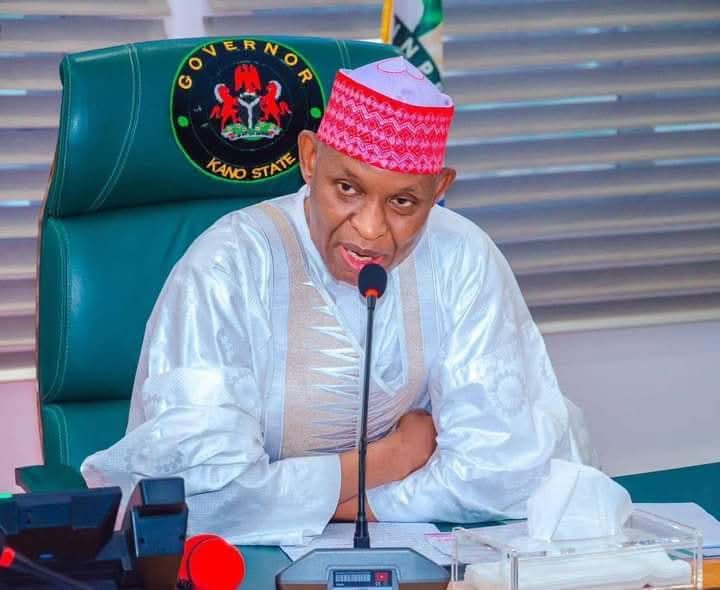
Kano Governor Abba Yusuf Spends 88.5% of ‘Other Recurrent’ Funds on Debt Repayment in Just Six Months
Secrets Reporters
Mining the 2025 Kano State Budget performance, SecretsReporters has discovered trends suspected to be budget fraud. Kano State Government officials released the second quarter 2025 budget implementation report through the Ministry of Planning and Budget in collaboration with the Ministry of Finance, revealing unusually rapid spending in the category known as other recurrent expenditure, usually used for diversion of public funds by state actors across states.
For Kano, this category, which covers public debt servicing, grants and contributions, subsidies, and transfer payments under economic account classes 2203 to 2209, saw cumulative disbursements reach ₦20,484,975,618.84 by the end of June. That figure represents 88.5 percent of the original approved annual allocation of ₦23,154,385,548.08, far exceeding the typical mid-year benchmark of around 45 to 50 percent for balanced implementation.
The second quarter alone contributed ₦12,807,207,120.71 to this total, building on the first quarter’s already substantial outlay of ₦4,874,115,667.89 under public debt charges, which stood at 40.2 percent of the annual provision at that early stage. Public debt charges under code 2206 ultimately hit ₦14,892,270,046.60 by mid-year, surpassing the original ₦12,137,421,548.08 budget allocation with a 122.7 percent performance rate. Related breakdowns show foreign interest and discount payments amounting to ₦853,157,775.68, domestic interest and discount at ₦1,945,277,156.57, and domestic principal repayments in sub-lines climbing dramatically to 277.2 percent of their budgeted amounts.
Subsidies under code 2205 recorded ₦3,202,666,327.24 spent against a ₦2,728,886,000.00 provision, achieving 117.4 percent utilization, with much of the funding directed toward support for public institutions. Grants and contributions under code 2204 reached ₦2,355,916,685.00 for 29.5 percent of the ₦7,974,553,000.00 allocation, while transfers of a general character between different levels of government under code 7018 stood at ₦75,431,000.00 against ₦1,150,000,000.00, equating to just 6.6 percent. Public debt transactions under functional code 7017 aligned closely with the debt charges pattern, posting ₦15,387,514,868.86 cumulative spending for 119.9 percent performance on the ₦12,837,421,548.08 line.
In contrast to this accelerated pace, the broader recurrent expenditure envelope totaled ₦115,236,020,242.44 for January to June, achieving 43.9 percent of projections. Personnel costs stood at 37.7 percent and overheads remained below expectations. Recurrent revenue, including FAAC allocations and internally generated revenue, reached ₦235,444,909,110.17 for 38.2 percent performance, while capital receipts and expenditure lagged significantly at 12.2 percent and 19.9 percent respectively. The report attributes some capital underperformance to non-disclosure of project drawdowns and notes efforts to improve tracking, but it provides no detailed justification for the front-loaded spending in the other recurrent category beyond mentioning overperformance in certain personnel and overhead codes that required amendments submitted to the State House of Assembly.
Later quarterly reports reflect adjustments to the fiscal framework. The third quarter revised the full-year appropriation for other recurrent expenditure upward to ₦45,761,450,067.80, with cumulative spending from January to September advancing to ₦29,691,540,816.93, or 64.9 percent of the new envelope, including a third-quarter addition of ₦9,206,565,198.09. By the end of the fourth quarter, the annual total reached ₦33,492,036,575.72, representing 73.2 percent of the revised budget, with that period contributing ₦3,800,495,758.79. Debt management administrative codes under 022001300100 continued showing low utilization in sub-items, such as ₦406,484,000.00 with limited draws in subsequent periods.
The official documents detail aggregate debt servicing lines that exceeded original provisions early in the year before aligning with the expanded envelope. However, they do not specify the exact domestic or foreign obligations settled, the recipients of particular grants or subsidies, or whether the rapid mid-year drawdown stemmed from scheduled amortization schedules or responses to unanticipated liabilities. Capital expenditure across the full year remained subdued compared to recurrent components, highlighting a disproportionate focus on debt-related, grant, subsidy, and transfer payments during the initial half of 2025 and the subsequent revision of the overall fiscal plan.
SCANDALS
Fresh Transparency Concerns Rock NUPRC as Stakeholders Demand Forensic Audit of 2025 Oil Licensing Round
Secrets Reporters
Fresh concerns have emerged over the integrity of Nigeria’s 2025 oil and gas licensing exercise, with industry stakeholders demanding a comprehensive forensic audit of the Nigerian Upstream Petroleum Regulatory Commission (NUPRC) amid allegations that aspects of the qualification process may have been manipulated to favour selected companies.
The calls, which have been corroborated by multiple industry sources familiar with the licensing exercise, come as the technical bid evaluation phase of the highly anticipated licensing round continues under the supervision of the NUPRC, led by its Commission Chief Executive, Engr. Gbenga Komolafe.
Sources who spoke to SecretsReporters on condition of anonymity alleged that several participants in the exercise have raised concerns over what they described as inconsistencies in the application of qualification requirements, particularly regarding mandatory technical and data acquisition obligations contained in the published bid guidelines.
According to the sources, there are growing questions over whether certain bidders were granted procedural waivers or exemptions not made available to other participants.
The allegations have triggered increasing calls from petroleum consultants, investors, civil society organisations and industry observers for an independent forensic audit capable of reviewing every stage of the licensing exercise, from prequalification to technical evaluation and eventual award recommendations.
At the centre of the controversy are questions surrounding transparency in the implementation of the Commission’s own published guidelines.
The NUPRC had repeatedly assured both local and international investors that the 2025 Licensing Round would be transparent, competitive and fully compliant with the Petroleum Industry Act (PIA), promising a digital and rules-based process designed to attract billions of dollars in fresh investment into Nigeria’s upstream petroleum sector.
Official documents published by the Commission show that the licensing round follows a two-stage process comprising qualification and commercial bidding before ministerial approval and contract execution. The process officially commenced in November 2025 and is expected to conclude after the commercial bid conference.
The exercise is strategically important to Nigeria’s economy.
The Federal Government expects the licensing round to attract approximately $10 billion in investment, unlock an estimated two billion barrels of additional oil reserves over the next decade and eventually contribute about 400,000 barrels of daily production once successful licensees begin development activities. Fifty oil and gas assets comprising onshore, shallow water, frontier and deepwater blocks were offered to investors under the programme.
Industry analysts warn that those ambitious projections could be undermined if confidence in the licensing process weakens.
Several stakeholders insist that the Commission should publicly disclose whether any exemptions were granted regarding mandatory data purchase requirements, technical qualification thresholds or other eligibility conditions.
Others are demanding publication of evaluation methodologies and the criteria used to assess bidders, arguing that transparency is essential to maintaining investor confidence in Nigeria’s upstream petroleum sector.
“There should be no ambiguity in an exercise of this magnitude,” another source said. “If waivers were granted, the Commission should explain the legal basis. If no waivers were granted, then that should equally be made clear. Silence only fuels speculation.”
The Petroleum Industry Act places significant emphasis on transparency, competition and accountability in the administration of petroleum resources, principles that government officials have consistently highlighted as central to ongoing reforms aimed at restoring investor confidence after years of declining upstream investment.
The latest controversy comes as Nigeria continues efforts to reverse years of declining crude oil production caused by underinvestment, insecurity, ageing infrastructure and capital flight to competing African petroleum jurisdictions. International oil companies have repeatedly cited regulatory certainty and transparent licensing processes as key considerations in investment decisions.
Market observers say the credibility of the 2025 Licensing Round may ultimately depend on how swiftly the NUPRC responds to the growing concerns and whether it is willing to subject the entire exercise to independent scrutiny.
At the time of filing this report, the NUPRC had not issued any public response specifically addressing the allegations of manipulated qualification processes or claims that procedural requirements were selectively applied.
General News
Sabotage, Corruption, Tribalism and Financial Recklessness Rocks Akwa-Ibom NSCDC Boss, Geraldine Abetianbe
Secrets Reporters
The Nigeria Security and Civil Defence Corps, NSCDC, Akwa Ibom State Command is in turmoil following a string of allegations against the State Commandant, Commandant Geraldine Abetianbe, ranging from complicity in economic sabotage to financial impropriety, victimization and collapse of inter-agency relations.
Findings by SecretsReporters based correspondences and testimonies from officers within the command paint a picture of a command lacking credible leadership, with critical operations allegedly stalled and relationships with sister agencies fractured.
The most serious allegation against Commandant Abetianbe borders on obstruction of a military investigation into a tanker conveying about 33,000 litres of illegally bunkered petroleum product. Documents sighted by our reporter show that the military made repeated written requests for the release of the Command’s Head of Anti-Vandal Unit, SP Mike Asibor, to aid investigation. The letters were copied to Army Headquarters, JTF OPDS headquarters, DSS and the Office of the National Security Adviser, ONSA.
Sources allege that the Commandant refused to release the officer.
“The refusal to cooperate has fractured relationships with critical sister security agencies including the Police, DSS and especially the Army,” a source said.
As a fallout, our reporter gathered that the Army has opened a checkpoint close to the NSCDC exhibit yard in the state with the aim of seizing the suspected truck whenever it resurfaces.
According to Section 116 of the Criminal Code Act, it is an offence for any person to willfully obstruct a public officer in the execution of his duty. The act also constitutes perverting the course of justice under Section 126, which attracts up to 7 years imprisonment. Furthermore, Public Service Rules 030401 and 030402 classify willful disobedience of lawful instructions and action prejudicial to the security of the State as serious misconduct punishable by suspension, demotion or dismissal.
The Commandant is further accused of failing to distribute tech operational system packs to officers despite a directive to do so. Instead, management staff were allegedly forced to sign that they had collected the items.
“One wonders the rationale for such act,” a source queried.
The issue that drew the most petitions was a welfare deduction scheme forcefully implemented by the Commandant. According to findings, 12,000 naira was to be deducted annually in three instalments of N4,000 each, amounting to about N12 million per year from the salaries of about 1,000 staff. The Commandant was alleged to have insisted to be among the signatory to the welfare account against professional counsel, financial rules and practices, occasioned by the transient nature of the office she holds. She also relieved executives previously elected by members.
After the first two deductions of N4,000 each, totaling N8,000 were made, serious petitions were raised. The pressure generated forced the Commandant to abolish the scheme and made refunds to affected personnel, some of which were serving outside the state.
The original scheme SecretsReporters understands was voluntary, with interested members contributing N500 monthly and electing Executives to run the scheme.
Officers also accused the Commandant of “constant victimization of indigenes” while allegedly filling relevant positions with her kinsmen. This, sources say, has further damaged morale and unity within the command.
The cumulative effect of the allegations, sources in government said, has led to the Commandant being banned from attending any government function or program; due to perceived corruption and complicity in economic sabotage, as the Governor frowns at such irresponsible acts
This resulted in a public embarrassment on Friday, 10th July, 2026, when the Commandant was allegedly blocked at the airport from joining other dignitaries to receive the Governor.
With inter-agency relations in Akwa Ibom described as “badly fractured,” officers and stakeholders are calling on NSCDC National Headquarters to immediately investigate the allegations, compel the the Commandment to cooperate with lawful investigation, take appropriate disciplinary action, and redeploy Comdt Abetianbe before the situation collapses beyond repair.
As at press time, efforts to get the reaction of Comdt Geraldine Abetianbe was unsuccessful.
SCANDALS
The Tax That Vanished: ₦262.1m Payment Into Personal Account, ₦192.4m Withholding Tax Shortfall Rocks NNPC Bala Wunti-Led NAPIMS
Secrets Reporters
Federal auditors are currently in awe at how tax deductions and payment procedures at the National Petroleum Investment Management Services (NAPIMS) during the tenure of its former Chief Operating Officer, Bala Wunti went down the drain
Paper trails by them indicate a withholding tax shortfall of ₦192,418,921.11 arising from consultancy-related payments and also question a ₦262,102,785.00 consultancy payment reportedly made into a personal bank account rather than a corporate account.
According to the audit records reviewed by SecretsReporters, consultancy payments made to several companies and service providers attracted a 5 per cent withholding tax deduction, whereas the auditors assessed that a 10 per cent deduction should have applied under the relevant tax provisions.
The documents identify consultancy engagements involving companies including Schlumberger Tech Nigeria, Broader Petroleum Ltd, Shefa Engineering Ltd, Aquarian Oil & Gas Ltd, Diddan and Associates, Amach Security Services Ltd, and the NNPC Leadership Academy.
For each transaction reviewed, the auditors compared the amount of withholding tax deducted with what they considered the appropriate statutory deduction. Based on that review, the documents put the cumulative withholding tax shortfall at ₦192,418,921.11.
The documents reference Sections 81, 82 and 84 of the Companies Income Tax Act, which provide for the deduction and remittance of withholding tax on qualifying payments made to companies.
Section 81 authorises the deduction of tax at source from specified payments, while Sections 82 and 84 require the remittance of deducted taxes within the prescribed period and outline the consequences of failure to deduct or remit such taxes in accordance with the law. It also referred to the the Federal Inland Revenue Service (Establishment) Act, which empowers the relevant authorities to recover unremitted taxes from government agencies and prescribes penalties for failure to deduct or remit taxes as required by law.
Against that legal framework, the audit documents question why a 5 per cent withholding tax deduction was applied to the consultancy payments reviewed instead of the 10 per cent rate assessed by the auditors, resulting in an estimated revenue shortfall of ₦192.4 million.
One of the red flags raised was a separate consultancy payment valued at ₦262,102,785.00, which they stated was paid into an account bearing the name Olaniwun Ajayi on December 7, 2022, at approximately 9:09 a.m. According to the audit records, the payment was made into what was described as a personal account.
Financial Regulation 713, provides that public funds should not be paid into private accounts and prescribes sanctions where public money is improperly handled.
Payment vouchers, Remita records and related financial documents were reviewed before the transaction was flagged. The auditors further stated that withholding tax and stamp duty were not deducted from the payment, resulting in an estimated revenue loss of ₦45,106,060.67.
The documents therefore raise two principal questions: first, why a consultancy payment of ₦262.1 million was reportedly made into a personal account; and second, why the applicable withholding tax and stamp duty deductions were not made before the payment was processed.
-
STRAY BULLET10 years agoYOU ARE A THIEF SO YOU CAN’T PROBE A THIEF: ANOTHER UK NEWSPAPER WRITES BUHARI
-
General News10 years agoPREACH AND DIE: FOR DARING EARLY MORNING PREACHING IN ABUJA, MUSLIMS HACK TWO PASTORS TO DEATH
-
General News9 years agoBREAKING: TYRANNICAL NIGERIA PRESIDENT, MUHAMMADU BUHARI DIES IN LONDON HOSPITAL, BUT PRESIDENCY KEEPS SEALED LIPS
-
SPECIAL REPORT10 years agoMISS ANAMBRA CUCUMBER SAGA: HOW ANAMBRA BROADCASTING SERVICE DIRECTOR, UCHE NWORAH LEAKED SEX VIDEO TO THE PUBLIC FOR HER REFUSAL TO CONTINUE SEXUAL AFFAIR WITH HIM (PART ONE)
-
SPECIAL REPORT10 years agoEXCLUSIVE: HOW STEPHEN KESHI AND WIFE WERE KILLED BY HIS OWN BROTHER
-
SPECIAL REPORT9 years agoPOWER GAME ALMOST OVER: OSINBAJO UNDER PRESSURE TO HAND OVER TO SARAKI AS VP IN ANTICIPATION OF THE UNKNOWN
-
STRAY BULLET10 years agoDESPITE HUNGER IN NIGERIA, BUHARI ALLEGEDLY DONATES 500 MILLION DOLLARS TO HILARY CLINTON’S FAILED PRESIDENTIAL ELECTIONS AS NIGERIANS PRESSURE HIM TO CONGRATULATE TRUMP
-
SPECIAL REPORT10 years agoEAR INFECTION SCAM: BUHARI JETS TO LONDON TO SECRETLY NEGOTIATE WITH NIGER DELTA AVENGERS