SCANDALS
Bribery Thrives at Nigeria Immigration Service as Honest Applicants Wait Months for Passports Despite ‘Reform’ Claims
Onoja Baba
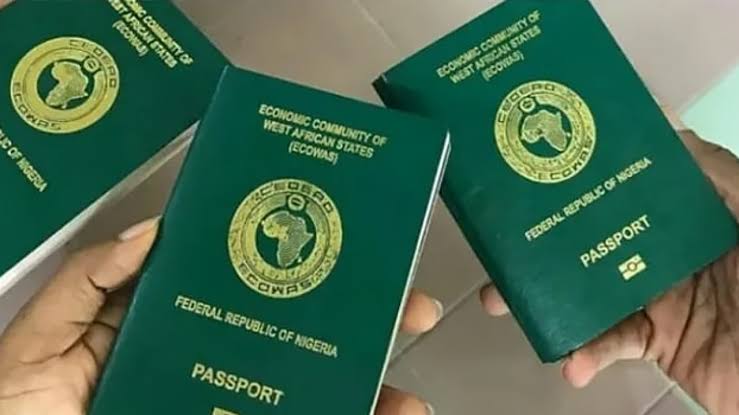
In a stark contradiction to the Nigeria Immigration Service’s (NIS) recent proclamations of a corruption-free, lightning-fast passport system, an anonymous applicant has laid bare a harrowing tale of bureaucratic sabotage and backdoor dealings that have left him stranded for over three months, his travel dreams derailed by an application gathering dust in the system’s shadows.
The applicant, a middle-aged professional from northern Nigeria who spoke exclusively to SecretsReporters on condition of anonymity for fear of victimization from immigration officials, submitted his passport application on August 28, 2025, via the official online portal. He secured an appointment at the NIS Headquarters in Sauka, Abuja, for September 5, where he dutifully presented his vetted forms, payment receipts, and supporting documents. “I followed every step to the letter. No shortcuts, no questions asked. But here I am, in January 2026, still checking the portal daily, only to see ‘processing’ staring back at me like a bad joke,” he recounted in a hushed phone interview, his voice laced with frustration.
What makes his ordeal particularly galling is the fate of a former neighbour who applied on the exact same day. That individual, the applicant revealed, received his passport within weeks, not through diligence, but by slipping an undisclosed sum to a mid-level officer at the Abuja office.
On December 6, last year, Comptroller-General Kemi Nandap declared an end to the “extortion, procedural delays, and physical bottlenecks” that once plagued the process. Speaking at a nationwide anti-corruption sensitization campaign in Abuja, Nandap hailed digital overhauls, including automated applications, biometric verification, and real-time tracking—as ushering in “a new era of transparency,” with command centers nationwide reporting “shorter waiting times, clearer procedures, and improved customer experience.” “By digitising our operations, we have not only enhanced transparency, but also ensured that our services meet the expectations of citizens,” she asserted, crediting the reforms with closing “avenues for extortion” through minimal physical interactions.
Yet, the ground reality tells a different story. The applicant’s saga unfolds against a backdrop of NIS’s much-vaunted September 18 launch of a Centralized Passport Personalisation Centre in Abuja, which officials promised would catapult daily production from a paltry 300 booklets to 5,000, processing times slashed from two weeks to just one. Interior Minister Olubunmi Tunji-Ojo, presiding over the unveiling, described it as a “long-awaited achievement” aligning Nigeria with global powerhouses like the UK, US, and France, complete with cutting-edge automation to “boost efficiency and restore public confidence.” By July 2025, the service had already issued over 3.5 million passports, a milestone celebrated as proof of the system’s renaissance.
But for many, these figures ring hollow. SecretsReporters uncovered a pattern of complaints echoing the applicant’s plight, particularly from Nigerians abroad, where delays in passport renewals have sparked urgent pleas for intervention. On December 2, diaspora groups, including the International Advocacy for Human Rights and Anti-Corruption and Concerned Nigerians in Germany, demanded federal action on “prolonged delays and additional travel burdens,” citing “systemic obstacles” and “inconsistent fees” that hint at exploitation. “Many applicants reported systemic obstacles that make timely processing extremely difficult,” their joint statement warned, calling for full digitalization and embassy-based mobile units to bypass the chaos.
Even as NIS rolls out temporary social media channels for complaints, launched December 9 amid a platform suspension, these stopgaps underscore ongoing glitches. On December 12, the service announced a 54-hour shutdown of its passport portal for “routine maintenance,” potentially stranding thousands more in limbo. Users are now funneled to ad-hoc X handles like @InquireAtNaija for redress, but skeptics question whether this addresses root causes or merely papers over cracks.
The rot runs deeper, rooted in a history of sabotage despite reforms. A 2022 probe by The Cable exposed how the 2019 e-passport portal, meant to curb forgery and middlemen, failed to stem bribe demands, with officials hoarding booklets and inventing fees for non-compliant applicants. “It’s kind of absurd,” one victim told investigators then, after months of back-and-forth for refusing to pay up. Fast-forward to August 2025, when a passport fee hike, from N35,000 to N100,000 for a standard booklet—was defended as a bulwark against corruption, with officials vowing to end the “cash-and-carry” era by stripping officers of discretionary powers. Presidential aide Temitope Ajayi even blamed applicants and rogue officers for necessitating the increase, claiming it would “restore integrity.”
These revelations come as NIS faces mounting scrutiny. In October 2023, the service pledged sanctions for racketeering personnel, yet follow-through has been spotty.
SCANDALS
Fresh Transparency Concerns Rock NUPRC as Stakeholders Demand Forensic Audit of 2025 Oil Licensing Round
Secrets Reporters
Fresh concerns have emerged over the integrity of Nigeria’s 2025 oil and gas licensing exercise, with industry stakeholders demanding a comprehensive forensic audit of the Nigerian Upstream Petroleum Regulatory Commission (NUPRC) amid allegations that aspects of the qualification process may have been manipulated to favour selected companies.
The calls, which have been corroborated by multiple industry sources familiar with the licensing exercise, come as the technical bid evaluation phase of the highly anticipated licensing round continues under the supervision of the NUPRC, led by its Commission Chief Executive, Engr. Gbenga Komolafe.
Sources who spoke to SecretsReporters on condition of anonymity alleged that several participants in the exercise have raised concerns over what they described as inconsistencies in the application of qualification requirements, particularly regarding mandatory technical and data acquisition obligations contained in the published bid guidelines.
According to the sources, there are growing questions over whether certain bidders were granted procedural waivers or exemptions not made available to other participants.
The allegations have triggered increasing calls from petroleum consultants, investors, civil society organisations and industry observers for an independent forensic audit capable of reviewing every stage of the licensing exercise, from prequalification to technical evaluation and eventual award recommendations.
At the centre of the controversy are questions surrounding transparency in the implementation of the Commission’s own published guidelines.
The NUPRC had repeatedly assured both local and international investors that the 2025 Licensing Round would be transparent, competitive and fully compliant with the Petroleum Industry Act (PIA), promising a digital and rules-based process designed to attract billions of dollars in fresh investment into Nigeria’s upstream petroleum sector.
Official documents published by the Commission show that the licensing round follows a two-stage process comprising qualification and commercial bidding before ministerial approval and contract execution. The process officially commenced in November 2025 and is expected to conclude after the commercial bid conference.
The exercise is strategically important to Nigeria’s economy.
The Federal Government expects the licensing round to attract approximately $10 billion in investment, unlock an estimated two billion barrels of additional oil reserves over the next decade and eventually contribute about 400,000 barrels of daily production once successful licensees begin development activities. Fifty oil and gas assets comprising onshore, shallow water, frontier and deepwater blocks were offered to investors under the programme.
Industry analysts warn that those ambitious projections could be undermined if confidence in the licensing process weakens.
Several stakeholders insist that the Commission should publicly disclose whether any exemptions were granted regarding mandatory data purchase requirements, technical qualification thresholds or other eligibility conditions.
Others are demanding publication of evaluation methodologies and the criteria used to assess bidders, arguing that transparency is essential to maintaining investor confidence in Nigeria’s upstream petroleum sector.
“There should be no ambiguity in an exercise of this magnitude,” another source said. “If waivers were granted, the Commission should explain the legal basis. If no waivers were granted, then that should equally be made clear. Silence only fuels speculation.”
The Petroleum Industry Act places significant emphasis on transparency, competition and accountability in the administration of petroleum resources, principles that government officials have consistently highlighted as central to ongoing reforms aimed at restoring investor confidence after years of declining upstream investment.
The latest controversy comes as Nigeria continues efforts to reverse years of declining crude oil production caused by underinvestment, insecurity, ageing infrastructure and capital flight to competing African petroleum jurisdictions. International oil companies have repeatedly cited regulatory certainty and transparent licensing processes as key considerations in investment decisions.
Market observers say the credibility of the 2025 Licensing Round may ultimately depend on how swiftly the NUPRC responds to the growing concerns and whether it is willing to subject the entire exercise to independent scrutiny.
At the time of filing this report, the NUPRC had not issued any public response specifically addressing the allegations of manipulated qualification processes or claims that procedural requirements were selectively applied.
General News
Sabotage, Corruption, Tribalism and Financial Recklessness Rocks Akwa-Ibom NSCDC Boss, Geraldine Abetianbe
Secrets Reporters
The Nigeria Security and Civil Defence Corps, NSCDC, Akwa Ibom State Command is in turmoil following a string of allegations against the State Commandant, Commandant Geraldine Abetianbe, ranging from complicity in economic sabotage to financial impropriety, victimization and collapse of inter-agency relations.
Findings by SecretsReporters based correspondences and testimonies from officers within the command paint a picture of a command lacking credible leadership, with critical operations allegedly stalled and relationships with sister agencies fractured.
The most serious allegation against Commandant Abetianbe borders on obstruction of a military investigation into a tanker conveying about 33,000 litres of illegally bunkered petroleum product. Documents sighted by our reporter show that the military made repeated written requests for the release of the Command’s Head of Anti-Vandal Unit, SP Mike Asibor, to aid investigation. The letters were copied to Army Headquarters, JTF OPDS headquarters, DSS and the Office of the National Security Adviser, ONSA.
Sources allege that the Commandant refused to release the officer.
“The refusal to cooperate has fractured relationships with critical sister security agencies including the Police, DSS and especially the Army,” a source said.
As a fallout, our reporter gathered that the Army has opened a checkpoint close to the NSCDC exhibit yard in the state with the aim of seizing the suspected truck whenever it resurfaces.
According to Section 116 of the Criminal Code Act, it is an offence for any person to willfully obstruct a public officer in the execution of his duty. The act also constitutes perverting the course of justice under Section 126, which attracts up to 7 years imprisonment. Furthermore, Public Service Rules 030401 and 030402 classify willful disobedience of lawful instructions and action prejudicial to the security of the State as serious misconduct punishable by suspension, demotion or dismissal.
The Commandant is further accused of failing to distribute tech operational system packs to officers despite a directive to do so. Instead, management staff were allegedly forced to sign that they had collected the items.
“One wonders the rationale for such act,” a source queried.
The issue that drew the most petitions was a welfare deduction scheme forcefully implemented by the Commandant. According to findings, 12,000 naira was to be deducted annually in three instalments of N4,000 each, amounting to about N12 million per year from the salaries of about 1,000 staff. The Commandant was alleged to have insisted to be among the signatory to the welfare account against professional counsel, financial rules and practices, occasioned by the transient nature of the office she holds. She also relieved executives previously elected by members.
After the first two deductions of N4,000 each, totaling N8,000 were made, serious petitions were raised. The pressure generated forced the Commandant to abolish the scheme and made refunds to affected personnel, some of which were serving outside the state.
The original scheme SecretsReporters understands was voluntary, with interested members contributing N500 monthly and electing Executives to run the scheme.
Officers also accused the Commandant of “constant victimization of indigenes” while allegedly filling relevant positions with her kinsmen. This, sources say, has further damaged morale and unity within the command.
The cumulative effect of the allegations, sources in government said, has led to the Commandant being banned from attending any government function or program; due to perceived corruption and complicity in economic sabotage, as the Governor frowns at such irresponsible acts
This resulted in a public embarrassment on Friday, 10th July, 2026, when the Commandant was allegedly blocked at the airport from joining other dignitaries to receive the Governor.
With inter-agency relations in Akwa Ibom described as “badly fractured,” officers and stakeholders are calling on NSCDC National Headquarters to immediately investigate the allegations, compel the the Commandment to cooperate with lawful investigation, take appropriate disciplinary action, and redeploy Comdt Abetianbe before the situation collapses beyond repair.
As at press time, efforts to get the reaction of Comdt Geraldine Abetianbe was unsuccessful.
SCANDALS
The Tax That Vanished: ₦262.1m Payment Into Personal Account, ₦192.4m Withholding Tax Shortfall Rocks NNPC Bala Wunti-Led NAPIMS
Secrets Reporters
Federal auditors are currently in awe at how tax deductions and payment procedures at the National Petroleum Investment Management Services (NAPIMS) during the tenure of its former Chief Operating Officer, Bala Wunti went down the drain
Paper trails by them indicate a withholding tax shortfall of ₦192,418,921.11 arising from consultancy-related payments and also question a ₦262,102,785.00 consultancy payment reportedly made into a personal bank account rather than a corporate account.
According to the audit records reviewed by SecretsReporters, consultancy payments made to several companies and service providers attracted a 5 per cent withholding tax deduction, whereas the auditors assessed that a 10 per cent deduction should have applied under the relevant tax provisions.
The documents identify consultancy engagements involving companies including Schlumberger Tech Nigeria, Broader Petroleum Ltd, Shefa Engineering Ltd, Aquarian Oil & Gas Ltd, Diddan and Associates, Amach Security Services Ltd, and the NNPC Leadership Academy.
For each transaction reviewed, the auditors compared the amount of withholding tax deducted with what they considered the appropriate statutory deduction. Based on that review, the documents put the cumulative withholding tax shortfall at ₦192,418,921.11.
The documents reference Sections 81, 82 and 84 of the Companies Income Tax Act, which provide for the deduction and remittance of withholding tax on qualifying payments made to companies.
Section 81 authorises the deduction of tax at source from specified payments, while Sections 82 and 84 require the remittance of deducted taxes within the prescribed period and outline the consequences of failure to deduct or remit such taxes in accordance with the law. It also referred to the the Federal Inland Revenue Service (Establishment) Act, which empowers the relevant authorities to recover unremitted taxes from government agencies and prescribes penalties for failure to deduct or remit taxes as required by law.
Against that legal framework, the audit documents question why a 5 per cent withholding tax deduction was applied to the consultancy payments reviewed instead of the 10 per cent rate assessed by the auditors, resulting in an estimated revenue shortfall of ₦192.4 million.
One of the red flags raised was a separate consultancy payment valued at ₦262,102,785.00, which they stated was paid into an account bearing the name Olaniwun Ajayi on December 7, 2022, at approximately 9:09 a.m. According to the audit records, the payment was made into what was described as a personal account.
Financial Regulation 713, provides that public funds should not be paid into private accounts and prescribes sanctions where public money is improperly handled.
Payment vouchers, Remita records and related financial documents were reviewed before the transaction was flagged. The auditors further stated that withholding tax and stamp duty were not deducted from the payment, resulting in an estimated revenue loss of ₦45,106,060.67.
The documents therefore raise two principal questions: first, why a consultancy payment of ₦262.1 million was reportedly made into a personal account; and second, why the applicable withholding tax and stamp duty deductions were not made before the payment was processed.
-
STRAY BULLET10 years agoYOU ARE A THIEF SO YOU CAN’T PROBE A THIEF: ANOTHER UK NEWSPAPER WRITES BUHARI
-
General News10 years agoPREACH AND DIE: FOR DARING EARLY MORNING PREACHING IN ABUJA, MUSLIMS HACK TWO PASTORS TO DEATH
-
General News9 years agoBREAKING: TYRANNICAL NIGERIA PRESIDENT, MUHAMMADU BUHARI DIES IN LONDON HOSPITAL, BUT PRESIDENCY KEEPS SEALED LIPS
-
SPECIAL REPORT10 years agoMISS ANAMBRA CUCUMBER SAGA: HOW ANAMBRA BROADCASTING SERVICE DIRECTOR, UCHE NWORAH LEAKED SEX VIDEO TO THE PUBLIC FOR HER REFUSAL TO CONTINUE SEXUAL AFFAIR WITH HIM (PART ONE)
-
SPECIAL REPORT10 years agoEXCLUSIVE: HOW STEPHEN KESHI AND WIFE WERE KILLED BY HIS OWN BROTHER
-
SPECIAL REPORT9 years agoPOWER GAME ALMOST OVER: OSINBAJO UNDER PRESSURE TO HAND OVER TO SARAKI AS VP IN ANTICIPATION OF THE UNKNOWN
-
STRAY BULLET10 years agoDESPITE HUNGER IN NIGERIA, BUHARI ALLEGEDLY DONATES 500 MILLION DOLLARS TO HILARY CLINTON’S FAILED PRESIDENTIAL ELECTIONS AS NIGERIANS PRESSURE HIM TO CONGRATULATE TRUMP
-
SPECIAL REPORT10 years agoEAR INFECTION SCAM: BUHARI JETS TO LONDON TO SECRETLY NEGOTIATE WITH NIGER DELTA AVENGERS