EDITORIAL
The Cry from the Ashes of Gwoza
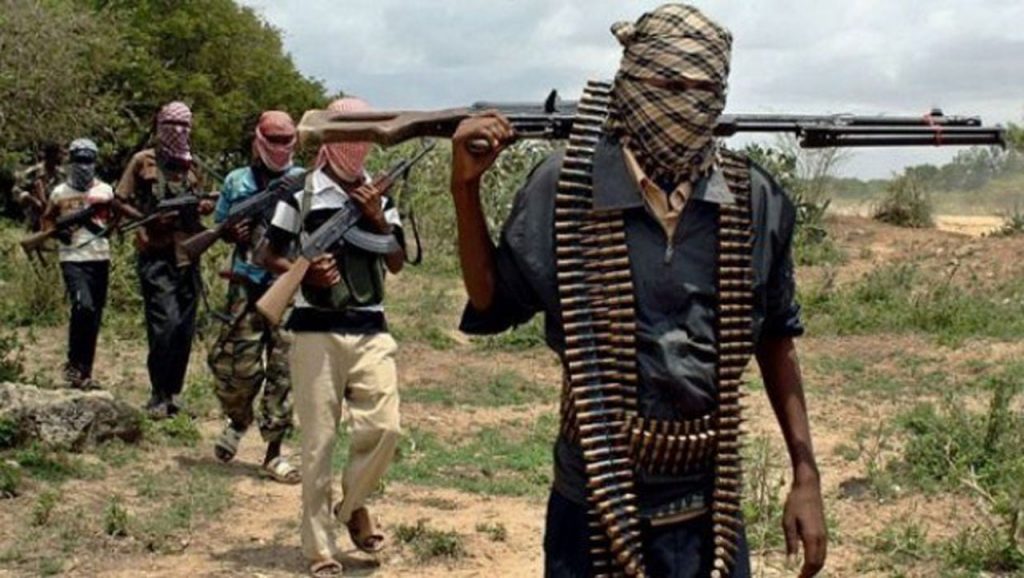
When the Gwoza Christian Community Association (GCCA) released its recent statement titled “The Unspoken Genocide: GCCA Account on Christian Persecution in Gwoza, Borno State,” it did not speak like politicians chasing sympathy or activists looking for headlines. It spoke like a wounded soul, one that has been battered by the twin forces of silence and suffering. The words were not the scribbles of emotion; they were the cries of a people who have watched their homes burn, their churches crumble, and their existence questioned in the land of their birth.
Gwoza, once a lively hub of Christian life, now lies in ruins — a ghost of its former self. The GCCA’s figures are not just statistics; they are tombstones written in ink. Before insurgency tore through the area, there were over 176 church buildings standing as monuments of faith and fellowship. Today, 148 of those churches have been reduced to rubble, while countless Christian homes have been flattened like dry leaves under the boots of terror. Every statistic represents a story, every ruin whispers the memory of songs that once filled the air.
The account paints a grim picture of human suffering. In Gava West alone, 74 towns and villages were sacked, 36,946 families displaced, 99 churches destroyed, and 292 people killed. In Attagara, 13 churches were leveled, 1,738 families displaced, and 140 Christians killed in just three months of 2014. By August of that same year, another 2,203 Christian houses and 28 churches were razed to the ground. These are not mere coincidences; they are the deliberate erosion of a community’s identity.
The GCCA lamented that while Muslim homes have been rebuilt and mosques restored, Christian houses remain shadows of what once was. They reported that during the rehabilitation of the Gwoza General Hospital, the damaged mosque was rebuilt, yet no church was restored. If this is not a picture of inequality, what then is? It raises a sobering question about leadership, justice, and the sincerity of those in authority. Is the government rebuilding communities or rewriting history?
The reconstruction imbalance is not only physical but psychological. When a people are denied their sacred spaces, their souls become refugees even in their homeland. The GCCA’s testimony that Christians are yet to see any real resettlement, while their Muslim neighbors enjoy restoration, cuts deep into the conscience of a nation that calls itself secular. It reveals a pattern that reeks of neglect, and neglect, in any form, is the quietest weapon of oppression.
Institutional silence, as the GCCA rightly observed, has been both deafening and damaging. The Christian Association of Nigeria (CAN) cannot afford to be a sleeping watchman while its flock bleeds. When faith-based leaders look away or mumble excuses, they do not just fail their people; they fail humanity. A nation’s conscience dies when its moral custodians choose convenience over conviction.
It is even more disheartening that some public figures, instead of standing with the persecuted, have trivialized their agony. Statements made on television suggesting that there is no persecution of Christians in Borno are not only insensitive but also cruel. They mock the graves of those who died with hymns on their lips. Silence may be golden, but in moments of injustice, it becomes the gold of betrayal.
The GCCA’s call for truth, accountability, and action is not a demand for pity; it is a plea for justice. Every democracy that values life must recognize that no group should be sacrificed on the altar of political expediency. When Christians in Gwoza cry for recognition, they are not asking for special treatment; they are asking to be seen as citizens worthy of protection.
The government cannot continue to hide behind the smokescreen of statistics and media denials. The Nigerian Constitution promises freedom of religion and equal protection of all citizens. These promises are not decorative phrases meant for textbooks; they are covenants that must be upheld. To deny them is to betray the very essence of governance.
What makes this tragedy even more unbearable is the erosion of empathy. The GCCA’s statement reminds us that over 107,000 Gwoza Christians remain displaced, scattered across 27 camps in Nigeria and the Minawao refugee camp in Cameroon. These are not faceless numbers; they are fathers who can no longer provide, mothers who have lost hope, and children who now draw pictures of destruction instead of dreams.
The moral burden extends beyond the Nigerian government. The international community, particularly Western nations and global human rights organizations, must wake from their slumber. The GCCA’s appeal to them is a call to conscience. It is a reminder that while the world debates geopolitics, innocent people in Gwoza are paying with their lives. Humanitarian aid and independent investigations are not favors; they are obligations under the banner of humanity.
To those who think this is a religious issue, let it be clear — this is a human issue. When any group is hunted for their faith, the entire human race bleeds. The destruction of Christian heritage in Gwoza is not just the loss of buildings; it is the slow murder of memory, culture, and hope. It is an erasure that history will judge harshly if left unaddressed.
Secrets Reporters aligns with the GCCA’s call for truth and accountability. The government must open its eyes to the ruins and its ears to the cries. Let there be an independent inquiry into the reconstruction efforts and into the alleged selective rebuilding of communities. Let those responsible for targeted violence be brought to book, regardless of creed or connection. Justice, after all, should wear no religious robe.
We must also call on religious leaders — both Christian and Muslim — to speak with one voice against injustice. Faith loses its meaning when it watches evil unfold in silence. Nigeria cannot heal if her leaders remain divided along lines of faith while their followers perish in avoidable conflicts. True peace comes not from denial but from deliberate action.
In the end, the story of Gwoza is a test of Nigeria’s moral fiber. Will the country choose truth over politics, justice over silence, and compassion over convenience? The world is watching. The ashes of Gwoza still whisper, and the spirits of the fallen still ask one question: how long will the living pretend not to hear?
EDITORIAL
Editorial: Democracy Dies in Secret Detention; Why Nigeria Must End the Culture of Unannounced Arrests
A democracy governed by the rule of law cannot permit citizens to vanish without explanation. Yet, in Nigeria, a disturbing pattern has become increasingly difficult to ignore. Armed operatives often arriving in unmarked Hilux vans or heavily tinted SUVs pick up citizens, journalists and critics without immediately identifying themselves, without promptly informing families of their whereabouts, and in some cases without allowing access to lawyers for days.
For relatives left behind, the experience is indistinguishable from kidnapping. In a country already battling terrorism, banditry and mass abductions, this practice is not merely unconstitutional it is dangerous.
It blurs the line between legitimate law enforcement and criminality.
When citizens can no longer tell whether armed men are security operatives or kidnappers, public trust collapses.
No democratic government should normalize such uncertainty.
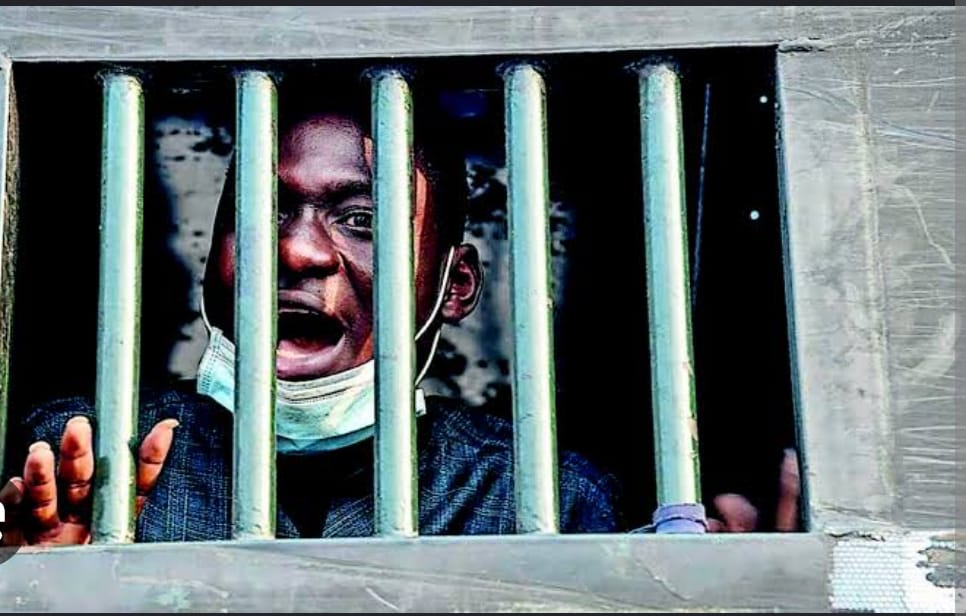
The detention of investigative journalist Stanley Ugagbe of SecretsReporters, a platform we are proud to publish, has renewed these concerns.
Ugagbe was kidnapped not arrested in Abuja after publishing an investigative report concerning Deputy Governor of the Central Bank of Nigeria, Emem Usoro taken by operatives of the Nigeria Police National Cybercrime Centre while returning home on Wednesday, July 1, and that neither SecretsReporters, his family, colleagues nor legal representatives were able to communicate with him until Saturday, July 4. It is still unclear if it’s the office of the National Security Adviser (NSA) that instigated the arrest, going by the various allegations of espionage against our platform.
Regardless of the allegations under investigation, every Nigerian deserves the protection of the law. That protection begins with the Constitution.
Section 35 of the Constitution guarantees every person’s right to personal liberty. It requires that anyone arrested be informed promptly of the reasons for the arrest and be brought before a court within the constitutionally prescribed period.
Section 36 guarantees the right to fair hearing and access to legal representation. Section 39 guarantees freedom of expression, including the freedom to hold opinions and to receive and impart information without interference.
These provisions were not inserted into the Constitution for convenience. They exist precisely to prevent arbitrary arrests, abuse of power and intimidation.
The press occupies a unique position in every democracy. Journalists investigate corruption, expose abuse of office, scrutinize public spending and ask uncomfortable questions on behalf of citizens. If investigative journalists begin to fear that publishing legitimate stories could result in being secretly detained for days without access to family or legal counsel, journalism itself becomes criminalized through intimidation rather than legislation. A frightened press cannot hold power accountable.
And a nation without an independent press cannot honestly call itself a thriving democracy. The implications extend far beyond journalism.
Nigeria is already struggling with one of the highest levels of kidnapping and violent crime in its history.
Government agencies repeatedly advise citizens to remain vigilant against suspicious vehicles and unidentified armed men. Yet when legitimate security agencies conduct arrests in ways that resemble abductions—using unidentified operatives, unmarked vehicles, or failing to promptly acknowledge custody—they inadvertently legitimize the methods of criminals.
Every such operation makes it easier for kidnappers to impersonate law enforcement officers.
Every secret detention deepens public confusion. Every unexplained disappearance weakens confidence in genuine security institutions. This is not simply a human rights issue. It is a national security issue.
Effective law enforcement does not require secrecy from the public after an arrest has been made. Professional policing demands transparency, accountability and adherence to due process.Security agencies have every legal right to investigate crime. No journalist, politician, civil servant or ordinary citizen should enjoy immunity from lawful investigation. But investigations must never become instruments of intimidation. Power exercised without transparency inevitably invites abuse.
Nigeria’s democratic progress will not be measured by the number of arrests its security agencies make. It will be measured by whether those arrests respect the Constitution.
A nation governed by law does not make people disappear.
It informs families. It grants access to lawyers. It identifies the arresting agency. It respects court processes.
It protects fundamental rights while pursuing justice.
The Federal Government must ensure that all security agencies adopt clear operational procedures requiring officers to identify themselves, promptly disclose the location of detained persons, allow timely legal access and strictly comply with constitutional safeguards.
Likewise, the National Assembly should strengthen oversight of detention practices, while the judiciary, the Nigerian Bar Association, the National Human Rights Commission, media organisations and civil society must continue defending the constitutional freedoms that underpin our democracy.
History teaches that societies rarely lose their freedoms overnight. They lose them gradually one unlawful detention, one secret arrest, one intimidated journalist and one silent citizen at a time. Nigeria must not travel that pathThe Constitution is supreme, no agency is above it and no office is greater than it.
No democracy survives when citizens begin to fear those entrusted to protect them. The rule of law must prevail not the rule of fear and this the Bola Tinubu government who used the NADECO route must protect.
EDITORIAL
When a Government Runs Out of Ideas: Remi Tinubu’s Akara Economy Is an Insult to Nigerians
Secrets Reporters
A nation’s greatness is measured not by how well its people survive, but by how boldly its leaders inspire them to thrive.
That is why the recent remarks by Nigeria’s First Lady, Senator Oluremi Tinubu, urging Nigerians to embrace frying akara, selling kulikuli, roasting corn and other forms of petty roadside trading as means of livelihood have generated widespread disappointment across the country. While these are honourable occupations that have sustained countless families for generations, presenting them as symbols of economic empowerment from the highest levels of government exposes a disturbing poverty of vision.
The issue is not akara.
The issue is not kulikuli.
The issue is not roasted corn.
The issue is that a government elected to build Africa’s largest economy appears increasingly comfortable reducing the dreams of over 230 million Nigerians to roadside survival.
For millions of young Nigerians who spent years in universities, polytechnics and colleges, acquired professional certifications, learnt software development, artificial intelligence, cybersecurity, digital marketing, robotics and engineering, such advice sounds less like empowerment and more like an admission that government has exhausted its ideas for economic transformation. Even more troubling is that this is not an isolated occurrence.
President Bola Ahmed Tinubu once suggested that unemployed Nigerian youths could be recruited into the Nigerian Armed Forces where, at the very least, they would be fed with ewa (beans) and agbado (corn). While military service is a noble profession deserving of respect, presenting food as a principal attraction for enlistment reflected a worrying shift in national discourse. Rather than unveiling an ambitious blueprint capable of creating millions of productive jobs, leadership appeared content with assuring young people that they would at least have something to eat.
That is not the language of a nation preparing for the future. It is the language of a nation lowering its expectations. The statistics tell an uncomfortable story. Nigeria’s population is now estimated at over 230 million, with a median age of about 18 years, making it one of the youngest countries in the world. Every year, hundreds of thousands of graduates enter the labour market with hopes of building meaningful careers. Yet unemployment and underemployment continue to affect millions of young Nigerians, while countless others are forced into informal businesses not because they lack ambition, but because the economy has failed to provide better opportunities.
Ironically, Nigeria is already blessed with one of Africa’s most vibrant technology ecosystems. Nigerian software developers build applications used across continents. Nigerian fintech companies process billions of naira daily. Nigerian AI engineers work for global technology firms. Nigerian innovators are creating solutions in agriculture, healthcare, finance, education and logistics.
The talent already exists.
What is missing is leadership that understands where the world is heading.
This is the era of Artificial Intelligence.
The era of robotics.
The era of quantum computing.
The era of biotechnology.
The era of renewable energy.
The era of semiconductor manufacturing.
The era of autonomous systems.
These are the industries shaping the global economy.
Yet while countries around the world compete to dominate these sectors, Nigeria’s national conversation is being reduced to frying akara and roasting corn. History shows that no nation has ever become prosperous by institutionalising survival. South Korea emerged from the ruins of war to become one of the world’s leading technology powers through deliberate investment in education, research, innovation and manufacturing.
Singapore transformed itself from a resource-poor island into one of the world’s richest economies by investing in human capital, technology and world-class infrastructure.
Estonia built one of the world’s most advanced digital governments, creating a thriving technology ecosystem despite having a population smaller than many Nigerian cities.
India invested heavily in software, information technology, digital infrastructure and innovation, becoming a global hub for technology services while creating millions of high-skilled jobs. China committed itself to artificial intelligence, robotics, electric vehicles, semiconductor production and industrial innovation, lifting hundreds of millions of people out of poverty and becoming one of the world’s foremost economic powers. None of these countries asked their graduates to embrace roadside trading as the pinnacle of economic aspiration. They built ecosystems where innovation created industries.
Industries created jobs.
Jobs created wealth.
Wealth transformed nations.
There is absolutely nothing wrong with selling akara, roasting corn or producing kulikuli. Honest labour deserves dignity and respect.
What deserves criticism is when those entrusted with governing a nation begin presenting these occupations as substitutes for comprehensive economic planning.
Government exists not merely to help citizens survive.
Government exists to create conditions where citizens can succeed.
Nigerians are not asking for handouts.
They are asking for uninterrupted electricity, quality education, affordable financing, modern infrastructure, industrial policies, research funding, technology parks, startup incentives, manufacturing hubs, digital skills, stable economic policies, an environment where businesses can grow, industries can flourish and innovation can compete globally.
The most painful aspect of this entire episode is not the grants themselves but what they represent. It suggests a government increasingly comfortable celebrating charity instead of prosperity. A government more focused on distributing temporary relief than creating permanent opportunities. A government that appears to mistake survival for development.
Citizens are not beggars.
They are taxpayers.
They are entrepreneurs.
They are innovators.
They are professionals.
They are creators.
They deserve policies that expand opportunity rather than rhetoric that shrinks ambition.
Leadership matters because words matter. When leaders consistently lower the ceiling of national aspiration, they risk normalising mediocrity.
When the First Lady tells struggling Nigerians to fry akara and roast corn while the rest of the world invests billions in artificial intelligence, robotics and advanced manufacturing, the message many hear is painfully simple: lower your dreams. Nigeria cannot build a globally competitive economy on roadside smoke and frying pans.
Our future will be built in classrooms, laboratories, research institutes, innovation hubs, factories, technology parks and globally competitive enterprises.
History will not remember this administration for the number of speeches delivered or ceremonial grants distributed. It will remember whether Nigerians became more prosperous, whether industries expanded, whether factories reopened, whether young people found meaningful work, whether innovation flourished, whether government built an economy capable of competing with the world’s best.
Great nations challenge their citizens to invent the future. They do not reduce them to managing poverty.
There is dignity in frying akara.
There is dignity in roasting corn.
There is dignity in selling kulikuli.
But there is tragedy when the highest office in the land presents those occupations as the horizon of a nation’s economic ambition.
Nigeria deserves leadership that speaks the language of innovation, industrialisation and shared prosperity, not one that risks normalising poverty as public policy.
And if this is the best policy Remi Tinubu can propound in an age of Ai driven technology, she can as well pack her bags back to Lagos or Delta State to open a state of the art Akara, corn and kulikuli business mall.
EDITORIAL
When Mercy Walks a Tightrope — Nigeria’s Presidential Pardon and the Burden of Justice
Secrets Reporters
In the corridors of power, mercy has once again worn a political robe. President Bola Tinubu’s recent presidential pardon, extending clemency to 175 convicts, was packaged as a noble gesture — a move toward justice, rehabilitation, and historical correction. But when one scratches beneath the glossy rhetoric, uncomfortable questions spring to life. Whose justice is being served, and at what cost to the soul of the nation?
According to the figures released, a staggering 29 per cent of those pardoned were convicted of drug-related crimes, while another 24 per cent were involved in illegal mining. In simple terms, more than half of the president’s mercy list is made up of individuals who fed fat on the nation’s social and economic weaknesses. Nigeria, already bleeding from the wounds of narcotics and environmental degradation, now watches as its offenders are ushered out of correctional facilities under the banner of reform.
The irony is too sharp to ignore. Illegal mining has turned once fertile lands into wastelands and swollen the coffers of criminal cartels. The same government that laments the depletion of mineral resources and loss of revenue has turned around to offer open arms to those who fueled that chaos. It is like pouring water into a leaking pot — a cycle of indulgence that mocks the very essence of justice.
Drug-related crimes, which have ruined countless lives and stained the nation’s moral fabric, dominate the pardon chart. By extending clemency to drug convicts, the government risks sending a dangerous message: that the wages of crime can be repentance dressed in political convenience. This is not reform; it is rehabilitation without responsibility.
Equally troubling is the inclusion of those convicted of corruption and financial crimes. Nigeria’s struggle against graft has long been a game of snakes and ladders — every step forward is followed by a slide backward. The decision to pardon individuals like former lawmaker Farouk Lawan, convicted for corrupt practices, undermines whatever is left of public faith in anti-corruption crusades. When corruption becomes a ticket to presidential mercy, moral order is turned upside down.
The Presidential Advisory Committee on the Prerogative of Mercy may have meant well, but its recommendations expose a deeper problem — selective compassion. Why does mercy seem to find its way so easily to the well-connected, the privileged, and the infamous? Meanwhile, the poor languish in cells for petty theft, unable to buy the language of mercy. Justice, it appears, wears a blindfold only when it suits the powerful.
Even more startling is the inclusion of individuals convicted of homicide and human trafficking. These are not victimless crimes. Families have been torn apart, lives lost, and futures destroyed. To fold such grievous offences into a blanket pardon in the name of “rehabilitation” is to trample on the graves of victims. True justice demands balance — compassion for the penitent, but protection for the innocent. Anything less is a betrayal.
Yes, the pardon of historical figures like Major General Mamman Vatsa, Ken Saro-Wiwa, and Herbert Macaulay touches a just chord. These are cases that history itself demanded be revisited. But mixing posthumous justice with contemporary political generosity taints the moral weight of those symbolic gestures. It turns solemn correction into political theatre.
The government insists that most beneficiaries have shown remorse and undergone reformation through education and vocational training. Yet, Nigerians cannot forget that our prisons are ill-equipped to produce saints. Without a transparent evaluation process, these claims sound more like official poetry than practical truth. Rehabilitation should be verified, not assumed.
The Presidential pardon, coming amid rising insecurity, economic hardship, and political maneuvering, also raises questions about timing. It arrives at a moment when the government is seeking to soften public sentiment ahead of 2027. To many, this wave of mercy feels less like justice and more like strategy — a balm applied not to heal the nation, but to polish an image.
In principle, mercy is a virtue. It is the divine spark that distinguishes justice from vengeance. But mercy without prudence becomes poison. When wielded carelessly, it emboldens wrongdoers and erodes deterrence. The state must remember that the law is not a swinging door that opens at the whim of politics.
If this administration truly seeks to reform the justice system, let it start by ensuring that punishment and mercy serve a higher moral purpose — not political optics. Let there be transparency in the process, clear criteria for selection, and a framework that balances compassion with accountability. Mercy should not be a lottery of influence, but a measure of true repentance.
Nigeria cannot afford to keep washing its dirty linen in the river of pardon. The time has come to strengthen the rule of law, not soften it for convenience. A nation that repeatedly pardons its own corruption risks losing the moral right to demand discipline from its citizens. In the end, justice delayed may be pardon misplaced — and mercy, when misapplied, becomes the enemy of the very justice it claims to serve.
-
STRAY BULLET10 years agoYOU ARE A THIEF SO YOU CAN’T PROBE A THIEF: ANOTHER UK NEWSPAPER WRITES BUHARI
-
General News10 years agoPREACH AND DIE: FOR DARING EARLY MORNING PREACHING IN ABUJA, MUSLIMS HACK TWO PASTORS TO DEATH
-
General News9 years agoBREAKING: TYRANNICAL NIGERIA PRESIDENT, MUHAMMADU BUHARI DIES IN LONDON HOSPITAL, BUT PRESIDENCY KEEPS SEALED LIPS
-
SPECIAL REPORT10 years agoMISS ANAMBRA CUCUMBER SAGA: HOW ANAMBRA BROADCASTING SERVICE DIRECTOR, UCHE NWORAH LEAKED SEX VIDEO TO THE PUBLIC FOR HER REFUSAL TO CONTINUE SEXUAL AFFAIR WITH HIM (PART ONE)
-
SPECIAL REPORT10 years agoEXCLUSIVE: HOW STEPHEN KESHI AND WIFE WERE KILLED BY HIS OWN BROTHER
-
SPECIAL REPORT9 years agoPOWER GAME ALMOST OVER: OSINBAJO UNDER PRESSURE TO HAND OVER TO SARAKI AS VP IN ANTICIPATION OF THE UNKNOWN
-
STRAY BULLET10 years agoDESPITE HUNGER IN NIGERIA, BUHARI ALLEGEDLY DONATES 500 MILLION DOLLARS TO HILARY CLINTON’S FAILED PRESIDENTIAL ELECTIONS AS NIGERIANS PRESSURE HIM TO CONGRATULATE TRUMP
-
SPECIAL REPORT10 years agoEAR INFECTION SCAM: BUHARI JETS TO LONDON TO SECRETLY NEGOTIATE WITH NIGER DELTA AVENGERS