Connect with us

EDITORIAL

Governor Bago’s Misguided Attempt to Gag the Pulpit

Published

on

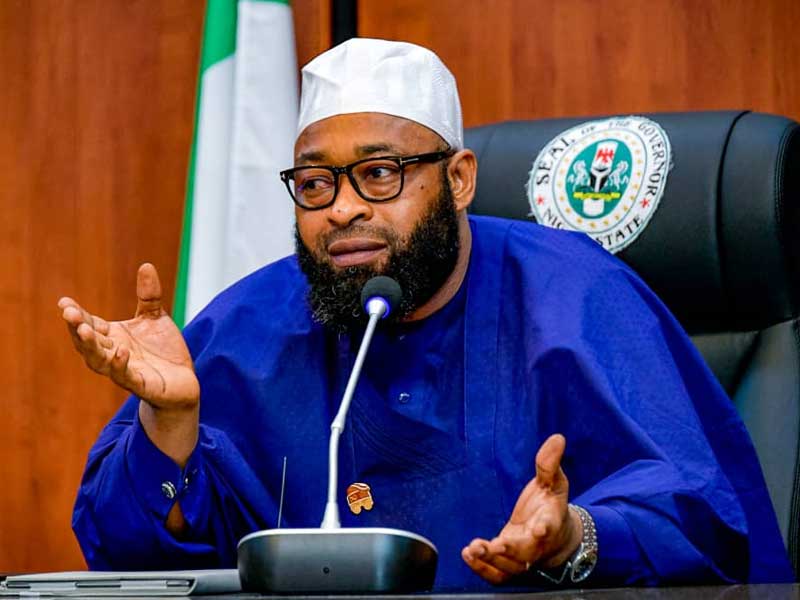
In the face of mounting insecurity, economic despair, and governance failures bedeviling Niger State, Governor Umar Bago has found a curious target: religious preachers. Rather than roll up his sleeves to address the real demons tormenting his people—poverty, banditry, hunger, and joblessness, he has chosen to clip the wings of clerics by demanding that their sermons be submitted for approval before they are delivered. If ever there was a case of misplaced priorities, this is it.

The governor argues that the policy is meant to curb hate speech and prevent inciteful preaching. On the surface, this might sound noble. But peel back the layers, and one finds an overreach that reeks of authoritarian tendencies. A government that cannot guarantee clean water for its citizens suddenly wants to guarantee what comes out of the mouths of pastors and imams. That is like a carpenter abandoning his tools to play the flute while his workshop burns.

What is more troubling is the comparison Governor Bago made with Saudi Arabia. Nigeria is not Saudi Arabia, and Niger State is not Riyadh. We are a secular democracy with constitutional provisions for freedom of worship and expression. Importing the Saudi model into a multi-religious, pluralistic state is like forcing a square peg into a round hole—it simply cannot fit without breaking something.

Instead of being the watchdog of development, the governor is threatening to turn himself into a gatekeeper of morality, armed with the scissors of censorship. Clerics, in his eyes, must stand in line like schoolchildren waiting to have their homework marked. The pulpit, historically a refuge for truth-telling and moral correction, is now at risk of being reduced to a loudspeaker for government propaganda.

Let us not forget the irony here: Niger State is groaning under the weight of banditry. Villages are raided, farmers are kidnapped, children cannot attend schools safely, and yet the government’s grand solution is to police sermons. It is like trying to mop the floor while the roof is leaking—an exercise in futility.

By demanding that sermons be vetted and preachers licensed, the government is inching dangerously close to setting up an Orwellian regime where thought itself becomes a crime. Today it is the pastor’s sermon, tomorrow it might be the journalist’s article, and before long, even the citizen’s social media post. Freedom once surrendered is rarely recovered, and Nigerians know too well the cost of silence under heavy boots.

The argument that “security agencies will work with the state to enforce the policy” is equally worrying. The SSS, police, NSCDC, and even the military are now being drafted to scrutinize scripture? This is the height of misdirected energy. These same agencies that struggle to chase kidnappers from our highways are now to become sermon inspectors. It is the classic case of a hunter chasing butterflies while lions roam freely in the village.

Religious leaders are not above the law, true. But gagging them under the guise of licensing and approval processes is a dangerous slippery slope. The Constitution already provides remedies for those who incite violence or promote hate. Why reinvent the wheel by placing chains on clerics who dare to speak truth to power? If a preacher calls out government failure, is that “inciteful”? If an imam decries hunger, will he be flagged for “hate speech”?

It is no secret that religion is a powerful tool in Nigerian society. But that power does not belong to government; it belongs to the people’s faith. The governor’s attempt to seize control of the pulpit is not about protecting citizens—it is about protecting his government from criticism. When leaders grow uncomfortable with dissent, they reach for the muzzle, not the mirror.

History has shown that when the state meddles in religion, it only brews resentment and underground radicalism. Silencing voices in the mosque or church will not stop dangerous rhetoric; it will only drive it underground, where it festers unchecked. You cannot cure a cough by covering the patient’s mouth—you must treat the infection within.

Governor Bago must be reminded that leadership is not about controlling speech but about creating an environment where speech heals rather than harms. If he fixes schools, empowers youths, secures communities, and provides jobs, no preacher would need to rail against government failure. Silence bought through censorship is temporary; silence earned through good governance is lasting.

It is high time our leaders stopped looking for shortcuts to legitimacy. Sermon approval committees, licensing panels, and censorship boards cannot replace the hard work of governance. Niger State people deserve roads, schools, hospitals, and security—not spiritual editors. When governance fails, censorship becomes the opium of insecure rulers.

In the end, the pulpit is sacred, not for government control but for divine accountability. The voices of clerics are meant to prick the conscience of rulers, not to soothe their egos. To gag them is to dim the light that exposes corruption, injustice, and neglect. Governor Bago may think he is protecting Niger State, but in truth, he is dimming the only lamps that can guide it out of the darkness.

Niger State deserves a governor who tackles bandits, not bishops; who licenses industries, not imams; who edits budgets for prudence, not sermons. Anything less is a betrayal of the oath of office and a dangerous flirtation with tyranny. We demand that the governor immediately reverse this nauseating, embarrassingly shocking policy, before freedom is sacrificed on the altar of political insecurity.

Continue Reading
Click to comment

Leave a Reply

Your email address will not be published. Required fields are marked *

EDITORIAL

Editorial: Democracy Dies in Secret Detention; Why Nigeria Must End the Culture of Unannounced Arrests

Published

on

A democracy governed by the rule of law cannot permit citizens to vanish without explanation. Yet, in Nigeria, a disturbing pattern has become increasingly difficult to ignore. Armed operatives often arriving in unmarked Hilux vans or heavily tinted SUVs pick up citizens, journalists and critics without immediately identifying themselves, without promptly informing families of their whereabouts, and in some cases without allowing access to lawyers for days.

For relatives left behind, the experience is indistinguishable from kidnapping. In a country already battling terrorism, banditry and mass abductions, this practice is not merely unconstitutional it is dangerous.

It blurs the line between legitimate law enforcement and criminality.
When citizens can no longer tell whether armed men are security operatives or kidnappers, public trust collapses.

No democratic government should normalize such uncertainty.

The detention of investigative journalist Stanley Ugagbe of SecretsReporters, a platform we are proud to publish, has renewed these concerns.

Ugagbe was kidnapped not arrested in Abuja after publishing an investigative report concerning Deputy Governor of the Central Bank of Nigeria, Emem Usoro taken by operatives of the Nigeria Police National Cybercrime Centre while returning home on Wednesday, July 1, and that neither SecretsReporters, his family, colleagues nor legal representatives were able to communicate with him until Saturday, July 4. It is still unclear if it’s the office of the National Security Adviser (NSA) that instigated the arrest, going by the various allegations of espionage against our platform.

Regardless of the allegations under investigation, every Nigerian deserves the protection of the law. That protection begins with the Constitution.

Section 35 of the Constitution guarantees every person’s right to personal liberty. It requires that anyone arrested be informed promptly of the reasons for the arrest and be brought before a court within the constitutionally prescribed period.

Section 36 guarantees the right to fair hearing and access to legal representation. Section 39 guarantees freedom of expression, including the freedom to hold opinions and to receive and impart information without interference.

These provisions were not inserted into the Constitution for convenience. They exist precisely to prevent arbitrary arrests, abuse of power and intimidation.

The press occupies a unique position in every democracy. Journalists investigate corruption, expose abuse of office, scrutinize public spending and ask uncomfortable questions on behalf of citizens. If investigative journalists begin to fear that publishing legitimate stories could result in being secretly detained for days without access to family or legal counsel, journalism itself becomes criminalized through intimidation rather than legislation. A frightened press cannot hold power accountable.
And a nation without an independent press cannot honestly call itself a thriving democracy. The implications extend far beyond journalism.

Nigeria is already struggling with one of the highest levels of kidnapping and violent crime in its history.

Government agencies repeatedly advise citizens to remain vigilant against suspicious vehicles and unidentified armed men. Yet when legitimate security agencies conduct arrests in ways that resemble abductions—using unidentified operatives, unmarked vehicles, or failing to promptly acknowledge custody—they inadvertently legitimize the methods of criminals.
Every such operation makes it easier for kidnappers to impersonate law enforcement officers.

Every secret detention deepens public confusion. Every unexplained disappearance weakens confidence in genuine security institutions. This is not simply a human rights issue. It is a national security issue.

Effective law enforcement does not require secrecy from the public after an arrest has been made. Professional policing demands transparency, accountability and adherence to due process.Security agencies have every legal right to investigate crime. No journalist, politician, civil servant or ordinary citizen should enjoy immunity from lawful investigation. But investigations must never become instruments of intimidation. Power exercised without transparency inevitably invites abuse.

Nigeria’s democratic progress will not be measured by the number of arrests its security agencies make. It will be measured by whether those arrests respect the Constitution.

A nation governed by law does not make people disappear.

It informs families. It grants access to lawyers. It identifies the arresting agency. It respects court processes.
It protects fundamental rights while pursuing justice.

The Federal Government must ensure that all security agencies adopt clear operational procedures requiring officers to identify themselves, promptly disclose the location of detained persons, allow timely legal access and strictly comply with constitutional safeguards.

Likewise, the National Assembly should strengthen oversight of detention practices, while the judiciary, the Nigerian Bar Association, the National Human Rights Commission, media organisations and civil society must continue defending the constitutional freedoms that underpin our democracy.

History teaches that societies rarely lose their freedoms overnight. They lose them gradually one unlawful detention, one secret arrest, one intimidated journalist and one silent citizen at a time. Nigeria must not travel that pathThe Constitution is supreme, no agency is above it and no office is greater than it.

No democracy survives when citizens begin to fear those entrusted to protect them. The rule of law must prevail not the rule of fear and this the Bola Tinubu government who used the NADECO route must protect.

Continue Reading

EDITORIAL

When a Government Runs Out of Ideas: Remi Tinubu’s Akara Economy Is an Insult to Nigerians

Published

on

Secrets Reporters

A nation’s greatness is measured not by how well its people survive, but by how boldly its leaders inspire them to thrive.

That is why the recent remarks by Nigeria’s First Lady, Senator Oluremi Tinubu, urging Nigerians to embrace frying akara, selling kulikuli, roasting corn and other forms of petty roadside trading as means of livelihood have generated widespread disappointment across the country. While these are honourable occupations that have sustained countless families for generations, presenting them as symbols of economic empowerment from the highest levels of government exposes a disturbing poverty of vision.

The issue is not akara.
The issue is not kulikuli.
The issue is not roasted corn.
The issue is that a government elected to build Africa’s largest economy appears increasingly comfortable reducing the dreams of over 230 million Nigerians to roadside survival.

For millions of young Nigerians who spent years in universities, polytechnics and colleges, acquired professional certifications, learnt software development, artificial intelligence, cybersecurity, digital marketing, robotics and engineering, such advice sounds less like empowerment and more like an admission that government has exhausted its ideas for economic transformation. Even more troubling is that this is not an isolated occurrence.


President Bola Ahmed Tinubu once suggested that unemployed Nigerian youths could be recruited into the Nigerian Armed Forces where, at the very least, they would be fed with ewa (beans) and agbado (corn). While military service is a noble profession deserving of respect, presenting food as a principal attraction for enlistment reflected a worrying shift in national discourse. Rather than unveiling an ambitious blueprint capable of creating millions of productive jobs, leadership appeared content with assuring young people that they would at least have something to eat.

That is not the language of a nation preparing for the future. It is the language of a nation lowering its expectations. The statistics tell an uncomfortable story. Nigeria’s population is now estimated at over 230 million, with a median age of about 18 years, making it one of the youngest countries in the world. Every year, hundreds of thousands of graduates enter the labour market with hopes of building meaningful careers. Yet unemployment and underemployment continue to affect millions of young Nigerians, while countless others are forced into informal businesses not because they lack ambition, but because the economy has failed to provide better opportunities.

Ironically, Nigeria is already blessed with one of Africa’s most vibrant technology ecosystems. Nigerian software developers build applications used across continents. Nigerian fintech companies process billions of naira daily. Nigerian AI engineers work for global technology firms. Nigerian innovators are creating solutions in agriculture, healthcare, finance, education and logistics.

The talent already exists.
What is missing is leadership that understands where the world is heading.

This is the era of Artificial Intelligence.
The era of robotics.
The era of quantum computing.
The era of biotechnology.
The era of renewable energy.
The era of semiconductor manufacturing.
The era of autonomous systems.
These are the industries shaping the global economy.

Yet while countries around the world compete to dominate these sectors, Nigeria’s national conversation is being reduced to frying akara and roasting corn. History shows that no nation has ever become prosperous by institutionalising survival. South Korea emerged from the ruins of war to become one of the world’s leading technology powers through deliberate investment in education, research, innovation and manufacturing.
Singapore transformed itself from a resource-poor island into one of the world’s richest economies by investing in human capital, technology and world-class infrastructure.
Estonia built one of the world’s most advanced digital governments, creating a thriving technology ecosystem despite having a population smaller than many Nigerian cities.

India invested heavily in software, information technology, digital infrastructure and innovation, becoming a global hub for technology services while creating millions of high-skilled jobs. China committed itself to artificial intelligence, robotics, electric vehicles, semiconductor production and industrial innovation, lifting hundreds of millions of people out of poverty and becoming one of the world’s foremost economic powers. None of these countries asked their graduates to embrace roadside trading as the pinnacle of economic aspiration. They built ecosystems where innovation created industries.

Industries created jobs.
Jobs created wealth.
Wealth transformed nations.

There is absolutely nothing wrong with selling akara, roasting corn or producing kulikuli. Honest labour deserves dignity and respect.
What deserves criticism is when those entrusted with governing a nation begin presenting these occupations as substitutes for comprehensive economic planning.

Government exists not merely to help citizens survive.
Government exists to create conditions where citizens can succeed.

Nigerians are not asking for handouts.
They are asking for uninterrupted electricity, quality education, affordable financing, modern infrastructure, industrial policies, research funding, technology parks, startup incentives, manufacturing hubs, digital skills, stable economic policies, an environment where businesses can grow, industries can flourish and innovation can compete globally.

The most painful aspect of this entire episode is not the grants themselves but what they represent. It suggests a government increasingly comfortable celebrating charity instead of prosperity. A government more focused on distributing temporary relief than creating permanent opportunities. A government that appears to mistake survival for development.

Citizens are not beggars.
They are taxpayers.
They are entrepreneurs.
They are innovators.
They are professionals.
They are creators.
They deserve policies that expand opportunity rather than rhetoric that shrinks ambition.

Leadership matters because words matter. When leaders consistently lower the ceiling of national aspiration, they risk normalising mediocrity.


When the First Lady tells struggling Nigerians to fry akara and roast corn while the rest of the world invests billions in artificial intelligence, robotics and advanced manufacturing, the message many hear is painfully simple: lower your dreams. Nigeria cannot build a globally competitive economy on roadside smoke and frying pans.
Our future will be built in classrooms, laboratories, research institutes, innovation hubs, factories, technology parks and globally competitive enterprises.

History will not remember this administration for the number of speeches delivered or ceremonial grants distributed. It will remember whether Nigerians became more prosperous, whether industries expanded, whether factories reopened, whether young people found meaningful work, whether innovation flourished, whether government built an economy capable of competing with the world’s best.

Great nations challenge their citizens to invent the future. They do not reduce them to managing poverty.

There is dignity in frying akara.
There is dignity in roasting corn.
There is dignity in selling kulikuli.
But there is tragedy when the highest office in the land presents those occupations as the horizon of a nation’s economic ambition.

Nigeria deserves leadership that speaks the language of innovation, industrialisation and shared prosperity, not one that risks normalising poverty as public policy.

And if this is the best policy Remi Tinubu can propound in an age of Ai driven technology, she can as well pack her bags back to Lagos or Delta State to open a state of the art Akara, corn and kulikuli business mall.

Continue Reading

EDITORIAL

The Cry from the Ashes of Gwoza

Published

on

When the Gwoza Christian Community Association (GCCA) released its recent statement titled “The Unspoken Genocide: GCCA Account on Christian Persecution in Gwoza, Borno State,” it did not speak like politicians chasing sympathy or activists looking for headlines. It spoke like a wounded soul, one that has been battered by the twin forces of silence and suffering. The words were not the scribbles of emotion; they were the cries of a people who have watched their homes burn, their churches crumble, and their existence questioned in the land of their birth.

Gwoza, once a lively hub of Christian life, now lies in ruins — a ghost of its former self. The GCCA’s figures are not just statistics; they are tombstones written in ink. Before insurgency tore through the area, there were over 176 church buildings standing as monuments of faith and fellowship. Today, 148 of those churches have been reduced to rubble, while countless Christian homes have been flattened like dry leaves under the boots of terror. Every statistic represents a story, every ruin whispers the memory of songs that once filled the air.

The account paints a grim picture of human suffering. In Gava West alone, 74 towns and villages were sacked, 36,946 families displaced, 99 churches destroyed, and 292 people killed. In Attagara, 13 churches were leveled, 1,738 families displaced, and 140 Christians killed in just three months of 2014. By August of that same year, another 2,203 Christian houses and 28 churches were razed to the ground. These are not mere coincidences; they are the deliberate erosion of a community’s identity.

The GCCA lamented that while Muslim homes have been rebuilt and mosques restored, Christian houses remain shadows of what once was. They reported that during the rehabilitation of the Gwoza General Hospital, the damaged mosque was rebuilt, yet no church was restored. If this is not a picture of inequality, what then is? It raises a sobering question about leadership, justice, and the sincerity of those in authority. Is the government rebuilding communities or rewriting history?

The reconstruction imbalance is not only physical but psychological. When a people are denied their sacred spaces, their souls become refugees even in their homeland. The GCCA’s testimony that Christians are yet to see any real resettlement, while their Muslim neighbors enjoy restoration, cuts deep into the conscience of a nation that calls itself secular. It reveals a pattern that reeks of neglect, and neglect, in any form, is the quietest weapon of oppression.

Institutional silence, as the GCCA rightly observed, has been both deafening and damaging. The Christian Association of Nigeria (CAN) cannot afford to be a sleeping watchman while its flock bleeds. When faith-based leaders look away or mumble excuses, they do not just fail their people; they fail humanity. A nation’s conscience dies when its moral custodians choose convenience over conviction.

It is even more disheartening that some public figures, instead of standing with the persecuted, have trivialized their agony. Statements made on television suggesting that there is no persecution of Christians in Borno are not only insensitive but also cruel. They mock the graves of those who died with hymns on their lips. Silence may be golden, but in moments of injustice, it becomes the gold of betrayal.

The GCCA’s call for truth, accountability, and action is not a demand for pity; it is a plea for justice. Every democracy that values life must recognize that no group should be sacrificed on the altar of political expediency. When Christians in Gwoza cry for recognition, they are not asking for special treatment; they are asking to be seen as citizens worthy of protection.

The government cannot continue to hide behind the smokescreen of statistics and media denials. The Nigerian Constitution promises freedom of religion and equal protection of all citizens. These promises are not decorative phrases meant for textbooks; they are covenants that must be upheld. To deny them is to betray the very essence of governance.

What makes this tragedy even more unbearable is the erosion of empathy. The GCCA’s statement reminds us that over 107,000 Gwoza Christians remain displaced, scattered across 27 camps in Nigeria and the Minawao refugee camp in Cameroon. These are not faceless numbers; they are fathers who can no longer provide, mothers who have lost hope, and children who now draw pictures of destruction instead of dreams.

The moral burden extends beyond the Nigerian government. The international community, particularly Western nations and global human rights organizations, must wake from their slumber. The GCCA’s appeal to them is a call to conscience. It is a reminder that while the world debates geopolitics, innocent people in Gwoza are paying with their lives. Humanitarian aid and independent investigations are not favors; they are obligations under the banner of humanity.

To those who think this is a religious issue, let it be clear — this is a human issue. When any group is hunted for their faith, the entire human race bleeds. The destruction of Christian heritage in Gwoza is not just the loss of buildings; it is the slow murder of memory, culture, and hope. It is an erasure that history will judge harshly if left unaddressed.

Secrets Reporters aligns with the GCCA’s call for truth and accountability. The government must open its eyes to the ruins and its ears to the cries. Let there be an independent inquiry into the reconstruction efforts and into the alleged selective rebuilding of communities. Let those responsible for targeted violence be brought to book, regardless of creed or connection. Justice, after all, should wear no religious robe.

We must also call on religious leaders — both Christian and Muslim — to speak with one voice against injustice. Faith loses its meaning when it watches evil unfold in silence. Nigeria cannot heal if her leaders remain divided along lines of faith while their followers perish in avoidable conflicts. True peace comes not from denial but from deliberate action.

In the end, the story of Gwoza is a test of Nigeria’s moral fiber. Will the country choose truth over politics, justice over silence, and compassion over convenience? The world is watching. The ashes of Gwoza still whisper, and the spirits of the fallen still ask one question: how long will the living pretend not to hear?

Continue Reading

Trending

Support Independent News