

Parliament
2019 SENATORIAL ELECTION: A TESTAMENT THAT POWER IS TRANSIENT

By Omoshola Deji
Nigeria’s huge population and profitable politics make the struggle to occupy public office intense. Many do wrongs to have their way and the incumbents hardly retire. After spending their constitutionally allowed two terms, some power obsessed governors simply retire into the Senate, where members are allowed to spend limitless term. Governors use the Senate as a safe haven to sustain their political relevance. Not that alone, they handpick a successor and enthrone themselves as political godfathers. The just concluded national assembly elections kick-start the fading of some of these tin-gods into oblivion. The feared giants fell like Goliath. Colossus who were before this time seen as undefeatable were defeated. This piece examines the factors and circumstance that brought about their defeat.
Nigeria runs a bi-cameral legislative house comprising the Senate which has 109 members and a 360 member House of Representatives. The rigor of assessing the circumstances that led to the defeat of political heavyweights in both chambers confined the writer to focus on the Senate. The Nigerian Senate is the meeting point of political bigwigs. The high number of prominent persons that contested the senatorial election further constricted the writer to focus on a particular class of contestant: the serving and former Governors who lose.
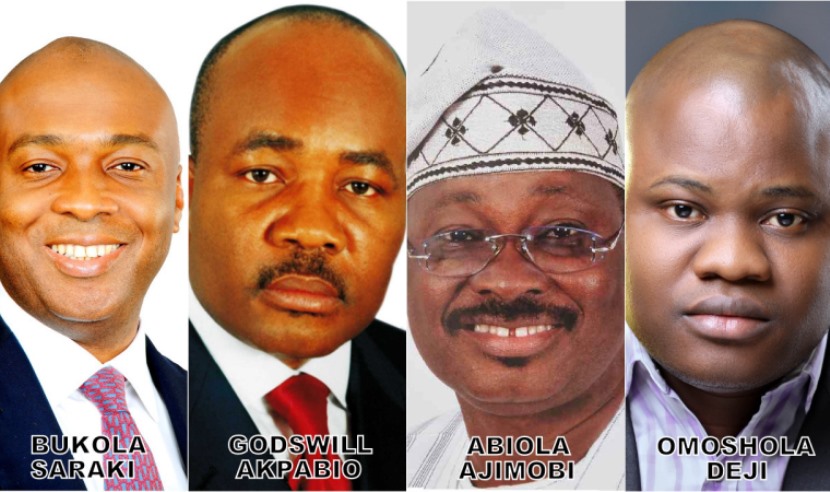
Bukola Saraki
One of the most shocking defeat in the last senatorial election is that of Bukola Saraki. The ex-Governor of Kwara State and Senate President lost in his bid to get reelected into the Senate. The Saraki Empire no one dare confront in the past is being demystified by hurricane ‘o to ge’. On the whole, ‘O to ge’ meaning ‘enough is enough’ is a movement against the reign of Saraki’s political dynasty in Kwara State.
The ‘o to ge’ mantra’s momentum is far-reaching and widely embraced. Kwara South’s longstanding hostility against Saraki made ‘o to ge’ swiftly gain ground in the region. Kwara North’s devastating infrastructure has made the population anti-Saraki, so they quickly embraced the ‘o to ge’ revolution. The hostility between Buhari and Saraki earned ‘o to ge’ patronage, particularly in the outskirt, close to Niger State, where the residents are sympathetic and loyal to the core north. ‘O to ge’ is also widely embraced in Saraki’s stronghold: the North-central, especially Ilorin. The movement keeps gaining momentum as the APC stalwarts have faced Saraki’s disciples’ violence for violence, blood for blood, and money for money.
After ruling Kwara State for eight years and successfully installing his stooge, Governor Abdulfatah Ahmed, Saraki became a godfather and his words became law. Ahmed’s government is widely seen as a continuity of Saraki’s rule. They thus share the accolades of success and the criticisms of either’s shortcomings. Some of the Saraki/Ahmed’s shortcomings that made the ‘o to ge’ revolution successful includes the backlog of unpaid salaries to civil servants and pensioners; Saraki’s alleged complicit in the Offa robbery fiasco; his corruption tainted reputation and trial; the lack of federal support owing to Saraki and Ahmed’s defection from APC to the PDP; and the elites, ex-loyalists and masses revolt against Saraki’s highhandedness, despotism and dynasty.
Many consider Saraki’s defeat as the manifestation of the law of karma, having betrayed his father to seize the political leadership of Kwara State. He leveraged on his father, Olusola Saraki’s extensive support base and political structure to emerge Governor, but later ousted him and enthrone himself as the godfather of Kwara politics. Against his father’s wish, Saraki installed Abdulfatah Ahmed as governor, instead of his sister Gbemisola Saraki. Rumors have it that Saraki’s father cursed him before passing away that he would be disgraced out of politics.
Oh power! Saraki is a big vessel, yet thou hast filled it and shown your transience! The mighty Bukola Saraki has fallen and may never rise again. APC’s Ibrahim Oloriegbe defeated him with 54,814 votes. With Buhari’s reelection, even if Saraki had won, he would have been an ordinary member as the APC would do all to ensure he doesn’t head the 9th Senate.
Hurricane ‘o to ge’ is speedily pulling down Saraki’s dynasty and changing the dynamics of politics in Kwara state. His fast-fall will almost certainly make his choice successor and PDP candidate, Rasak Atunwa, lose the forthcoming gubernatorial election. The encouraging aftereffect of Saraki’s lose is that Nigerians have gained more confidence that they can collapse the dynasty of political godfathers with their votes.
APC fanatics and Bola Tinubu’s apologists’ needs to format their reasoning. It is irrational to abuse the political godfather in Kwara and praise the one in Lagos. The fall of Saraki is a pointer that Tinubu’s fall is not impossible and near. A battle foretold does not kill a wise lame! It’s just a matter of time before Lagosians too shall declare that enough is enough. Saraki’s lose is a big lesson to Tinubu that power is transient and no one reigns forever.
Godswill Akpabio
Former Akwa-Ibom State Governor, Godswill Akpabio suffered an unexpected (but deserved) defeat in the 2019 senatorial election. Akpabio’s lose is not unconnected with his defection from the PDP, the party under which he served as Commissioner and two term Governor. He was later elected Senator in 2015 and became the party’s first Senate Minority Leader despite being a first term lawmaker. The PDP made Akpabio a name, but he defected from the party, accusing her of not rewarding loyalty, apparently because (instead of him) Senate President Bukola Saraki was made the PDP leader when he defected from the APC.
Akpabio ruled like Tsar when he was Governor. He determined who got what and when. He handpicked Udom Emmanuel has his successor and frustrated bigwigs such as Patrick Ekpotu and Nsima Nkere out of the PDP. Akpabio’s bossiness set off a frosty relationship between him and Emmanuel shortly after the latter became Governor. His excesses were unbearable, embarrassing and disrespectful to Emmanuel and his office. Akpabio would at the time make a bold entry into a state event, frolicking with his praise singers, disrupting the program, when the Emmanuel is already seated. The Governor could not tolerate this for long.
The fear of being prosecuted for corruption mainly made Akpabio join the APC. He left PDP for the APC he frustrated Nkere to join and now leading his governorship campaign. Upon defection, Akpabio secured the APC senatorial ticket, boasted he would win by a landslide, but the electorates stopped him. His lose is a testament that no one reigns forever and power is transient. PDP’s Chris Ekpenyong, the then deputy of ex-Governor Victor Attah, defeated Akpabio. The loss was a sweet revenge because Akpabio has not been in good terms with Attah and Ekpenyong, his former principals under whose administration he served as Commissioner.
The ruling APC fooled Akpabio and he fell for it. Confident of winning the North, the APC needed to ensure President Buhari gets a comfortable victory by earning substantial votes in the South-south and South-east, which are PDP strongholds. Upon realizing it would be difficult to win the two regions, APC opt to reduce PDP’s votes by winning over some of her bigwigs. They succeeded in getting Akpabio and Emmanuel Uduaghan, the former Governor of Delta State. The APC celebrated Akpabio’s defection from the PDP. A special televised rally was organized to welcome him into the party. Akpabio felt happy, honored and was boasting he would bring water out of the rock for the APC. In no distant time, it’ll become clear to Akpabio that the APC only needed him and Uduaghan to destabilize PDP’s stronghold. Now that Buhari has won and they lost their senatorial elections, the APC bigwigs would in a little while frustrated them out of the party.
Akpabio’s name will fade into oblivion, if APC loses the upcoming governorship election in Akwa-Ibom. His unceasing boast of having the capacity to dethrone the incumbent governor has made APC rely strongly on him. The party would ostracize him if Nkere lose. He may be arraigned for corruption as the federal government may withdraw the prosecution amnesty granted to him when he joined the APC. Akpabio lost his senatorial election because the electorates largely sees him as a desperate politician, who because of hunger, sold his birthright for a plate of porridge.
George Akume
Former Governor of Benue State and Senator representing Benue Northwest constituency, George Akume, lost his reelection bid to return to the Senate for the fourth time. PDP’s Orker Jev defeated him with a margin of 42,304 votes.
Akume’s defeat is not unconnected with the lingering supremacy battle between him and Governor Samuel Ortom. The hostility between both heightened when Ortom defected to the PDP over accusations that the APC led federal government is uncommitted to ending the genocidal killings perpetrated by Fulani herdsmen in Benue State. While Ortom was tackling the federal government to live up to the responsibility of ensuring adequate security for his people, Akume was more concerned about remaining in the good books of the federal government. This made him act contrary to his people’s will on many occasions.
Having been in power for twenty uninterrupted years, Akume’s omnipotent boasts made ex-Senate President David Mark and ex-Governor Gabriel Suswam end their political scuffles with Ortom, especially when he joined them in the PDP. Akume vowed to unseat Ortom and reinstate an APC government in the State, but the electorates reward Ortom’s dedication to exterminating their plights and sacked Akume instead.
Akume’s lose is an attestation that, in a democratic system, the strength of the power of the people is more than that of the people in power. The electoral loss of the godfather of Benue politics, despite having federal government’s backing, is a pointer that like life, power is a temporary, transient phenomenon.
Olusegun Mimiko
The former Governor of Ondo State’s loss at the poll is another testament that power is transient. The Zenith Labour Party (ZLP) Ondo Central senatorial candidate – who dropped his presidential ambition to contest for senate – only managed to come third. He scored 56,624 votes, coming behind APC’s Ayo Alasoadura who garnered 57,828 votes and PDP’s Ayo Akinyelure who won with a total of 66,978 votes.
Mimiko’s awful defeat is a lesson to those in power. Just few years ago, Mimiko was so powerful that he won governorship election twice (in 2009 and 2013) under a relatively unknown and weak platform – the Labour Party (LP). Not many imagined that Mimiko’s electoral value would diminish so fast that he’ll lose an ‘ordinary’ senatorial election after letting go his presidential ambition.
Mimiko’s political worth diminished when he abandoned the LP for the PDP. He sacrificed the LP statewide political structure he built and controlled to join the then PDP led federal government, only to face stiff opposition from the Jimoh Ibrahim led faction in the state. His political structure collapsed after his preferred successor, Eyitato Jegede lost the governorship election to incumbent Governor Rotimi Akeredolu of the APC.
Mimiko had the chance to build the Labour Party into a formidable national one, but he bungled that opportunity because of his insatiable thirst for power. He was PDP at the center, but LP at home. The ex-Governor may never rise politically again. He is not in good form to win future elections, except he defects to the ruling APC or opposition PDP.
Abiola Ajimobi
The Governor of Oyo State, Abiola Ajimobi, has fallen on hard times. The two term incumbent – who broke the jinx of governor’s losing reelection after serving a term – couldn’t win a senatorial poll that only covers one-third of his state. His uncouth orations, anti-masses policies, and the arbitrary use of power largely made him lose the election. Oyo indigenes are cultural people who cherishes humbleness and respectful communications, but Ajimobi is ill-mannered. This shortcoming made the masses revolt against him. Oyo natives, like most Yoruba people, especially those in the hinterlands, cherishes respect than money and gifts, even if they are poor. They are experts at decoding the hidden message in communications and does not take insults lightly.
Ajimobi’s inability to gauge his utterances made him lose the admiration of many. He lost public support when he maliciously demolished Yinka Ayefele’s Fresh FM radio. Despite public outcry, an unremorseful Ajimobi arrogantly called Ayefele “a disabled being”. Ajimobi also said “Ayefele shouldn’t be pitied because he’s a cripple. He’s not the first to be”. The Ajimobi-Ayefele saga was interpreted by the masses as a contest between the powerful and the powerless. The masses rose in defense of their fellow defenseless brethren, Ayefele.
Persons who fail to learn from others mistakes end up facing their misfortunes. Uncouth statements made the late Bola Ige and ex-Governor Alao Akala lose elections in Oyo state in 1983 and 2011. Same has now made Ajimobi lose his senatorial race to PDP’s Kola Balogun. Lest one forgets, the insults Ajimobi rained on protesting LAUTECH students’ remained unforgivable in the minds of their parents and families who voted during his senatorial election.
Moreover, Ajimobi’s insistence on restructuring the Ibadan kingship and chieftaincy traditional laws earned him more foes than friends. Many took the utterance that he once used to send Olubadan’s wife on errands to his girlfriends as a deliberate move to publicly ridicule the revered monarch. This act made Ajimobi’s cup of sin overflow. The much craved opportunity to punish him surfaced when he decides to run for senate and the masses utilized it.
Ajimobi’s vow that he would not contest for public positions after his governorship tenure ends was also vehemently used against him. His refusal to take a bow when the ovation was at its loudest earned him a fall.
Ibrahim Dakwambo
The incumbent Governor of Gombe State and former presidential aspirant of the PDP, Ibrahim Dakwambo lost his Gombe-North senatorial constituency election to Sa’idu Alkali of the APC. Aside underperformance, Dakwambo was largely affected by Buhari’s unparalleled acceptability in the North. Conducting the presidential election simultaneously with that of the national assembly made it difficult for the populous, less educated voters to differentiate between Buhari’s presidential and Dakwambo’s senatorial ballot paper. Alkali defeated Dakwambo by a difference of 64,530 votes.
For an incumbent that won governorship election and reelection in 2011 and 2015 to lose a ‘mere’ senatorial election by such a wide margin is a pointer that Dakwambo has lost public confidence and admiration. He came fifth in the 2018 PDP presidential primaries that produced Atiku Abubakar as candidate. Dakwambo’s appointment as Atiku’s campaign coordinator for the Northeast region yielded no positive results. His appeal to the electorates to vote Atiku as President fell on deaf ears. He couldn’t even deliver his Hassan Manzo ward. Buhari scored 457 votes to defeat Atiku who garnered a meagre 80 votes in the ward.
Dakwambo’s serial defeat is an indication that the mighty has fallen and may just never rise again. Ikkyu’s thought is the best advice for Dakwambo: Like vanishing dew, a passing apparition or sudden flash of lightning – already gone – thus should Dakwambo regard himself.
End Notion and Lesson
The strength of power doesn’t depend on its in perpetuity, but on its transience. The hire and fire power of the voter card makes it a crucial weapon the electorates must use to reward or punish the elected, depending on their performance. Nigerian politicians have an insatiable thirst for power, but are un-thirsty for national development and progress. They do all possible to grab power and once it’s theirs, they do all to hold on to it till death do them part.
The loyalty and patronage power commands fade off like a wisp of smoke when it is lost. Power is not worth gaining or retaining by force as its value is sullied by its transiency. People switch allegiance once power is lost. The deposed godfathers would know they have fallen on hard times in the days ahead. Politicians must act right when in power and beyond because their actions or inactions today is tomorrow’s history. The unborn generations will read it and be told. The defeat of those once regarded as undefeatable at the polls is a testament that no king can reign forever; the mighty (like Saraki) has fallen for new ones to arise.
The Second Part
This piece is the concluding part of a twin piece on the transience of power in which the writer analyzed the issues and outcome of the presidential and senatorial elections. The first part appraised Atiku’s inability to regain control of the country he once managed as the second in command. It dissects why he has been unable to retain the loyalty of the bigwigs he once lord over when he was in power. Although Atiku did not run as a one term ex-President or incumbent, analyzing the piece around the transiency of power was inexorable based on his former capacity as Vice President: a powerful one that allegedly made his boss, President Obasanjo, kowtow for him before winning reelection. To read the piece, please search this platform or Google “2019 Presidential Poll: Is Atiku’s Defeat a Testament that Power is Transient?”
Omoshola Deji is a political and public affairs analyst. He wrote in via moshdeji@yahoo.com


Oche Nehi
There was a time in Nigeria when securing a job marked the beginning of a better life. Employment meant stability, dignity, and hope. Parents sacrificed everything to educate their children because they believed a certificate would open the door to prosperity. That social contract has now been broken.
Today, millions of Nigerians rise before dawn, endure hours of traffic, work eight to twelve hours daily, and still return home unable to provide decent meals, pay school fees, settle rent, or save for tomorrow. They are not unemployed. They are not lazy. They are victims of an economy that increasingly punishes honest labour while rewarding political privilege.
Nigeria has quietly created a new class of citizens the WORKING POOR.
This silent emergency deserves as much national attention as unemployment, insecurity, and corruption because it is gradually eroding the dignity of work itself.
Across ministries, hospitals, schools, banks, factories, media houses, security agencies, and private businesses, countless workers now live from one salary to the next. For many, the salary is exhausted within days of payment. The remaining weeks are financed through borrowing, cooperative societies, digital loan apps, family support, or pure endurance.
The consequences are visible everywhere.
- A teacher who educates the nation’s future cannot afford quality education for her own children.
- A nurse entrusted with saving lives struggles to pay hospital bills when illness strikes her family.
- A police officer charged with protecting society battles to feed his household.
- A journalist exposing corruption cannot afford decent housing.
- A junior civil servant, after paying rent, transportation, electricity bills, food, and other essentials, is left with little or nothing before the next payday.
These are not isolated stories. They represent a growing national reality.
The tragedy is that Nigerians are working harder than ever before, but getting poorer with every passing year.
The reasons are not difficult to identify. Inflation has steadily reduced the value of wages. Food prices have reached levels unimaginable just a few years ago. Transportation costs have surged. House rents continue to climb in major cities. Electricity tariffs and other basic living expenses consume increasing portions of household income. Yet salaries particularly in the public sector and among lower-income workers in the private sector have failed to keep pace with these rising costs. The result is predictable: employment no longer guarantees economic security.
This should alarm every policymaker.
When workers can no longer afford the basic necessities of life despite full-time employment, productivity declines, corruption becomes more tempting, brain drain accelerates, and public confidence in government weakens.
Perhaps the greatest danger psychological. A generation that believes hard work no longer leads to progress is a generation that begins to lose faith in legitimate enterprise. It is no coincidence that more young Nigerians now dream of leaving the country than building careers within it. They are not simply chasing higher salaries abroad; they are searching for societies where effort is rewarded and work restores dignity.
At SecretsReporters, we believe this crisis cannot be separated from governance. While governments at various levels have introduced reforms intended to stabilize the economy and improve public finances, ordinary Nigerians continue to judge success by what happens in their kitchens, not by what appears in policy documents. Economic reforms that fail to translate into improved living conditions will inevitably face questions from the citizens they are meant to benefit.
This is why accountability must extend beyond budget speeches and official statistics. It must answer a more fundamental question:
Why are Nigerians working harder but living poorer? The answer demands honesty. It requires confronting inflation, improving productivity, investing in affordable public transportation, expanding access to quality healthcare and housing, supporting businesses that create decent jobs, and ensuring that wage policies reflect the real cost of living.
It also requires government at every level to recognise that development cannot be measured solely by infrastructure projects or macroeconomic indicators. A nation succeeds when ordinary workers can afford food, educate their children, access healthcare without financial ruin, and retire with dignity.
Employment should be the strongest weapon against poverty not another expression of it.
The working poor are not asking for luxury. They are asking for fairness. They seek an economy where honest work can provide a decent life and where sacrifice is rewarded with opportunity rather than perpetual hardship. Nigeria cannot continue to celebrate employment figures while ignoring the quality of life of those who are employed. A job that cannot feed a family, pay rent, or meet basic human needs is no longer a pathway out of poverty it is evidence of a deeper structural failure.
As this newspaper has consistently maintained, the true wealth of any nation is not measured by the fortunes of a privileged few but by the dignity enjoyed by its ordinary citizens. The millions of Nigerians who keep this country running teachers, nurses, artisans, factory workers, journalists, drivers, civil servants, farmers, traders, and security personnel deserve more than applause for their resilience. They deserve an economy that values their labour. The greatest injustice in today’s Nigeria is not merely that many people cannot find jobs.
It is that millions who already have jobs are still living in poverty.
That should trouble every leader. And it should trouble every Nigerian.
By Barau Simon (Dantani Jr)
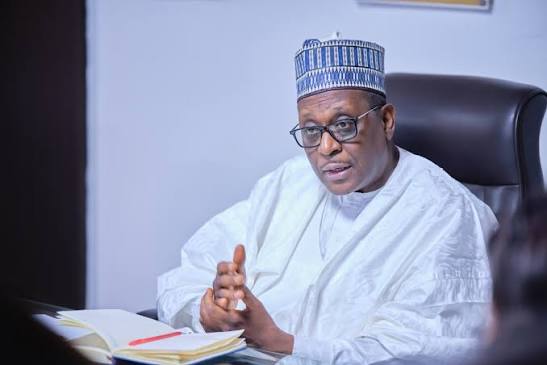
When he took office as the Minister of Health and Social Welfare Prof. Muhammad Ali Pate made a bold promise: to “Save Lives, Produce Health, and do it for all Nigerians.
But as bold as his promises are and were, the decline of the Nigerian health sector, as well as the dwindling of it, has shown that the Minister’s assertion while taking office was just mere words and rhetoric and has not at any point translated into realities and achievements of any sort.
A cursory look at the just-verbalized four-pillar agenda he dished out to revamp the health system shows that, rather than delivering, the health system has been in a comatose state.
What he promised and what the reality is at the moment:
He promised the health governance and synergy, pledging to coordinate the three tiers of government, the health sector has continued to battle a historical lack of synergy between federal, state, and local governments, fragmentation has been the word that is existing in this sector, as it is this has brutally hampered primary healthcare (PHC) delivery, resulting in overloaded tertiary hospitals, poor funding, and inadequate supply of medical staff and supplies across rural communities.
On the ground, realities prove that the “lack of synergy” remains an ongoing hurdle, which is a slap on the minister’s promise of health governance synergy. Under him, stakeholders have often pointed out that needs assessments of the community are hardly or not even synchronised, an act that has led to duplications in some areas and complete neglect of medical facilities in others.
Again, he promised Primary Healthcare (PHC) and Maternal Health, the minister’s assertion to focus on expanding and revitalizing grassroots primary care to ensure basic services—such as routine vaccines and maternal health facilities—are available to everyone has remained a mirage; nothing has been achieved further than what was achieved in the previous governments.
As of today, the primary healthcare (PHC) system in Nigeria is relentlessly constrained, with only about 20% of the over 30,000 PHC facilities deemed fully functional. There is little or no funding, and the continuous massive brain drain of medical professionals, dilapidated infrastructure, and severe shortages of essential drugs and medical equipment remain unchanged.
The case of six in ten Nigerians lacking access to quality primary health care service remains as it is, there has not been any improvement under the current minister and with the basic primary facilities lacking delivery tools, emergency interventions, and skilled midwives, treatable pregnancy complications regularly turn fatal, particularly for women and newborns in rural communities, and so far so long, maternal and child mortality has remained even high more than the way it is before he took saddle on the position as the minister.
Suffice to say that the Nigerian health sector, under the Coordinating Minister of Health and Social Welfare Prof. Muhammad Ali Pate, instead of soaring high like what he promised when he took office, is rather plummeting, and this is shown in terms of severe infrastructural decay, paralyzing labor strikes, and systemic vulnerabilities that have continued.
Key areas that show failure in the health sector under Ali Pate
Decay of Facilities
Little or no funding has left tertiary health institutions brutally derelict, as seen in the dilapidation of diagnostic and laboratory facilities within them, which has shifted the weight of apt medical investigations to costly private hands.
Labour Strike and Crisis of Human Resources
There have been a series of strikes embarked by health workers and medical personnel under Ali Pate as Minister of Health. More so, there have been obnoxious policies that have exacerbated the human resource crisis and sped the “brain drain” of medical professionals leaving the country in droves.
They are as follows;
Non-payment of Entitlements: The health sector has been plagued by incessant and interminable strikes by medical workers, including the Nigerian Association of Resident Doctors (NARD), the Joint Health Sector Unions (JOHESU), demanding the implementation of the Consolidated Health Salary Structure (CONHESS).
The Minister’s “No Work, No Pay” Policy: Under the Minister’s leadership, his ministry enforced an abhorrent rule of a “no work, no pay” for striking health professionals, a posture health sector critics argued has worsened the human resource crisis and sped the “brain drain” of medical professionals leaving the country in their numbers.
Professor Muhammad Ali Pate’s enforcement of the “no work, no pay” rule for striking health workers—particularly during the prolonged 2025–2026 Joint Health Sector Unions (JOHESU) industrial action over the Consolidated Health Salary Structure (CONHESS)—severely disrupted public healthcare delivery.
Service Disruption: The policy failed to deter unions like JOHESU, which represents roughly 85% of the healthcare workforce. Workers continued their strike, forcing public hospitals to close or operate at heavily reduced capacities, leading to delayed treatments, postponed surgeries, and compromised patient care.
Worsening Brain Drain: Financial pressures, combined with a lack of hazard allowances and delayed wage negotiations, are accelerating the exodus of vital health workers. This “japa” wave leaves the remaining public hospitals critically understaffed.
Deteriorating Sector Morale: The enforcement of this rule—which was applied to some unions but selectively missed for others—has bred feelings of marginalization and institutional disrespect. Experts warn that these execution gaps and disputes undermine trust in the government’s ability to manage health system reforms.
Increased Out-Of-Pocket Costs: With public hospitals paralyzed by these labor disputes, vulnerable Nigerians have been forced to bear the high, out-of-pocket costs of seeking care at private clinics.
The hidden cost of these prolonged labor disputes ultimately cripples the population’s access to care, with citizens bearing the brunt of the instability.
How Health Policies Are Fragmentally Executed As Gaps Exist In Policy Implementation
Feeble and Weak Execution: for instance, health sector Groups like Corporate Accountability and Public Participation Africa (CAPPA) have mentioned failures to execute health funding policies as a reason for frequent expenses and overdue care for patients.
Struggles within the State Level: Despite policies being made, the Nigerian Health sector critics are of the view that even with reforms and policies, little or nothing has been implemented successfully in the states.
Continuous Brain Drain Syndrome Under The Minister
In February 2025, the Minister of Health for the State, Professor Iziaq Salako, reechoed what his boss, Professor Ali Pate, has consistently said of stopping the brain drain syndrome, popularly known as japa syndrome.
But the reforms under the Minister of Health Professor Ali Pate have failed to arrest or stop the japa syndrome, even with targets to increase local medical manpower and retain professionals. Persistent inflation, poor remuneration, and challenging working conditions have continued to drive record numbers of Nigerian health workers to migrate.
Critics and unions argue these measures do not address the root causes of the japa wave, they said poor foundational salaries and systemic lack of infrastructure continue as the primary drivers of the brain drain.
Non-payment of entitlements, policy somersault has continued to cause industrial actions by health and medical personnel.
Timeline of strikes under the current Minister of Health
Under the tenure of the Coordinating Minister of Health and Social Welfare, Prof. Muhammad Ali Pate, the Nigerian Association of Resident Doctors (NARD) engaged in a prolonged strike in late 2025 and issued several ultimatums in 2026 over unfulfilled welfare and allowance agreements.
The timeline of major NARD industrial actions and agreements under his administration includes:
•July 2023: NARD embarked on a nationwide, indefinite strike over unfulfilled salary and allowance demands. The action lasted until mid-August.
In November 2023, President Bola Tinubu approved the waiver of the “No Work, No Pay” order against the doctors.
•September 2025: NARD issued a 30-day ultimatum to the Federal Government regarding lingering welfare issues, specifically the non-disbursement of the 2023 Medical Residency Training Fund and unpaid arrears.
•November 1, 2025: Following the expiration of ultimatums, NARD began a “total, comprehensive and indefinite” nationwide strike over overwhelming workloads, unpaid salary arrears, and poor hospital infrastructure.
•November 29–30, 2025: NARD signed a 19-item Memorandum of Understanding (MoU) with the Federal Government. The union’s National Executive Council voted to suspend the 29-day strike to allow government ministries to fulfill commitments.
•January 12, 2026: NARD resumed its indefinite strike, citing the Ministry of Health’s failure to implement provisions from the November MoU (such as correcting professional allowance errors and reinstating dismissed union leaders in Lokoja) and the enforcement of a “no work, no pay” policy.
•February 2026: The broader health sector experienced significant friction, as JOHESU embarked on a strike.
•April 7, 2026: NARD initiated another nationwide indefinite strike due to protracted pay disputes and the government’s attempts to halt the newly revised Professional Allowance Table (PAT).
•April 8, 2026: Following high-level interventions by Vice President Kashim Shettima and Minister Pate, NARD suspended its indefinite strike after the government committed to restoring the revised allowance table.
Under Professor Ali Pate as Health Minister, the Joint Health Sector Unions (JOHESU) embarked on two major industrial disputes and other ones all these are primarily driven by demands for the implementation of the adjusted Consolidated Health Salary Structure (CONHESS) and other welfare packages.
A timeline of these actions:
•June 2023: Health workers embarked on a 12-day nationwide strike. The action was suspended after a direct intervention by President Tinubu, who requested a 21-day timeline to resolve the unions’ demands. [1]
•November 2025 – February 2026: Following prolonged stalemates regarding the full implementation of the adjusted CONHESS, JOHESU declared an indefinite nationwide strike on November 15, 2025. The strike paralyzed public tertiary and secondary health institutions nationwide.
•January 2026: The Federal Government invoked the “No Work, No Pay” policy in an attempt to force striking health workers back to their duties, a move the union strongly resisted.
•February 2026: Following successful conciliation meetings in Abuja with the Federal Ministry of Health and Social Welfare, JOHESU officially suspended their 84-day nationwide strike on February 6, 2026.
Also under him, the National Association of Nigerian Nurses and Midwives (NANNM) has embarked different strikes action over disputes that centers on salary structure adjustments, inadequate staffing, and unpaid allowances.
A detailed timeline of these actions is as follows:
July–August 2025: Nationwide Warning Strike
•July 14, 2025: Nurses issued a 15-day ultimatum to the federal government citing poor remuneration, staff shortages, and unresolved welfare issues. [1, 2]
•July 30, 2025: Following the expiration of the ultimatum, nurses commenced a 7-day nationwide warning strike that temporarily paralyzed health services at 74 federal hospitals, state facilities, and primary health centers. [1, 2]
•August 3, 2025: NANNM suspended the warning strike after the federal government signed a Memorandum of Understanding (MoU) with agreed-upon timelines for addressing key demands, including the gazetting of a new scheme of service and finalizing the upward review of allowances.
Mid-2026: Continued Unrest and Negotiations
•May–June 2026: Lingering distress over delayed allowances, coupled with Nursing and Midwifery Council of Nigeria (NMCN) certificate delays, continued to generate unrest in the sector. Negotiations over the new allowance structures and demands to implement full agreements remain ongoing, with unions frequently warning of further industrial action to press home their demands.
Grants Received
As the Coordinating Minister of Health and Social Welfare, Prof. Muhammad Ali Pate, Nigeria has received and facilitated over $4.6 billion in foreign health grants and investments. Key international funding received under his tenure includes:
• Global Fund: An allocated $933 million grant for the implementation period spanning across 2024 to 2026 to combat HIV/AIDS, tuberculosis, and malaria.
• United States Government: A nearly $2 billion grant commitment to support Nigeria’s health priorities, specifically focusing on antiretroviral therapies, malaria, and maternal/child health.
• International Investment & Localization: Over $5.5 billion in foreign investments have been secured to build local pharmaceutical and healthcare manufacturing capacity, including financing from the European Investment Bank and Afreximbank.
Despite grants received, cases such as Malaria, Tuberculosis has remained high. Nigeria remains vulnerable to recurring disease outbreaks, exposing the weakness of its healthcare system.
Nigeria’s health sector remains fragile despite the Minister’s so much talk of bold promises and what he has achieved under the sector that are nowhere to be seen.
Even with his policy and reforms the persistence of challenges still rearing their ugly heads health sector raises questions about his capacity to improve healthcare in Nigeria as he has claimed he will do.
For instance at the 2025 Strategic Health Summit, health advocates assessed the sector’s progress and acknowledged that significant gaps persist.
Ali Pate’s approach to healthcare sector where he superintend as the Minister has become a mix of broken promises and penny-pinching. The consequence is simple and brutal. For Nigerians, visiting a public hospital has become a gamble. Will you see a doctor? Will the lab be open? Will the nurse be available? Will the strike still be on?
And even if you are lucky, you are likely to meet exhausted professionals carrying the weight of a system that refuses to support them.
This is the state of our public healthcare under the current Minister.
Dr David Ejiofor
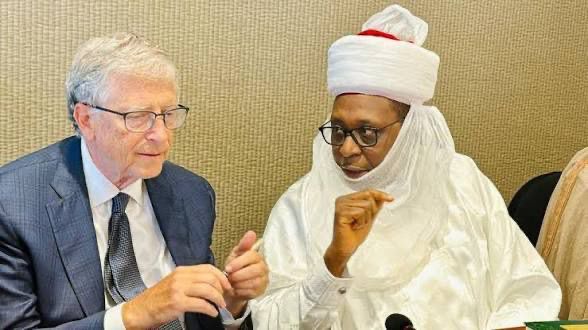
To understand why Nigeria’s Minister of health Prof Muhammad Ali Pate has an umbilical like linkage to Bill Gates one will have to unravel the motive behind the multimillion dollar support from Gates foundation, the reason may not be far fetched over the years experts have theorized that Gates has been behind harmful medical experimentation around population control in Africa and Nigeria especially. And Pate is his gateway to ensure a massive population control. To stop Nigeria from becoming the third most populous country by 2050. This may sound far fetched to the undiscerning but there’s a precedence to this.
Public skepticism toward foreign-funded medical initiatives in Nigeria cannot be understood without reference to the 1996 Pfizer Trovan trial in Kano. During a meningitis outbreak that claimed thousands of lives, Pfizer tested the experimental antibiotic Trovan on children. Subsequent investigations and legal disputes raised serious concerns regarding informed consent procedures, ethical approvals, and research oversight. The controversy left a lasting impact on public trust and remains one of the most cited examples of ethical failures in medical research conducted in developing countries.
The legacy of the Trovan case continues to shape public perceptions of international health interventions. For many Nigerians, it serves as a reminder of the need for rigorous safeguards whenever foreign-funded research or medical programs involve Nigerian citizens.
Western-sponsored vaccines have thus become tools for population control with Gates Foundation at the forefront. More recently, discussions on social media and other online platforms have revived concerns about transparency, accountability, and oversight in international health collaborations. While various claims and allegations have circulated online, many remain unverified and should be treated with caution unless supported by credible evidence and official investigations.
Nevertheless, the broader questions raised by citizens deserve serious consideration. Nigerians have a legitimate interest in knowing that all medical research, health interventions, and international partnerships affecting their wellbeing are conducted in accordance with the highest ethical standards.
In this regard, health policy experts emphasize the importance of strong regulatory institutions, informed consent procedures, independent ethical review boards, and transparent government oversight. Public confidence in healthcare initiatives depends not only on scientific effectiveness but also on trust, accountability, and respect for human dignity.
A few months ago verified emails, circulated online analyzing and measuring women’s bodies and possible medical imaging. Among these were email exchanges said to be between Epstein and the same Gates, where specifically mentioned Nigeria and their anatomy, in which he was reportedly requested to bring women from Nigeria, with suspicions raised that parts of their bodies might be used for activities linked to potential research that may be contravenes the Nuremberg code of medical research ethics.
For many observers, the debate is ultimately about safeguarding the rights of citizens under principles that have guided medical ethics since the Nuremberg Code. No foreign-funded research involving Nigerians should proceed without fully informed consent, rigorous ethical scrutiny, and transparent government oversight. Anything less risks undermining public trust and repeating mistakes that history has already warned against.
As Nigeria deepens its engagement with global health partners, the challenge is not to reject international cooperation but to ensure that such partnerships operate under robust safeguards that protect the rights and interests of Nigerian citizens. Transparency, public accountability, and ethical compliance must remain at the heart of every health intervention conducted within the country.
Ultimately, the debate reflects a broader global issue: how nations can benefit from international scientific collaboration while maintaining sovereignty, public trust, and rigorous protection of their citizens.
-
 STRAY BULLET10 years ago
YOU ARE A THIEF SO YOU CAN’T PROBE A THIEF: ANOTHER UK NEWSPAPER WRITES BUHARI
-
 LATEST NEWS10 years ago
PREACH AND DIE: FOR DARING EARLY MORNING PREACHING IN ABUJA, MUSLIMS HACK TWO PASTORS TO DEATH
-
 LATEST NEWS9 years ago
BREAKING: TYRANNICAL NIGERIA PRESIDENT, MUHAMMADU BUHARI DIES IN LONDON HOSPITAL, BUT PRESIDENCY KEEPS SEALED LIPS
-
 SPECIAL REPORT10 years ago
MISS ANAMBRA CUCUMBER SAGA: HOW ANAMBRA BROADCASTING SERVICE DIRECTOR, UCHE NWORAH LEAKED SEX VIDEO TO THE PUBLIC FOR HER REFUSAL TO CONTINUE SEXUAL AFFAIR WITH HIM (PART ONE)
-
 SPECIAL REPORT10 years ago
EXCLUSIVE: HOW STEPHEN KESHI AND WIFE WERE KILLED BY HIS OWN BROTHER
-
 SPECIAL REPORT9 years ago
POWER GAME ALMOST OVER: OSINBAJO UNDER PRESSURE TO HAND OVER TO SARAKI AS VP IN ANTICIPATION OF THE UNKNOWN
-
 STRAY BULLET10 years ago
DESPITE HUNGER IN NIGERIA, BUHARI ALLEGEDLY DONATES 500 MILLION DOLLARS TO HILARY CLINTON’S FAILED PRESIDENTIAL ELECTIONS AS NIGERIANS PRESSURE HIM TO CONGRATULATE TRUMP
-
 SPECIAL REPORT10 years ago
EAR INFECTION SCAM: BUHARI JETS TO LONDON TO SECRETLY NEGOTIATE WITH NIGER DELTA AVENGERS