 By
By In this report, Odimegwu Onwumere unearths that the utilisation of the local content in the oil and gas sector is still a tall dream since the Nigeria Oil and Gas Industry Content Development Act was enacted in 2010; and $380b dollars or more have been lost in 50 years in the industry, upon the billions of dollars also being pumped in, to sustain the scheme
Stakeholders in the oil and gas sector and the federal government have been gasping for breath to fashion out a lasting plan for the utilisation of the local content in the sector since the Nigeria Oil and Gas Industry Content Development Act was enacted in 2010. This socio-economic term, which is as old as man, has had setbacks in several occasions in the country with companies and the authorities pumping in money into the initiative that is habitually never accomplished. The incessant hope given by opinion leaders pointing out that by making use of local content, about $191 billion could be maintained, while 300,000 new nonstop job opportunities were green in such areas as engineering, sciences, technical services and manufacturing of the oil and gas sector, might have been dashed by the oil companies and Nigerian authorities.
The “exploration, production, manufacturing, fabrication, procurement and allied services sectors of the oil business” which were the canons for the implementation of local content in the oil and gas sector are not being realised with the attendant results they deserve. Most times, while the stakeholders push to accomplish the “value added in local oil industries”, they make loss upon creating proposed chances and heartening indigenous oil companies to vigorously take part in maximizing local content.
Investigation by this writer has revealed that the local content, which was supposed to be a win-win affair, has been laced with controversies by the different stakeholders; hence there is a gap in promoting alliance amid “national oil companies, local companies and international organization.” The local content initiative is still struggling to be all inclusive, because there is drought of enabling environment for business, therefore leading to un-optimized moves to carry out Corporate Social Responsibility (CSR) by the companies involved and not insuring utmost earnings for all.
Billions Of Dollars On Local Content
The Nigerian National Petroleum Corporation (NNPC), defines local content in the oil and gas company as “The quantum of composite value added or created in the Nigerian economy through the utilization of Nigerian human and material resources for the provision of goods and services to the petroleum industry within acceptable quality, health, safety and environment standards in order to stimulate the development of indigenous capabilities.”
To realise this, experts have said that the government of Nigeria made mammoth venture up to $10 billion USD yearly to achieve 70% local content goal by the end of 2010 in the oil and gas sector. But as spectators have seen, the aim was defeated.
However, just on October 16, 2017, Vice Chairman/ Managing Director of Nigerian Agip Oil Company (NAOC), Mr. Massimo Insulla, while speaking during this year’s Nigerian Content Activities, hosted by Eni in Yenagoa, disclosed that the company spent over $5.4 billion in making sure that the Nigerian content gets to the peak in the last six years.
This is even as Chevron Nigeria Limited (CNL) said it spent $2.5 billion on local content development in Nigeria’s oil and gas sector, “representing 65 per cent of the total Nigerian goods and services expenditures for the year.”
According to Chairman of the Board and Chief Executive Officer of Chevron, John Watson, “We do so through partnerships with national and local governments, national oil companies, Non-Governmental Organisations (NGOs), and development agencies.”
Upon Companies Boast Of Expending Billion Dollars
Meanwhile, the Federal Government by August 24, 2017, had geared up to launch $200m (about N61bn at the official exchange rate of N305 to a dollar) local content interference fund. This was apart from its unyielding billions of dollars expended yearly to end local content quagmire by the end of 2010 that never came to light.
According to the Federal Ministry of Petroleum Resources, the novel move was “in pursuant of the Business Environment and Investment Drive Component of the #7BIGWINS, known as a document of the ministry that focuses on the short and medium-term priorities targeted at growing the nation’s oil and gas industry between 2015 and 2019.”
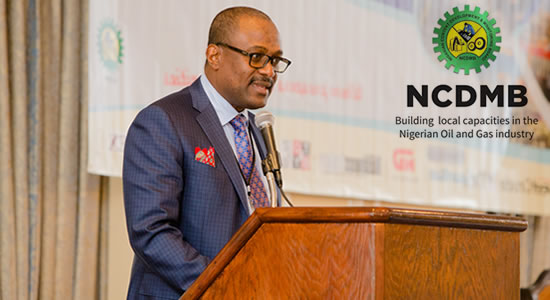
But on the contrary, the Nigerian Content Development and Monitoring Board (NCDMB) might not be certain with its compass’s navigation on the local content. On September 25 2017, in Lagos, the NCDMB said that it was looking up that the Nigerian Content Intervention (NCI) fund would hit $1 billion in the next three years. It could be sensed that the NCDMB was using permutation in carrying out its national duty than it was using betting. This is even as it had said through its Executive Secretary, Engr. Simbi Kesiye Wabote at a public hearing conducted by the Joint Senate Committee on Petroleum Upstream and Gas in Abuja on July 26 2017 that it intended to establish a Local Content Bank of Nigeria.
While the NCDMB might not be certain with accountability of the funds to the tone of trillions of naira dished out for various projects over the years, media reports affirmed, “The bank when set up will focus on establishment of facilities for domiciliation of services with emphasis on the optimal use of local resource inputs.”
Buttressing this, Wabote in December 2016, (during a media dialogue on his plans to make these companies to meet the terms with the Nigeria Oil and Gas Industry Content Development (NOGICD) Act 2010 by making a payment to the Fund) gave an insight that some companies do not remit their one per cent contributions to the Nigerian Content Intervention (NCI) Fund.
Explaining, those who know better said, “The NCI Fund is a pool made available by the NCDMB to meet the funding needs of manufacturers, service providers and other key players in the Nigerian oil and gas industry. It was however, gathered that some upstream companies do not contribute to the NCI Fund at all.”
Meanwhile, this is contrary to a July 27 2017 report, stating, “On the Nigerian Content Development Fund (NCDF), the Executive Secretary reported that international oil companies comply reasonably in remitting one percent of the value of their contracts but some service companies and indigenous operating firms default in their payment.”
$380bn Lost In Oil/Gas Sector Due To Lack Of Local Content
While Nigeria was boasting of the billions of dollars she had expended in boosting local content in the oil and gas sector, by September 2017, while speaking at an oil and gas forum held in Accra, Ghana, Wabote disclosed that a whooping sum of $380b dollars or more have been lost in 50 years in oil and gas industry in the country.
“This capital flight is due to the absence of regulation on local content development in the oil and gas industry,” said the source.
However, Wabote added, saying, “Local content development in Nigeria has brought about the domiciliation and domestication of value addition in the oil sector, culminating in 26 percent in-country value retention compared to the five percent prior to the enactment of the Local Content Act in 2010.”
While this lasted, at the opening of the sixth Practical Nigerian Content Conference, in Abuja, in September 2016, to enlarge implementation of the local content policy to the midstream and downstream of the oil and gas sector, Wabote had explained that “a blueprint would soon be unveiled to attract the needed investment to the sector. And besides the creation of industrial parks for the sector, the NCDMB is also working towards the establishment of three pipe mills across the country.”
100% Local Fabrication Of Modular Refineries
At the same time, Nigeria can be seen is confused on how to go about her local content, whereas in 1962 when Norway’s offshore oil industry took off, the country recorded a huge growth in its Gross Domestic Product (GDP) and by 1965, the Norwegian Petroleum Law was enshrined and by 1972, the local content law was enacted in Article 54 of the Royal Decree of 1972.
According to reports, “The Royal Decree of 1972 mandated that Norwegian government should vigorously pursue the goal of insuring that Norwegian goods and services be given preference in the running of the oil and gas industry, provided they were competitive in terms of price, quality, schedule and service.” But since the 50s oil was explored in Nigeria at Oloibiri, a small community in Ogbia LGA located in Bayelsa State, Nigeria was by August 24, 2017 ‘still’ initiating plans to achieve 100 per cent local fabrication and this is especially of modular refineries in Nigeria.
A discussion with the Original Equipment Manufacturers (OEM), the federal government was also not certain when to achieve a lasting use of local content in the oil and gas sector. Just as it has been pumping billions of dollars in order to realise the local content by the end of 2010, the federal government through the Minister of State for Petroleum Resources, Dr. Ibe Kachikwu was not certain when the deadline for the local fabrication of oil vessels and Floating, Production, Storage and Offloading vessels (FPSO), would berth. This is even as “the Bank of Industry said the newly launched $200 million intervention fund could be used for contract financing and loan refinancing for oil companies.”
According to the media, “Speaking at the Memorandum of Understanding (MoU), signing ceremony on the implementation of the $200 million Nigerian Content Intervention Fund (NCIF), between BoI and the Nigerian Content Development Monitoring Board (NCDMB), Kachikwu said Nigeria would not continue to award contracts, but set deadlines on when to localise most of the vessels and projects in the country.”
Senate Uncertain With Local Content Implementation In Oil Industry
While the Malaysian oil industry began in the 1950s and objectives set for Malaysia’s oil and gas policy, which was to “maximise local benefits through the development of local capabilities and industrial base to support the growing onshore and offshore oil and gas industry”, Nigeria was thus far probing the local content implementation in the oil and gas industry in the country by July 18 2017.
The Red Chambers at the National Assembly was afraid that investors were not considering Nigerian companies while investing, hence the senate referred the investors to Nigeria Oil and Gas Industry Content Development Act, which states inter alia: “Investors were mandated to consider Nigerian companies as an important element in their project development and management.”
According to news reports, “The Senate Joint Committee on Petroleum Resources (Upstream) and Gas Resources has commenced investigation into the implementation of local content in the oil and gas industry in the country.
“Opening the session of an investigative hearing on the issue on Tuesday in Abuja, President of the Senate, Bukola Saraki, who was represented by the Leader of the Senate, Sen. Ahmed Lawan, said the National Assembly was concerned with the level of implementation of local content in Nigeria.”
It is expected that the stakeholders in the oil and gas sector will get the local content right this time with Wabote saying recently that NCDMB was presently putting into practice a 10-year tactical roadmap fastened on transporting five pillars of sustainable local content, with an intention of attaining 70 per cent of local content in the next 10 years.
Odimegwu Onwumere is a Poet, Writer and Media Consultant based in Rivers State. Tel: +2348032552855. Email: apoet_25@yahoo.com