

STRAY BULLET
ONNOGHEN’S SUSPENSION AND MATTERS ARISING

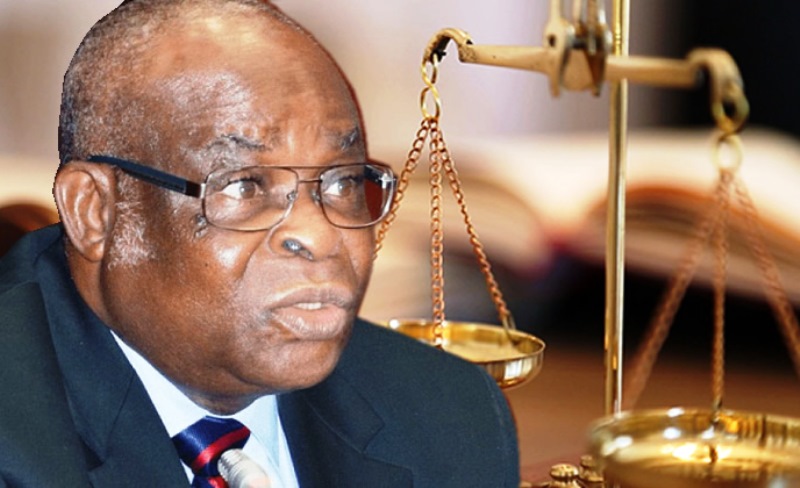
By Aliyu Ibrahim
No doubt, a lot of dust has been raised by the suspension of Hon. Justice Samuel Walter Nkanu-Onnoghen by President Muhammadu Buhari led Federal Government, based on the order of the Code of Conduct Tribunal, CCT, a court of competent jurisdiction. The United States Embassy in Nigeria, the European Union and the United Kingdom have since weighed in, with statements of condemnation.
The heat has gathered enough steam within the country, although quite a number of legal experts and pundits have expressed their opinion in support of the Federal Government’s action. The main opposition parties have since become the spokespersons of Justice Onnonghe, making flagrant statements in his defence, day in day out, while disregarding the substance of the contending issue.
I want to begin with the US, EU and the UK. I make bold to say that, there is no country in the whole of Europe, as much as the UK and US, whose number one judicial officer would be charged with the same offence as Justice Onnoghen, and remain in office for the next second. Beyond moral rectitude, it has become a convention that such a personality will not only bury his head in shame but resign from office immediately such a thing become public. They call those places “saner climes”, where sanity and morality abound. In 2013, Mr Wolfgang Duchatczek, Austrian National Bank Deputy Governor resigned after the country’s central bank suspended him a week earlier than his resignation, over a bribery scandal. Mr Duchatczek was accused of turning “blind eye to shady banknote printing contracts with Azerbaijan and Syria in deals that got him and eight others indicted.”
In the same vein, in 2016, the Prime Minister of Iceland Mr Sigmundur David Gunnlaugsson after the Panama Papers, those 11.5 million leaked documents that detail financial and attorney-client information for more than 214,488 offshore entities revealed that “he and his wealthy wife had set up a company in the British Virgin Islands.” The Panama Papers leak, which exposed how politicians and powerful figures across the world hide their vast ill-gotten wealth, attracted global outrage, that spanned up to our homeland – Nigeria. The President of the Senate of the Federal Republic of Nigeria, Alhaji Abubakar Bukola Saraki was also exposed by those leaks. At least four assets belonging to him that were not declared to the Code of Conduct Bureau as required by Nigerian laws were uncovered. But guess what! Since Nigeria is not a “saner clime”, Abubakar Bukola Saraki is still not only occupying the number three position, but used it and his vast questionable riches, to take advantage of our rotten judicial system, and got off the hook. He still is using his powerful position as number three citizen to subvert the rule of law and undermine our hard earned democracy in his desperate quest to drag us back to the dark days when some elite citizens were above the law.
What is happening appear to be a seeming gang-up by the elites in the opposition against an enigma whose integrity is uncontested. The President has taken himself to the public court particularly the judiciary by challenging all those opposed to the suspension of the CJN; “I expect the opposition to get a copy of my Assets Declaration form and expose my insincerity. I have immunity, yes, but if I forgot to say the truth in that form, immunity will not stand on my way to resignation… we must start to value the sacredness of our country because we have no other country, or let me say, I have no other country…”, the president said. Nowhere else in the world would such impunity as demonstrated by the former CJN be celebrated except in Nigeria.
Several examples of sanity abound in the deeply entrenched democracies of Europe and America, and even Africa and Asia.
A close one here in Africa is that of the Liberian Information Minister Lawrence Bropleh, who was mentioned in a government audit report to have embezzled a paltry sum of $200,000 in 2010. Mr Bropleh resigned from his position as a cabinet Minister in President Ellen Johnson-Sirleaf’s government. In South Africa, as late as 2018, President Jacob Zuma resigned as president of South Africa after he was romped by corruption scandals. Mr Zuma was accused of “benefiting from $24 million in taxpayer money spent on ‘security upgrades’ made to his rural residence, including a swimming pool and cattle pen.” He had to resign, albeit after enormous pressure has been mounted on him.
What is the position of the law? Can the President of Nigeria suspend the CJN as he did in the case Justice Samuel Walter Nkanu-Onnoghen to clear the way for proper investigation of the suspected breach? Given the subsisting issues, and rightly too, the CCT directed President Buhari to suspend the CJN. As a principled respecter of the rule of law, and indeed conscious of national interest, what the President did was to faithfully respect the court order. Yes, the President can suspend the CJN as prescribed by law. The President is reversing the trend and establishing a template of the fight against corruption. Obviously, corruption is fighting back and, very dirty too.
Perhaps only Nigeria could afford to continue with a Chief Justice whose hands were soiled with corruption, to which he has already owned up. This brings us to the question of whether we are serious at all, as a nation, in our turtous journey to glory, or we are just been rhetoric on all issues of national development and rule of law.
Before the advent of the Buhari administration, we only hear of prosecutions of top government officials for corruption and other criminal offences, in countries like China, USA and Europe. This is the first time in our country that the fight against corruption was taken to the highest quarters. No President has ever shown this level of commitment, sincerity and audacity to stem the tide of corruption in our country. Today in Nigeria, two former governors, all of whom were members of Buhari’s ruling APC are serving jail terms for corruption. The Secretary to the Government of the Federation, (SGF) was not only sacked from his position by President Muhammadu Buhari, but he also directed that the former SGF be prosecuted and, if found guilty, jailed. Mr Babachir David Lawal is one of Buhari’s favourites, if not the most favoured. This is clear evidence that this administration will not spare anyone found to be corrupt no matter how close he or she may be to the seat power.
Judicial corruption was faced headlong by this administration in 2016 when the Department of State Security, DSS, acting on credible intelligence clamped down on corrupt judicial officers, breaking the “mythology of the sacrosanct authority of the judge in Nigerian affairs.” DSS made amazing discoveries during the raid on some judicial officers’ residences and offices.
The opposition in Nigeria have proven themselves true to type; having sensed an imminent defeat come February 16, they are employing desperate measures to scuttle the 2019 general elections. Their target now is to overflog this issue with a view to whipping up sentiments locally, in order to attract the attention of the international community.
Hon. Justice Samuel Walter Nkanu-Onnoghen should be bold enough to face the allegations raised against him in the Code of Conduct Tribunal if he truly is not in cahoot with the opposition, in sabotaging the war against corruption. Similarly, he should know more than any other person in the country, that he is not immuned from prosecution by any law of the land.
If the international community is sincere about fighting the cankerworm of corruption especially in developing countries like Nigeria, the action of the Federal Government should be applauded. The strategic position of Nigeria in the comity of nations has made her to be one of the most important countries in world. The international community must not succumb to the antics of desperate politicians and agents of destabilisation who were the architects of wanton corruption and brigandage that stagnated our progress and development for so long. The world cannot afford a politically unstable Nigeria at any point in time, given its population, particularly its complex mix. The threat of destabilising Nigeria through any political faultline could lead to a crisis of monumental dimension. If a country of over 180 million people in the sub-Saharan Africa is let loose due to orchestrated constitutional crisis, the social fallout could threaten international security, the consequences of which could only be imagined. It is against this backdrop that, this writer is asking Western powers to rethink their approach to this issue.
Ibrahim wrote from Abuja


INVESTIGATION
Investigation: Shadows of Neglect and Conflict Plague Federal Teaching Hospital Lokoja Amid Allegations of Overwork Exploitation and Ethical Breaches

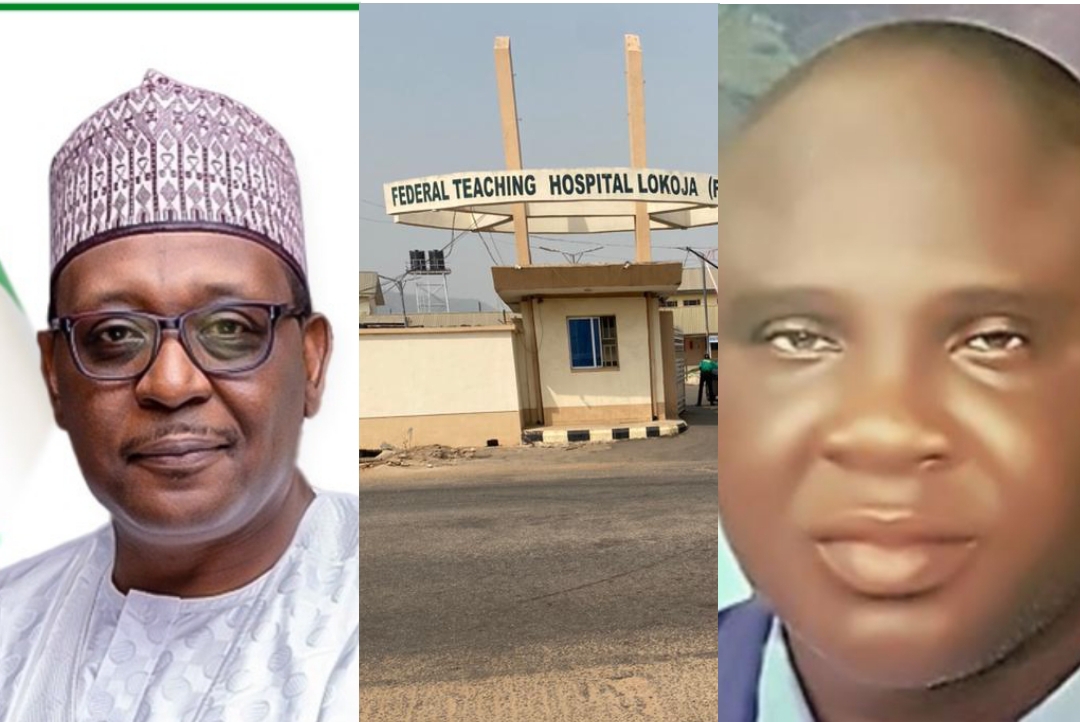
By Onoja Baba
In Lokoja, Nigeria’s’ only confluence capital, where the Niger and Benue rivers merge, a different kind of convergence unfolds, one fraught with despair, exhaustion, and ethical quandaries at the Federal Teaching Hospital Lokoja, formerly known as the Federal Medical Centre Lokoja. This institution, mandated to deliver world class healthcare to Kogi State’s residents and beyond, stands accused of systemic failures that have claimed lives, shattered families, and eroded public trust.
SecretsReporters delved deep into a web of allegations spanning overwork of junior doctors, patient neglect, violent intrusions by political figures, and glaring conflicts of interest, where senior medical professionals allegedly divert resources and patients to their thriving private ventures. This exhaustive probe, drawing from eyewitness accounts, historical records, official statements, and exclusive interviews, uncovers a hospital teetering on the brink, where the pursuit of private gain clashes with public duty, potentially violating Nigeria’s medical ethics and public service codes.
The troubles at Federal Teaching Hospital Lokoja are not new. Tracing back to at least 2018, the facility of the Kogi State Specialist Hospital in Lokoja was plunged into mourning with the death of Doctor Chukwudibe Rosemary, the Head of Department of Internal Medicine, on a Monday that year. Reports from the time detailed how Doctor Rosemary succumbed, allegedly due to exhaustion, overwork, and the non-payment of salaries by the Kogi State Government since February of that year. Compounding the tragedy, another doctor, Idris Nuhu, along with three nurses and a ward attendant, reportedly collapsed under similar strains of relentless duty. The nurses had been on shift since the previous Saturday morning, their workloads exacerbated by a two month strike from the Joint Health Sector Union, which left fewer hands to manage an influx of patients. A hospital staffer, speaking anonymously, connected Doctor Rosemary’s demise to financial woes, recounting how she lamented her omission from the March salary schedule, forcing her to languish in penury, unable to afford her own medications. The informant alleged a dire lack of resources, including no oxygen spanner available to administer lifesaving oxygen and insufficient funds to conduct necessary tests. This whistle-blower urged the state government to prioritize civil servants welfare, highlighting how erratic traffic payment systems adopted by the administration had deepened the crisis.
Fast forward to January 2024, and the hospital became a battlefield when Suleiman Abubakar, the Majority Leader of the Kogi State House of Assembly representing Okene One constituency, allegedly mobilized hoodlums to assault medical staff following the death of his relative. Eyewitnesses described how Abubakar and his entourage broke through the hospitals gates on a Tuesday, unleashing chaos in the Accident and Emergency department. One doctor, recounting the ordeal on Wednesday morning, detailed how the lawmaker tore shirts and beat health workers on duty. The physician explained that their team was reviewing a new patient when the group demanded accountability for a lost patient, whom they later learned was under Abubakars care. Confused and uninvolved, the doctors faced violence, with Abubakar hurling his phone at one and attempting to tear clothing. The assailants destroyed property in the Accident and Emergency unit, assaulting nurses, doctors, and security personnel. The hospital’s Chief Security Officer intervened with a gun, but the mob wrestled it away, firing several shots during the struggle, forcing staff to hide and lock gates. Another doctor, identified as @k_f2d on X (formerly Twitter), confirmed the assault in a series of posts, noting she was directly attacked and a colleague suffered injuries requiring a chest X ray. The lawmaker and his men reportedly beat anyone intervening, including security, while vandalizing hospital assets. When contacted, Kogi State Police Public Relations Officer William Ovye Aya deferred comment, as he was at a recruitment venue, promising to respond later.
Public reactions to the incident poured in on social media and forums, revealing a polarized community. Facebook users reacted to the story with different narratives. Adamu George lamented the hospitals management lessons learned only when high profile cases arise, recalling his 2020 loss of a twenty three year old son due to absent doctors, beds, and attendants. Muazu Sadiq acknowledged potential uncaring behaviour by staff but condemned the lawmaker’s vigilante justice, urging redress through authorities.

In response to the allegations, Suleiman Abdulrazak, the majority leader, denied involvement in shooting or vandalism in a statement issued on January 26, 2024. He accused the hospital of negligence and lies, admitting he visited with two brothers and a colleague but framing the incident as a reaction to delays in treating his father in law, referred from Reference Hospital Okene. Abdulrazak claimed staff removed the oxygen mask without improvisation, leaving the patient unattended for three hours, leading to death. He noted two other negligence related deaths upon arrival, creating a rowdy environment with aggrieved relatives. The lawmaker described finding the Accident and Emergency department padlocked and encountering unresponsive doctors, whom he greeted and introduced himself to but received rude, nonchalant responses. He alleged a chaotic scene involving unidentified men in mufti, staff, and relatives, where one fired shots sporadically, prompting his colleagues security to disarm him. Abdulrazak categorically denied taking thugs, vandalizing facilities, or brutalizing staff, calling it a campaign of calumny. He criticized the hospitals focus on propaganda over quality care, petitioned authorities for investigation, and expressed confidence in justice. The Nigerian Medical Association demanded his arrest and prosecution, amplifying calls for accountability.
SecretsReporters’ own visit to Federal Teaching Hospital Lokoja underscored the dilapidated state. A patient needing dialysis, who walked in with our reporter, was swiftly redirected by three nurses at the Nurses’ Station, including one male and two females, to the Kogi State Specialist Hospital. The nurses openly admitted that many doctors at both facilities (Specialist and FTH) own and manage their private clinics or hospitals, exacerbating resource strains.

The nurses disclosed that the hospital lacked basic admission cards that day, attributed to a health workers strike, but SecretsReporters observed that the only visible development was a massive mosque construction nearly rivaling the administrative building in size. A resident of Lokoja, Ahammed Shaba, lamented this prioritization, questioning how religious structures eclipse medical needs in a facility grappling with inadequate infrastructure.
He said, ‘’I still struggle to understand where exactly we got it wrong, and how wrong we got it. Recently, I noticed a gigantic construction project ongoing at the Federal Medical Centre (FMC), Lokoja, Out of curiosity, I made inquiries and discovered that the structure is a mosque.
‘’This development, however, raises serious concerns. When completed, aside the administrative building, both the mosque and the church within the FMC premises will likely stand as the largest structures in the entire compound in a medical centre that is already grappling with inadequate medical facilities and infrastructure. What this clearly suggests is that Christians and Muslims appear to be competing over who owns the biggest religious structure, rather than prioritising the core purpose of the institution.
‘’More troubling is the placement, the mosque is located close to the main gate, while the church is situated around the residential/administrative area.
‘’This is a federal government establishment, meant to serve all Nigerians regardless of faith, yet religious identity seems to be taking centre stage over institutional functionality.’’

The Mosque under construction
A focal point of SecretsReporters’ uncovering is Adewale Arimiyau Abolore, head of the dialysis unit at the FTH, Lokoja, whose private A4 Consultant Clinic and Dialysis Centre thrives a stone throw away from the FTH. Just opposite the FTH. Incorporated on August 2, 2018, with registration number RC 2635840, its address is No. 6B, J.S.Q. Nigerian Inland Waterways Authority quarters, Lokoja. Abolore serves as proprietor, with activities in medical practice and consultancy. SecretsReporters observed that while the dialysis machine at FTH non-functional with patients being redirected, the A4 boomed with patients spilling outside to decongest interiors. This proximity raises concern and the operation of the A4 owner raises conflict of interest flags against public office holder codes. Even though the Medical and Dental Council of Nigeria’s Code of Medical Ethics, under Rule 49, restricts full time public consultants to one private clinic outside duty hours, mandating in hospital care only at the employing public facility, Rule 42 prohibits enticing patients from colleagues, emphasizing no professional dealings without notice to prior attendants. While the code spells no explicit distance, the Nigerian Constitutions Fifth Schedule Code of Conduct for Public Officers forbids full time officers from managing private businesses except farming to avert conflicts.
SecretsReporters learnt that the dialyses unit of the FTH Lokoja, headed by the owner of the A4 hospital, is one of the units left in terrible conditions.

In an exclusive interview with Doctor Omeiza David Sunday, President of the Association of Resident Doctors at Kogi State Specialist Hospital Lokoja, SecretsReporters conducted as part of probing dual practice, conflicts, self-referrals, neglect, and enforcement gaps, he provided insights from a general perspective. Denying widespread ownership, he noted barely a few doctors at Specialist own private hospitals, roughly one or two percent of total, and emphasized their near constant presence in public duties. He argued few patients in privates come from government referrals, less than zero point one percent, attributing preferences to privacy and accessibility. Overwork, he admitted, affects all due to doctor shortages, with thousands japaing abroad, leading to strikes and low pay
He clarified dual practice as owning versus part time work in privates for tokens outside hours, insisting no inherent conflict if duties are fulfilled. On negligence, he viewed it as universal, not public specific, often misconstrued by the public, like referrals for space shortages being labeled neglect. . ‘’Negligence isn’t just a public hospital concern; it can happened anywhere including private hospitals. It happened in developed Nations and that’s why litigation exists for damages. The Dr that took care of the late Michael Jackson wasn’t a Nigerian. The only misconception in the public most time is that what the masses referred to as negligence isn’t negligence in most case. A patient is referred for lack of space and he goes out there and call it negligence,’’ he said.
He rebuffed claims of most Specialist doctors owning privates as lies, noting none among his seven executives do. He said, ‘’If most Drs have private hospital, how come I don’t have? We are 7 as excos and none of us has private hospital.’’
Doctor Omeiza however mentioned that there is a required distance a private hospital must maintain from a public facility, though unable to recall it precisely, underscoring potential ethical lapses in such close setups.
Messages to former Nigerian Medical Association President Doctor Omede Idris went unanswered. Meanwhile, another NMA former president who reached out informed SecretsReporters that he would not like to speak on the matter. He however admitted that running a private clinic while serving as doctor with a government hospital is illegal for doctors under 10 years of practice.
This mosaic of incidents, conditions, and testimonies paints a hospital in crisis, where junior doctors allegedly endure extended duties beyond norms, fearing reprisals from superiors, a claim Doctor Omeiza contextualized as shared overwork.
FTH Lokoja’s history reveals a transformation fraught with challenges. Originally, the General Hospital Lokoja, built in 1954 by the former Kabba Provincial Government at the Nigerian Inland Waterways Authority headquarters in Adankolo, it relocated in 1958 to its current Government Reserved Area site, half a kilometer away. Upgraded to specialist status in 1984 under Kwara State with additions like four wards, a laboratory X ray building, store laundry complex, and mortuary, it became part of Kogi State in 1991. The Federal Medical Centre Lokoja emerged on November 9, 1999, via an agreement between the Federal Ministry of Health and Kogi State Ministry of Health, starting with eighty six personnel. The mandate emphasized skilled care in a friendly atmosphere sustained by research and training. Late Professor Momoh Anate, the first Medical Director appointed November 12, 1999, oversaw initial renovations, absorbing 252 staff from the old General Hospital in August 2000. Absorbing outdated infrastructure necessitated pulling down old roofs and rebuilding outpatient consulting, pharmacy, children ward, dental, accounts, audit, physiotherapy, casualty, and medical social welfare departments. Miss Thomas Itsemhe A. Val, the first youth corper in 2004, contributed by designing layouts, signposts, labels, wards, offices, and the centres flag.
Under Doctor Dada Gbadebo Eleshin, acting from November 9, 2007, and confirmed in May 2008, manpower shortages were addressed with small scale recruitment of medical officers, nurses, laboratory assistants, health attendants, records assistants, and electricians. Previously, one doctor covered the entire hospital on call and one nurse per ward on afternoons or nights. Locum staff and corps members bridged gaps until larger recruitments in 2010 and 2013.
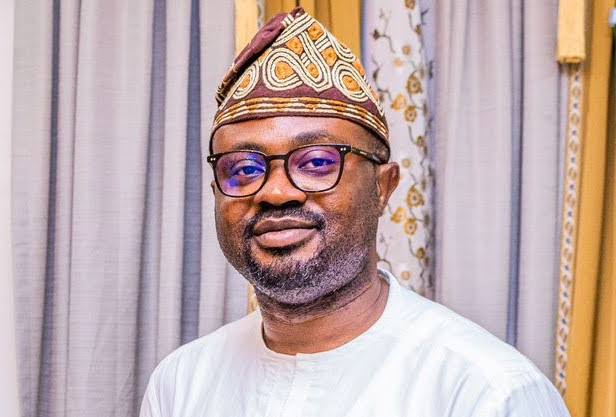
Tunde Olukoya
Hon. Olubunmi Tunji Ojo in a bid to convince gullible Nigerians that his much celebrated reforms in Nigeria Immigration Service embarked on an unscheduled working visit to the FCT Command Passport Office at Abuja where he was seen on video widely circulated on the social media emotionally abusing officers and men of the office. He was seen accusing them of tactically failing to attend to the Passport applicants under the guise of poor internet network services.
Hon Tunji Ojo since his assumption of office has been carrying out campaign of blackmail against the officers of Nigeria Immigration Service branding them rogues and criminals. The style of leadership and human resources management employed by the Hon Minister defies every known theory of motivation of the workforce.
The Minister conduct in the viral video is condemnable, lacks respect for uniform ethics, and national embarrassment. It is likened to a Pharasee who is removing dust in one’s eyes while carrying a log on his own eyes.
The Minister cannot claim ignorance of the fact that his reforms in NIS are not working. It is a known fact that the internet backbone being used by the Passport offices are sim-enable routers that are not up to 5G networks which connects the passport office to their remote servers at the production centres and which fluctuates whenever there are weather changes. Clusters of Passport offices (some cases 5 states) are connected to a production center and when there are power failure or network issues at the production center the entire passport offices in the five states will be shut down.
Will he Hon Minister also claim ignorance of the fact that the Immigration website recently encountered down time making it difficult for payments to be made during the day time except one wakes up late at night to do the payment?
Since taking up the production of Cerpac card has the Minister been able to produce cards for the expatriates? Is he Minister not aware of how difficult it is for Nigerians in diaspora to receive their passports which he is producing from Nigeria?
Is the Minister not aware of the difficulties encountered by foreigners applying for eVisa?
Is it also the fault of Immigration officers that his much advertised central Passport production has not kicked off? Is it the fault of the Immigration Officers that he has not been able to solve the problem of scarcity of passport booklets?
Can the Hon Minister be transparent enough to tell Nigerians how much the passport offices receives as subvention to run the office and how he finances the internet network services in all the passport offices?
Is the Minister not aware that his portals for various immigration services functions effectively only at nights?
Can he be transparent enough to tell Nigerians how effective is the passport delivery system? Can he be transparent enough to tell Nigerians who takes the extra charges of #4000 and #7000 in each passport and about $140 in Cerpac?
When Col Ahmed Ali rtd. took over Customs he didn’t reform Customs by bullying officers but rather he worked on the welfare of custom officers and got Government to adequately remunerate he customs officers providing logistics and infrastructural support to the customs officers and this gave rise to increase in revenue for customs. Can Tunji Ojo tell Nigerians how he provides uniform materials for the officers?
Can he tell Nigerians what support he has given to Immigration Officers who are being killed or injured in JTF operations in North East and other operations in other parts of the country? as well as at the various borders in the country? What was his effort in securing release of abducted officers of the Service in Benue and other states?
Apart from hijacking Immigration duties and giving to surrogate companies without adequate manpower what training program has he executed for the officers and men of the Service in the areas of ICT and effective management to boost the performance of officers?
I wish to call on Investigative Journalists to carry out an investigation on the reforms by Olubumi Tunji Ojo with a view to unraveling the truth or else he will run NIS to a halt.
SCANDALS
Hypocrisy Unmasked: Public Complaints Commission’s Management Share Millions Of Public Funds To Staff as Pocket Money
Secrets Reporters
The very institution tasked with upholding accountability and transparency, the Public Complaints Commission (PCC) – Nigeria’s own Ombudsman – finds itself under an uncomfortable spotlight as an audit report, obtained by SecretsReporters, reveals a worrying pattern of irregular expenditure.
The report highlights reimbursements for out-of-pocket expenses totaling a staggering ₦9,969,920.00, paid to staff without due approvals, casting a long shadow over an agency meant to champion integrity.
The audit’s findings lay bare a system seemingly oblivious to the established financial regulations. Paragraph 2302 of the Financial Regulations (FR), 2009, serves as the bedrock for prudent financial management, stipulating that all local purchases or indents must be authorized by the officer controlling expenditure and signed by them. However, the PCC, an agency dedicated to investigating public grievances against government bodies and private institutions, appears to have fallen short of these very standards.
According to the comprehensive audit, the sum of Nine million, nine hundred and sixty-nine thousand, nine hundred and twenty naira (₦9,969,920.00) was disbursed as reimbursement for out-of-pocket expenses to its staff. What raises a red flag is the glaring omission of crucial documentation: there was no evidence of a need assessment report for most of these items being out of stock or in the store, nor was there any sign of approval to incur these expenses on behalf of the Public Complaints Commission.
These anomalies, the report unequivocally states, can be attributed to “weaknesses in the internal control system at the Public Complaints Commission, Abuja.” The risks stemming from such lax controls are far-reaching and gravely concerning: a potential “diversion of public funds,” the specter of “payment for goods not delivered and services not rendered,” and ultimately, the “misappropriation of funds.”
In a move that could be seen as a turning a blind eye to the grave allegations, the PCC management offered “No response” to the audit’s findings. This silence, the auditors emphasized, leaves the findings valid and standing firm “until the Management implements the recommendations.”
To pull the agency back from the brink, the audit has laid out clear and stringent recommendations for the Chief Commissioner. He is now formally requested to account to the Public Accounts Committees of the National Assembly for the sum of ₦9,962,920.32, which was specifically identified as paid to officers “without approvals.”
Furthermore, the report demands the urgent recovery and remittance of this exact sum to the Treasury, with undeniable evidence of this transaction to be forwarded to the Public Accounts Committees.
Failure to comply, the audit warns, should trigger appropriate sanctions relating to poor management of cash and irregular or wrong payment, as stipulated in paragraphs 3115 and 3106 of the Financial Regulations, 2009.
-
 STRAY BULLET10 years ago
YOU ARE A THIEF SO YOU CAN’T PROBE A THIEF: ANOTHER UK NEWSPAPER WRITES BUHARI
-
 LATEST NEWS10 years ago
PREACH AND DIE: FOR DARING EARLY MORNING PREACHING IN ABUJA, MUSLIMS HACK TWO PASTORS TO DEATH
-
 LATEST NEWS9 years ago
BREAKING: TYRANNICAL NIGERIA PRESIDENT, MUHAMMADU BUHARI DIES IN LONDON HOSPITAL, BUT PRESIDENCY KEEPS SEALED LIPS
-
 SPECIAL REPORT10 years ago
MISS ANAMBRA CUCUMBER SAGA: HOW ANAMBRA BROADCASTING SERVICE DIRECTOR, UCHE NWORAH LEAKED SEX VIDEO TO THE PUBLIC FOR HER REFUSAL TO CONTINUE SEXUAL AFFAIR WITH HIM (PART ONE)
-
 SPECIAL REPORT10 years ago
EXCLUSIVE: HOW STEPHEN KESHI AND WIFE WERE KILLED BY HIS OWN BROTHER
-
 SPECIAL REPORT9 years ago
POWER GAME ALMOST OVER: OSINBAJO UNDER PRESSURE TO HAND OVER TO SARAKI AS VP IN ANTICIPATION OF THE UNKNOWN
-
 STRAY BULLET10 years ago
DESPITE HUNGER IN NIGERIA, BUHARI ALLEGEDLY DONATES 500 MILLION DOLLARS TO HILARY CLINTON’S FAILED PRESIDENTIAL ELECTIONS AS NIGERIANS PRESSURE HIM TO CONGRATULATE TRUMP
-
 SPECIAL REPORT10 years ago
EAR INFECTION SCAM: BUHARI JETS TO LONDON TO SECRETLY NEGOTIATE WITH NIGER DELTA AVENGERS