 By
By Bulmun Dakwal
Fresh disturbing concerns over spending priorities have surfaced in Taraba State following the allocation of N1 billion for renovation of the state’s first lady Mrs. Agyin Agbu Kefas office. The project, titled “Renovation of Her Excellency’s Office in Jalingo, Jalingo LGA” in the approved 2026 budget, has been earmarked for execution despite an earlier allocation of N800 million for the same project with a recording of zero performance in 2025.
A look into the budget document by SecretsReporters shows that the project, listed under the Ministry of Women Affairs and Child Development, received an initial allocation of N800 million in the 2025 budget. However, the budget performance report for January to December 2025 shows that no expense was recorded on the project.

A screenshot of the budget line in the 2026 approved budget
Rather than providing an explanation for the non-implementation of the earlier allocation, the state government has now increased the cost of the project to N1 billion in the 2026 approved budget.
This allocation was included in the budget despite the visible dilapidating infrastructure across the state, where residents continue to grapple with poor roads, inadequate healthcare facilities, overcrowded classrooms, and aging public infrastructure.
The renovation has particularly drawn attention because it follows the similar pattern of spending on Government House renovation project in the previous 2025 budget. Several research by Secrets Reporters indicated that over N2.4 billion was spent the renovation of the Government House and Government Lodges in Jalingo.
While the state spent N2.4 billion on renovating the Government House, Jalingo, and lodges between January and June 2025, it generated only N9.6 billion as independent revenue (IGR) in the same period.
For many residents, the latest proposal raises a simple question “why is another N1 billion being proposed for an office renovation when the basic needs of the people remain largely unmet?”
Across several communities in Taraba, the realities of daily life paint a different picture from the figures contained in the state’s budget documents.
For years, residents, commuters, traders, and farmers have continued to express concerns about the condition of critical transport infrastructure linking communities and markets.
One of the most frequently cited examples is the long standing challenges associated with the Namnai axis, a strategic route that serves as a major gateway connecting Taraba to other parts of the country.
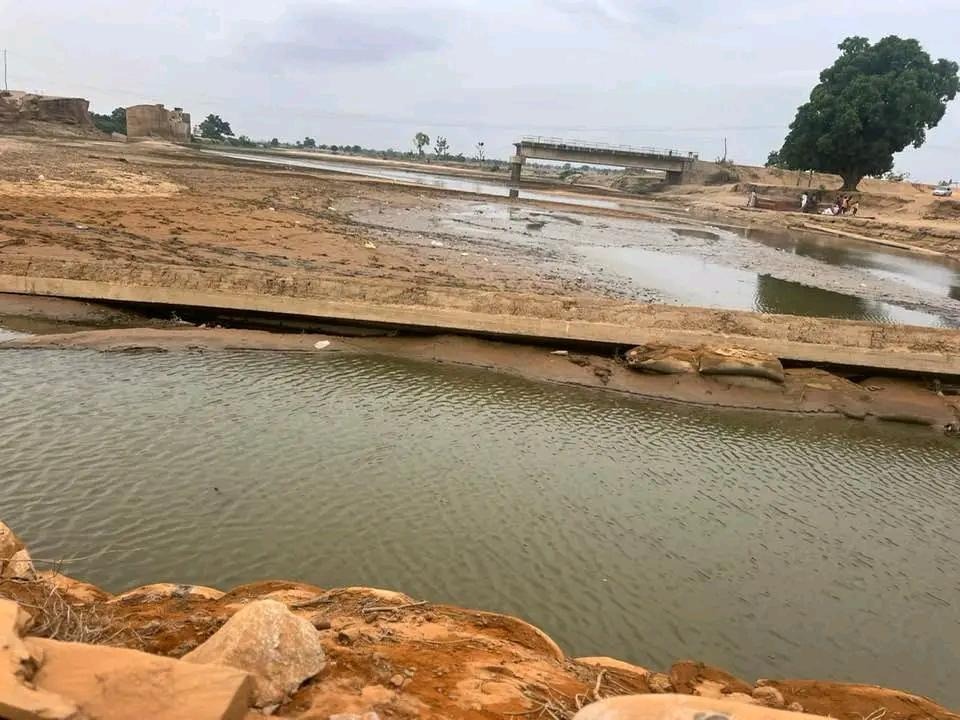
Farmers transporting agricultural produce often face delays and increased transportation costs, while businesses complain that poor infrastructure continues to affect the movement of goods and services.
Residents say transportation challenges not only increase the cost of doing business but also affect access to healthcare, education, and economic opportunities.
In a state where agriculture remains one of the major sources of livelihood, the condition of transport infrastructure has direct implications for food security and economic growth.
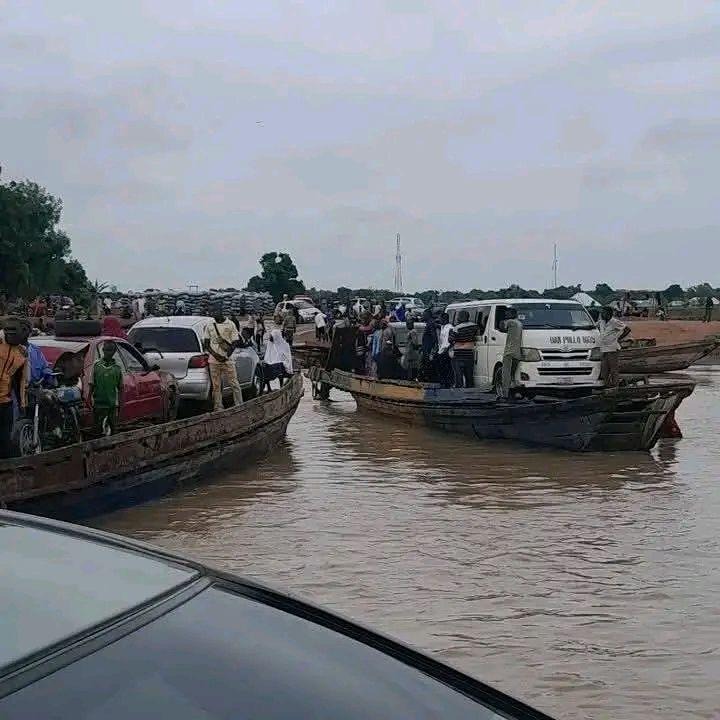
Commuters trying to cross the Namnai river
A farmer who spoke with SecretsReporters anonymously said transportation costs have continued to eat into profits that would otherwise support farming activities.
“When roads and bridges become difficult to use, it is ordinary people that pay the price,” he said.
Another resident who chose anonymity said the community has lost over four of its active youth drivers in the water due to the absence of a bridge

Residents crossing with their motorcycles
“The bridge collapsed in August 2024 due to heavy rains, our struggle continues to linger on and it has affected a lot of businesses and the major loss for us is the death of four our brothers in this same water” he said
Recounting the incident silently and shaking his head, “Their death would have never happened if only the government did the right thing by fixing the bridge” he added with a sad tone.
In some schools, students reportedly share desks or sit on the floor, learning environments that many education advocates say are not conducive for effective teaching and learning.
Many public health facilities continue to face operational challenges ranging from inadequate equipment to unstable electricity supply, insufficient infrastructure and in some cases dilapidated infrastructure.
In far rural communities especially, residents often have to move from their community to the other to access quality healthcare services.
Due to these loopholes, the decision to allocate N1 billion for the renovation of Her Excellency’s Office has become a subject of public debate and scrutiny.
Transparency advocates say the issue is not merely the existence of the project but the absence of clear explanations regarding its cost and necessity.
Questions have also been raised about the earlier N800 million allocation in the 2025 approved budget. If the project was not executed in 2025, critics argue that government should first provide a detailed explanation before introducing an even larger outrageous allocation.
The document does not clearly indicate whether the renovation involves structural reconstruction, expansion, furnishing, technological upgrades, security installations, or other major works that could account for the proposed cost.
Without detailed project specifications, experts say it becomes difficult for citizens to determine whether the allocation is genuine and not another budget exaggeration.
Public finance observers also point to the issue of opportunity cost.
A billion Naira is a substantial amount of public money that can fund multiple community based projects across the state that would benefit its citizens. Projects like school rehabilitation programmes, healthcare upgrades, rural road rehabilitation or construction, water projects, or agricultural interventions capable of reaching a larger segment of the people.
For many residents, the issue goes beyond a single office renovation. It points to a bigger question about governance priorities in a state where communities continue to seek better roads, stronger schools, improved healthcare facilities, and infrastructure capable of supporting economic growth.