

LATEST NEWS
DEBT MANAGEMENT: PANACEA TO ECONOMIC EVOLUTION

Ifeanyi Omokwe
The promise of Change by the President Muhammadu Buhari-led administration is one that should take a holistic approach to curb the issue of unemployment and investment in the country. So it was not unexpected, when on June 20, 2016, the Debt Management Office unveiled what seems to be an airtight strategy to manage Nigeria’s debt going forward. Contrary to the situation that led to the 2004/2006 strategy, the new debt management strategy takes an almost 180 degrees turn to address current issues in the economy viz the vision of President Buhari.
In a nutshell, it was originally argued that the best way to manage Nigeria’s debt profile is to reduce the level of external borrowing and increase the rate of domestic borrowing; precisely 84% domestic borrowing to 16% external borrowing, the new thinking canvasses a marginal increase in external borrowing, in both the short and long term.
A decade ago, the ideal strategy in view of the Paris and London club’s debt relief to the country. However, there were downsides to the notion such as the unavailability of the needed fund in by the private sector to sustain local industries to culminate in the needed economic leap. The result of this single factor dwarfs the possibility of an effective diversification of Nigeria’s economy.
In view of the above, logic therefore demanded that a review is done on the internal to external debt ratio. Hence, the DMO came up with a new ratio of 60:40 borrowing template. According to the office, it is intended to keep money in the hands of private investors in order to spearhead a private sector driven economy. Ultimately, it is expected that this will translate into job creation and a diversification of the economy.
An analogy given in “A Tale of Two Cows” expresses the traditional capitalist action when resources are limited. It goes thus, you have two cows; you sell one and buy a bull. Your herd multiplies, and the economy grows. You sell them and retire on the income. Fortunately, this is where Nigeria finds herself today because the economy finally gets serious attention to diversify. The question of where we are coming from should find some sort of relevance here. Likened to an American corporation that has two cows; you sell one, and force the other to produce the milk of four cows. Later, you hire a consultant to analyze why the cow has dropped dead.
Going forward as a nation, it is important that investors are not over labored with a perfectly avoidable mix of reduced resources and a demand for increased productivity; this is bad business and a strategy for failure given the dwindling prices of oil. Just like the central bank’s flexible foreign exchange rate policy, the DMO under the able leadership of Dr. Abraham Nwankwo has scored a major goal in Nigeria’s drive for an economic quantum leap and deserves the applause for his ingenuity and intellectual sagacity.
The DMO boss, who recently addressed members of the media in Abuja on further insights into Nigeria’s Debt Management Strategy (2016-2019), described the new document as one which would be broad-based as well as inspire confidence in Nigerians.
He noted that the new four-year borrowing plan was appropriate for the times and challenges as well as appropriate for the country’s vision going forward.
He said: “The Debt Management Strategy we are going to pursue over the next four years, takes into account the fact that for now Nigeria’s public debt portfolio is dominated by domestic debt.
“After the Paris and London Club exits between 2004 and 2006, the country took a deliberate decision to develop its domestic bond market and to do most of the public borrowing from domestic sources so as to develop the domestic bond market, that objective has been sufficiently achieved.
“And therefore taking into account that external financing sources are on the average cheaper than domestic sources, it becomes more necessary to slant more of the borrowing in favour of external sources.
“Therefore one of the major elements of this strategy is that over the medium, term we will strive to remix the public debt portfolio from 84% domestic and 16% external to 60% domestic and 40% external.
“In addition taking into account other factors, the fact that over the next four years public borrowing proceeds will be devoted to capital expenditure an element of the strategy is to ensure that we remix the current status of about 31 percent short-term and 69 percent long-term to a maximum of 25% short-term and a minimum of 75% long-term.
“So we are remixing between external and domestic and we are also remixing within the domestic, between short and long-term.
”And when we look at the opportunities and possibilities which are very credible given our resource base, given the number of things we can do better than we’ve ever done, there’s no doubt then that in the next few years, there will be significant improvements in employment generation, poverty reduction and in the living standards of our people and more importantly, we should be inspired by the fact that the picture of the future which we see is a sustainable one; it’s not one that will be bedeviled as in the past by volatilities in the oil market.”
Further justifying the rationale behind the external borrowing particularly at a period of unfavourable exchange rate regime and lower reserves, he said: “One of the major advantages of remixing in favour of external debts is that first, we will be able to achieve cheaper cost of funds, therefore lower debt servicing but more importantly, we will be avoiding the risk of crowding out the private sector from access from the domestic markets.
“As you know, within the context of government’s economic programme which requires massive investment in infrastructure, and diversification of the economy, the private sector is still expected to play the lead role so that as government makes its own expenditure in infrastructure and improving the business environment, you expect the private sector to key in, in developing the various sectors of the economy including agriculture, solid minerals, manufacturing among others.
“Therefore, given the momentum government is bound to create in resuscitating the economy, the private sector would be expected to require massive resources as well and it becomes necessary to leave more space for the private sector to mobilize the resources they require to be able to complement government’s initiatives.”
Looking at the trend, Nwankwo has made sustained effort in outlining Nigeria’s public debt management objectives by ensuring the growth and development of the country’s domestic and international securities markets, meeting government’s financing needs at minimal cost and with prudent degree of risk over the medium to long-term and also the efficient management of Nigeria’s public debt in terms of well-diversified and sustainable debt portfolio, supportive of government and private sector needs.
Beyond the need to diversify the economy, Nwankwo also said Nigeria may still access the Eurobond or sovereign sukuk market for more cash but hinted that the country was yet to determine the size of a potential sukuk deal and was working with the Securities and Exchange Commission (SEC), the Central Bank of Nigeria and the stock exchange to build capacity.
Besides, Nigeria’s low debt to Gross Domestic Product (GDP) ratio means the country can borrow more to fund budget, infrastructure and other essential projects that will stimulate the economy and create jobs for the citizenry.
Also, speaking at a one-day workshop on “Public Debt and the challenge of financing Nigeria’s economic recovery” organised for Capital Market Correspondents Association of Nigeria (CAMCAN) in Lagos, the DMO boss reiterated the federal government’s stance to use all money to be borrowed to finance the 2016 budget to fund capital projects.
Nwankwo stressed that the Nigerian debt level is highly sustainable, noting that the nation still had a lot of idle potential, which the current administration is working to harness for effective growth of our national economy.
According to him, in the medium to long term, debt sustainability in Nigeria hinges on the overall sustainability of the economy, and the overall economic sustainability hinges on diversifying the economy in a sustainable manner.
On revealing the three year debt management strategy which will run from 2016 – 2019, Dr. Nwankwo explained that the focus of the new initiative is to develop a debt management strategy that would ensure that in the face of macroeconomic and other financial constraints, the cost and risk profile of the public debt portfolio remains within acceptable limit over time.
By way of conclusion, this solution is not a quick fix for local industries in an economy that has been laid unattended. Rather, it is an enduring effort that will ensure local industries organically erupt as a result of the availability of funds in the hands of private individuals.
Omokwe wrote in from The Gazetter Newspaper


LATEST NEWS
Emem Usoro Scandal: Journalist Stanley Ugagbe Remanded in Kuje Prison Over Cybercrime Charges

Secrets Reporters
Journalist Stanley Ugagbe has been remanded at the Kuje Correctional Centre by the Federal High Court in Abuja following his arraignment on a six-count charge filed by the Inspector-General of Police over publications concerning the Deputy Governor of the Central Bank of Nigeria (CBN), Emem Usoro.
Ugagbe was arraigned before Justice Salim Olasupo Ibrahim on Monday morning, where the charges were read to him. Following the proceedings, the court ordered that he be remanded in the Kuje Correctional Centre and adjourned the case until September 21st for trial.
The development marks the latest chapter in a case that has drawn attention from journalists and press freedom advocates nationally and internationally following Ugagbe’s arrest and detention by the Nigeria Police Force.
The charges stem from criminal proceedings instituted by the Inspector-General of Police before the Federal High Court in Abuja, accusing Ugagbe and Fejiro Oliver of conspiracy, cyberstalking and defamation arising from a series of reports titled “Exclusive: CBN Deputy Governor Emem Nnana Usoro Hides N1.4 Billion California Luxury Condo in Asset Declaration Scandal – Part 1”; “EXCLUSIVE: CBN Deputy Governor Emem Usoro Linked to N3.6bn Los Angeles Property Amid Questions Over Asset Declaration Compliance (Part 2)” published on SecretsReporters.
According to the charge sheet, the prosecution alleged that the defendants conspired to commit cyberstalking contrary to the Cybercrimes (Prohibition, Prevention, etc.) Act, 2015 (as amended in 2024). The police further accused Ugagbe of publishing stories alleging that the CBN deputy governor concealed a luxury property in California in her asset declaration, was linked to a multi-billion naira property in Los Angeles, and published another report concerning her personal life. The prosecution contended that the publications were false and constituted cyberstalking and defamation under the Cybercrimes Act and the Penal Code.
With the court now ordering his remand at the Kuje Correctional Centre, Ugagbe will remain in custody pending the next hearing, which has been fixed for September. The court is expected to consider issues relating to his bail and continue proceedings on the substantive charges at the adjourned date.
Recall that Ugagbe’s ordeal began on July 1, 2026, when armed men reportedly abducted him on his way home from work. The operatives confiscated his mobile phones and laptop before taking him away in an unmarked vehicle. For several days, neither his family nor his employer knew his whereabouts.
His disappearance sparked widespread condemnation from media organizations, including the Nigeria Union of Journalists (NUJ), which demanded that security agencies disclose his whereabouts, grant him access to his family and legal representatives, and either charge him before a competent court or release him.
International organizations also reacted. The Committee to Protect Journalists (CPJ) called on Nigerian authorities to investigate his disappearance and ensure his immediate safety, while the International Press Institute (IPI Nigeria) intervened in efforts that eventually led to his release from police custody.
Following his release on July 6, Ugagbe was granted bail while police reportedly continued investigating allegations, including espionage, cyberstalking, and other computer-related offences.
LATEST NEWS
ICPC Probes News Agency of Nigeria Over Alleged Recruitment Irregularities After Secrets Reporters Expose
SecretsReporters
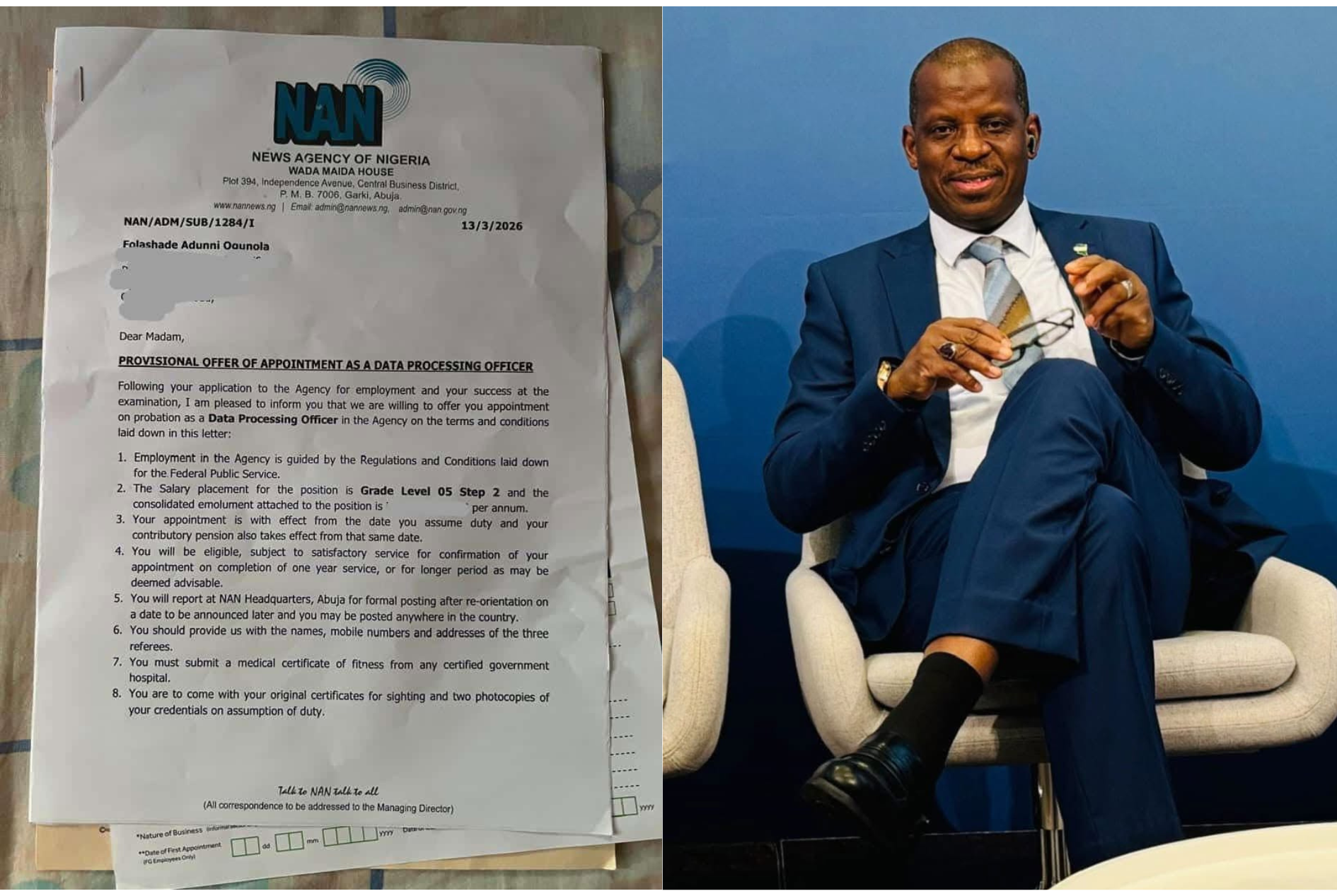
The Independent Corrupt Practices and Other Related Offences Commission (ICPC) has commenced an investigation into alleged recruitment irregularities at the News Agency of Nigeria (NAN), seeking records relating to the agency’s employment and staff regularisation exercises conducted between 2024 and 2026.
The development comes days after SecretsReporters publication, titled “Alleged Sexual Harassment, Recruitment Controversy Rock News Agency of Nigeria as Female Employee Questions Grade Level Placement”.
The anti-corruption agency has formally requested a comprehensive range of recruitment and personnel records from NAN as part of an ongoing investigation into possible violations of the Corrupt Practices and Other Related Offences Act, 2000.
In a letter dated July 6, 2026, and addressed to the Managing Director/Chief Executive Officer of NAN, the ICPC directed the agency to produce the requested documents and designate a competent officer to appear before investigators at the Commission’s headquarters in Abuja.
The letter, signed by the Director of Operations on behalf of the Chairman of the ICPC, stated that the request was made pursuant to Section 38 of the Corrupt Practices and Other Related Offences Act, 2000, which empowers the Commission to obtain documents and information required for the purpose of investigations.
According to the letter, investigators requested all records relating to NAN’s recruitment and staff regularisation exercises between 2024 and 2026.
The Commission specifically requested recruitment advertisements, eligibility and selection criteria, lists of shortlisted applicants, names of successful candidates, and minutes of meetings of committees involved in the recruitment process.
The ICPC also requested the personnel file of Ogunola Folashade Adunni, together with any additional information that could assist investigators in determining whether due process was followed during the recruitment exercise.
Part of the letter reads: “This Commission is investigating an alleged violation of the Corrupt Practices and Other Related Offences Act, 2000 and it has become necessary to obtain certain documents/information from your office.”
It further directed NAN to ensure that a competent officer appeared before investigators with all relevant recruitment and personnel records requested by the Commission.
LATEST NEWS
While David Umahi Walks Free Of Homicide, Police File Six-Count Charge Against Fejiro Oliver And Ugagbe Over Reports on CBN Deputy Governor Emem Usoro
Secrets Reporters
The Nigeria Police Force has filed a six-count criminal charge before the Federal High Court in Abuja against SecretsReporters investigative journalist Stanley Ugagbe and his publisher, Fejiro Oliver, who they referred to as Oghenetega Oghenedoro, over a series of publications concerning the Deputy Governor of the Central Bank of Nigeria (CBN) in charge of operations, Emem Usoro.
According to the charge sheet dated July 4, 2026, the Inspector-General of Police is the complainant, while Stanley Ugagbe and Fejiro Oliver are listed as the first and second defendants, respectively. The second defendant is identified in the court process as being “at large.”
In the first count, the prosecution alleged that both defendants conspired to commit cyberstalking, contrary to Section 27(1)(b) of the Cybercrimes (Prohibition, Prevention, etc.) Act, 2015, as amended in 2024, an offence punishable under Section 24(1)(b) of the same Act.
The second count accused Ugagbe of publishing a report on SecretReporters.com titled, “CBN Deputy Governor Emem Nana Usoro hides N1.4 Billion California Luxury Condo in Asset Declaration Scandal.” The prosecution alleged that the publication was false and intended to cause a breakdown of law and order, contrary to Section 24(1)(b) of the Cybercrimes Act.
In the third count, the police alleged that Ugagbe published another report titled, “CBN Deputy Governor Emem Usoro linked to N3.6 BN Los Angeles Property amidst questions over Asset Declaration Compliance,” which the prosecution claimed was knowingly false and intended to bully, threaten or harass the CBN Deputy Governor. The charge was brought under Section 24(2)(a) of the Cybercrimes Act and is stated to be punishable under Section 24(2)(c)(i) of the Act.
The fourth count relates to a publication titled “Adulterous Woman: How CBN Deputy Governor Emem Usoro turned side chic, paraded herself as man’s wife, destroyed couple’s union.” Prosecutors alleged that the publication was knowingly false and intended to damage the reputation of the CBN Deputy Governor, contrary to Section 24(2)(c) of the Cybercrimes Act and punishable under Section 24(2)(c)(ii).
In the fifth count, the police also charged Ugagbe under Sections 391 and 392 of the Penal Code Act, alleging that the same publication concerning the CBN Deputy Governor’s personal life amounted to defamation likely to harm her reputation.
The sixth count concerns the publication regarding the alleged Los Angeles property linked to the CBN Deputy Governor. Prosecutors alleged that the publication constituted defamation contrary to Section 393 of the Penal Code Act because it was made knowing, or having reason to believe, that it would harm the reputation of Emem Usoro.
The charge was filed before the Federal High Court, Abuja Judicial Division, and is signed by Anthony A. Egwu, Kufreabasi Ebong, Aminu Abubakar, and Victor I. Okoye, all of the Directorate of Legal Services at the Force Headquarters, Abuja. The court document bears a Federal High Court official filing stamp dated July 7, 2026.
Recall that Ugagbe’s ordeal began on July 1, 2026, when armed men reportedly abducted him on his way home from work. The operatives confiscated his mobile phones and laptop before taking him away in an unmarked vehicle. For several days, neither his family nor his employer knew his whereabouts.
His disappearance sparked widespread condemnation from media organizations, including the Nigeria Union of Journalists (NUJ), which demanded that security agencies disclose his whereabouts, grant him access to his family and legal representatives, and either charge him before a competent court or release him.
International organizations also reacted. The Committee to Protect Journalists (CPJ) called on Nigerian authorities to investigate his disappearance and ensure his immediate safety, while the International Press Institute (IPI Nigeria) intervened in efforts that eventually led to his release from police custody.
Following his release on July 6, Ugagbe was granted bail while police reportedly continued investigating allegations, including espionage, cyberstalking, and other computer-related offenses.
In his reaction, Fejiro Oliver wondered why the police should state that he’s “at large”, when they know he’s not resident in the country, a statement he described as “malicious and judicially irresponsible from the police. The police knows the court is going on vacation soon and hurriedly packaged this on Emem’s order so they can get remand order.”
Meanwhile, David Umahi, Nigeria’s Works Minister is still walking free despite a public outcry over the death of Mary Habila in his house after she visited him for days with her friend in Ebonyi State from Kaduna, a Northern part of Nigeria
-

 STRAY BULLET10 years ago
YOU ARE A THIEF SO YOU CAN’T PROBE A THIEF: ANOTHER UK NEWSPAPER WRITES BUHARI
-

 LATEST NEWS10 years ago
PREACH AND DIE: FOR DARING EARLY MORNING PREACHING IN ABUJA, MUSLIMS HACK TWO PASTORS TO DEATH
-

 LATEST NEWS9 years ago
BREAKING: TYRANNICAL NIGERIA PRESIDENT, MUHAMMADU BUHARI DIES IN LONDON HOSPITAL, BUT PRESIDENCY KEEPS SEALED LIPS
-

 SPECIAL REPORT10 years ago
MISS ANAMBRA CUCUMBER SAGA: HOW ANAMBRA BROADCASTING SERVICE DIRECTOR, UCHE NWORAH LEAKED SEX VIDEO TO THE PUBLIC FOR HER REFUSAL TO CONTINUE SEXUAL AFFAIR WITH HIM (PART ONE)
-

 SPECIAL REPORT10 years ago
EXCLUSIVE: HOW STEPHEN KESHI AND WIFE WERE KILLED BY HIS OWN BROTHER
-

 SPECIAL REPORT9 years ago
POWER GAME ALMOST OVER: OSINBAJO UNDER PRESSURE TO HAND OVER TO SARAKI AS VP IN ANTICIPATION OF THE UNKNOWN
-

 STRAY BULLET10 years ago
DESPITE HUNGER IN NIGERIA, BUHARI ALLEGEDLY DONATES 500 MILLION DOLLARS TO HILARY CLINTON’S FAILED PRESIDENTIAL ELECTIONS AS NIGERIANS PRESSURE HIM TO CONGRATULATE TRUMP
-

 SPECIAL REPORT10 years ago
EAR INFECTION SCAM: BUHARI JETS TO LONDON TO SECRETLY NEGOTIATE WITH NIGER DELTA AVENGERS