 By
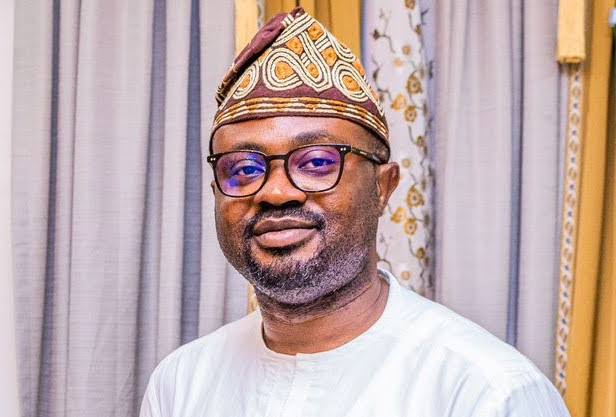
By With Nigeria’s dependence on crude oil export over 90 per cent of its total foreign exchange earnings and over 70 per cent of public revenue, the fall in crude oil prices makes the economy vulnerable to shocks. Director-General of Debt Management Office (DMO), Dr Abraham Nwankwo, says harnessing potential in public, private sectors of the economy as well as diversification of the economy remain critical to speedy recovery, writes COLLINS NWEZE.
Nigeria’s economy has been largely crude oil dependent. With oil prices still down, the impact on revenues and government’s ability to deliver on major developmental projects remain challenging. Still, government’s over-dependence on crude oil for national revenues was recognised for decades, but largely ignored.
For the Director-General, Debt Management Office (DMO), Dr. Abraham Nwankwo, both the private and public sectors have huge potential that should be harnessed to lift the economy from the pains of crashing crude oil prices.
He insists the oil price crisis resulted from drastic, adverse structural shift in the global market demand and supply of oil and gas. International market price of oil dropped by about 43 per cent from an average of about $100.35 for the 12 months of 2014, to an average of $57.20 for the first six months of last year and closed at $46 last Friday.
Crude oil prices declined to the lowest level in almost two months during Thursday trading amid several bearish reports, including the decline in US stockpiles, Brexit concerns and potential supplies. In addition, higher volumes of selling activities are also eroding stock and commodity prices.
US crude dipped almost five per cent to $45.14 per barrel, the lowest settlement in almost two months. Brent crude futures declined nearly 4.8 per cent to $46.43 per barrel after the rise of almost 1.5 per cent during the early trading session last Thursday.
Nwankwo explained that for decades, developed economies have invested heavily on alternative energy sources and have been making steady and gradual gains in solar, organic and other renewable energy sources. Advances have also been made in energy-saving and efficiency devices.
Besides, the oil price crash has hit the Federation Accounts Allocation Committee (FAAC) resources, the major source of revenue for all governments in the Federation, which dropped by 50 per cent compared to the pre-crisis period and the drop in the annual amount available for sharing among the governments of the federation, estimated at $16 to $20 billion.
The drop in FAAC revenues led to the inability of over 30 states, out of the 36, to honour recurrent obligations, including salaries and pension liabilities, as well as capital obligations. The DMO has helped to restructure the state debts, bringing temporary relief for the affected states.
States’ debt support scheme
DMO’s previous efforts in restructuring of banks’ loans to states into Federal Government of Nigeria (FGN) bonds was strategic. The DMO had last year, put forward a proposal for restructuring the short-term bank loans of states into long-term Federal Government of Nigeria (FGN) Bonds. The purpose was to reduce the debt-service outflow of states and free resources for meeting other obligations, particularly, clearance of arrears of salaries and pensions.
The debt office said a total of 23 states had submitted requests for the bank loan-to-FGN bond restructuring. Phase I consisted of eleven states which had completed and submitted all necessary documentations, including the submission of jointly authenticated balances with banks. These states had their bank loans restructured into 20-year FGN bonds effective August 17, last year. Phase II of the restructuring consisted of 12 states whose bank loans were restructured into 20-year FGN bonds effective September 16, last year.
It disclosed that the second phase, which concludes the restructuring exercise, showed that 14 banks were involved in phase I debt restructuring operation and their total loans to the 11 states which were restructured amounted to N322.788 billion.
Also, 12 banks were involved in Phase II of the restructuring operation and the total loans restructured for the 12 states amounted to N252.728 billion bringing the total restructured amount for the 23 states to N575.516 billion.
The debt office said the government attached high priority to addressing the fiscal imbalance faced by most states of the federation. The immediate cause of the fiscal imbalance was the structural drop in the international price of crude oil and the resultant drop in the revenue allocation from the distributable pool for all governments in the Federation.
Infrastructure funding
The Director-General of West African Institute for Financial and Economic Management (WAIFEM), Prof. Akpan Ekpo, agreed with Dr. Nwankwo. He explained that with declining government revenues from oil, budgetary allocations alone may not be enough to finance the infrastructure deficit in the country.
Ekpo admitted that the debt option is still the most viable at this time. He said Nigeria’s rebased $510 billion Gross Domestic Product (GDP) economy gives it more room to borrow more to bridge infrastructure gap.
For him, Nigeria could borrow up to 40 per cent of its GDP externally, adding that the DMO has in the past, demonstrated good negotiation skills in dealing with the country’s debt matters, either with internal or external creditors.
He believes the viable option for government to take is to borrow from the World Bank or African Development Bank (AfDB) to fund the key developmental projects. Government can also borrow internally to achieve the feat, but disclosed that internal borrowing is always short term while external borrowing has longer tenor.
Besides, the Nigeria Trust Fund with the AfDB can be used as leverage while borrowing form the bank, adding that borrowing from the International Monetary Fund (IMF) will be expensive because Nigeria is now classified as a Middle Income Country on the Fund’s list.
Ekpo said the DMO has the capacity and constitutional role to advise the government on these choices. “The World Bank rates are cheaper with longer term. The DMO can also leverage on the Nigeria Trust Fund with the AfDB to get better deal on new loans needed to fund developmental projects,” he said.
Senate calls for more advocacy on debt management
The Senate has called for more advocacy on debt management and servicing to enable Nigerians understand the benefits and impact of government’s plans to raise funds from the capital and bonds’ market for development purposes.
The Chairman, Senate Committee on Local and Foreign Debts, Senator Shehu Sani, disclosed this at a retreat organised for members of the committee by the DMO in Minna, the Niger State capital.
Sani said if there was aggressive advocacy on what such debts were taken for, Nigerians would support such initiative aimed at driving development and engendering development.
According to him, it was imperative for the DMO to develop a framework in the major languages in the country to get the citizens to understand why debts are taken, for what purpose and what the society stands to benefit from such borrowing.
“There is need for strategy mix anchored on proper advocacy on what debt management is all about. Nigerians want to know why governments borrow, to what purpose such debts are taken and I can say that once it is well explained, the people will key into the programme.
“I, therefore, hope that the DMO will rev up its advocacy, especially in the major languages because a whole lot of Nigerians don’t seem to understand why their states governments will take loans and they cannot see why the loan was taken in the first instance.”
Sani said “debt is a veritable tool for economic growth and development if properly managed. I also believe that an effective debt management that emphasises transparency due process, and fiscal discipline can precipitate a turnaround in the economy”.
According to him, the Senate will look at the DMO Act to amend it to meet the realities of the present economic situation, noting that the legislature should be involved in the negotiations of loans as it will not only enhance their capacity but offer a clear insight into the terms and conditions of such loans.
Nwankwo said the workshop with the theme: Processes and procedures for external and domestic borrowing and settlement, has become imperative given the funding of the 2016 budget from loans. He said the Federal Government does not just borrow for borrowing sake but to address the challenge of development and infrastructure growth.
Way out of the crisis
Nwankwo explained that to address the economic problems, there is need to articulate the essential elements and actions required for the short and long-term fiscal stabilisation, as well as the structural reorganisation and diversification needed to achieve self-sustaining, employment-generating growth.
The DMO chief said the public sector should encourage Private Direct Investment (PDI) as well as Public-Private Partnership (PPP), including the use of incentives and enhancements, like provision of sovereign guarantees. Such special supports would be almost imperative where the private sector shows interest in investing in infrastructure and mega industrial projects that would be provided by the public sector.
Nwankwo said the debt body has been helping the country to manage its debt effectively. For instance, it began the implementation of the strategic objective of assisting the states of the federation to develop debt management institutions and capabilities since the last quarter of 2007, as part of its five-year strategic plan.
The goal, he explained, was to forestall a relapse into debt un-sustainability, as was experienced by the country before its successful exit from the Paris and London Club debts over-hang. The strategy was to redress the very weak debt management institutions, structures and practices at the state levels towards a more effective coordination of public debt management.
Other borrowing guidelines
The National Assembly is expected to grant prior authorisation in the appropriation or other Act or Law for the purpose for which the borrowing is to be utilised. “The Federal Government may borrow from the capital market, subject to National Assembly’s approval. Government at all tiers shall only borrow for capital expenditure and human development on concessional terms,” the debt guidelines said.
Any government of its agencies can only obtain external loans through the Federal Government and such loans must be supported by Federal Government guarantee. “No state, local government or federal agency shall, on its own, borrow externally. State governments and their agencies wishing to obtain external loans shall obtain Federal Government’s approval-in-principle, from the Federal Ministry of Finance,” it said.
However, the borrowing proposal must be submitted to the Federal Ministry of Finance and the DMO for consideration, and must state the purpose for which the borrowing is intended and its link to the development agenda of government.