 By
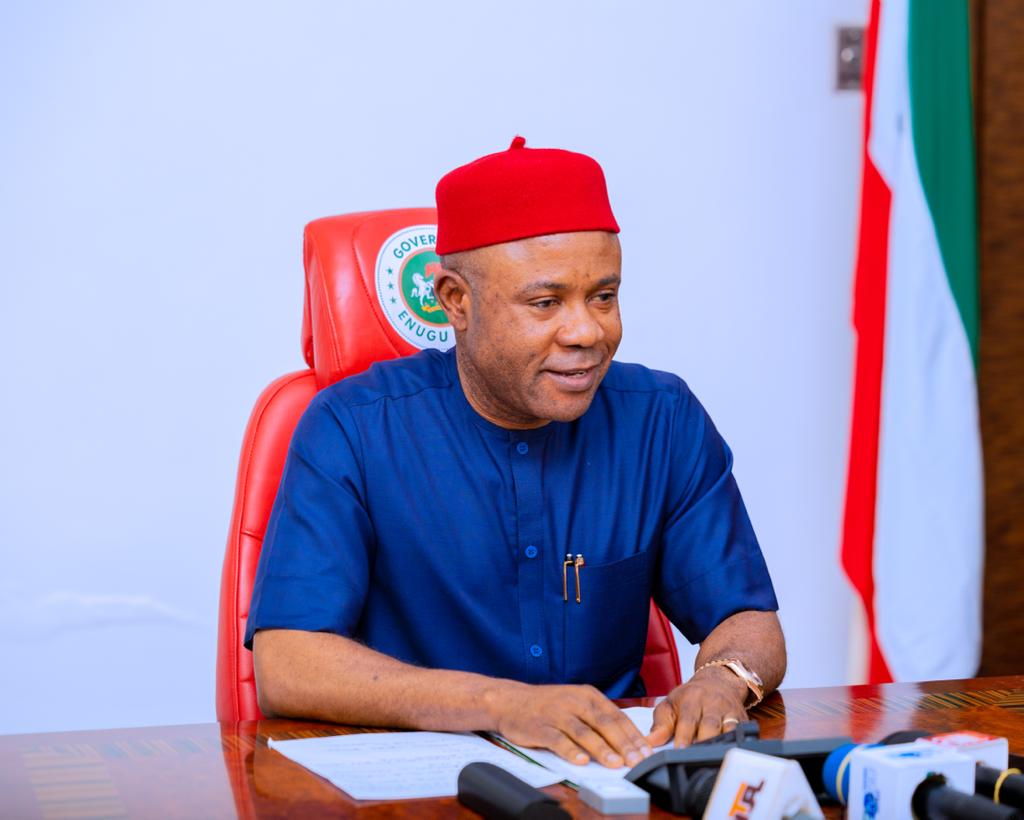
The Governor's Office under Governor Peter Mbah holds a revised budget of N299,410,216,694. Findings by SecretsReporters show that one office, the office of the governor, was handed 18.5 percent of the entire Enugu State budget of N1,617,397,465,000.
The whole state realised N399,020,097,408.06 in revenue in the nine months, 24.7 percent of what it budgeted to receive, and spent N298,334,226,372.25, a performance of 18.4 percent against the full year budget.
Out of that total spending, the Governor's Office alone consumed N60,238,281,202.62 in nine months. One office took 20.2 percent of every naira the Enugu State Government spent in the period, ahead of the ministries charged with its hospitals, its schools, its roads and its water.
The running costs of that office tell the sharper story. The Governor's Office carries an overhead vote of N47,933,470,000 in the revised budget, and it spent N23,482,456,934.33 of it in nine months, a burn rate of 49.0 percent. The overhead of one office, the money for its day to day running, comes to two-thirds of the N35,620,072,305.51 that the entire Enugu State workforce, every teacher, nurse, doctor and civil servant on the state payroll, received as salaries in the same nine months.
While the overhead raced, the capital vote of the Executive Governor crawled. The Office of the Executive Governor holds a capital vote of N34,560,000,000, and in nine months it spent N2,317,970,301.39 of it, a performance of 6.7 percent, in the same period when the overhead of the governor's own office ran at 49.7 percent.
The money the state promised itself never came in. Enugu budgeted N870,747,465,000 as independent revenue for the year, and nine months in, N145,627,917,796.97 was actually produced, a performance of 16.7 percent.
Aid and grants fared worse. The budget provided for N46,900,000,000 in aid and grants, and not one naira of it was received in the nine months.
The borrowing plan collapsed the same way. The state wrote N282,750,000,000 into the budget as Capital Development Fund receipts, the loans and capital inflows meant to fund its projects, and received N23,028,227,533.95, a performance of 8.1 percent.
The capital lines that were voted in full stand nearly untouched. The purchase of office furniture and fittings opened the year with a budget of N115,811,488,000, was revised down to N76,641,488,000, and in nine months the state spent N279,320,000 of it, a performance of 0.4 percent.
The purchase of aircrafts carries a vote of N35,000,000,000 in the same capital budget. Nothing at all was spent on the line in nine months, the full provision standing where it was written.
Motor vehicles were voted N21,833,750,000, and N762,253,581.40 was spent, a performance of 3.5 percent. Security equipment was revised to N16,660,350,000, and N137,219,080 was spent on it, a performance of 0.8 percent.
The lines that moved fast were the lines of comfort. Refreshment and meals carries a revised vote of N1,796,700,000, and N1,323,782,550.52 was consumed on it in nine months, a performance of 73.7 percent.
Publicity and advertisements followed the same path, with N2,099,190,820.27 spent in the nine months, a performance of 66.1 percent of the revised vote for the line.
Medical care moved at a crawl behind them. Medical Expenses, Local was revised upward to a vote of N715,000,000, and N68,237,480 was spent, a performance of 9.5 percent, while Medical Expenses, International recorded N59,072,000 in spending in the same nine months.
The state also paid heavily to service its borrowings. Public debt charges consumed N11,311,821,785 in the nine months, money that left the treasury to creditors while the project lines the borrowing was raised to fund stood almost idle.