 By
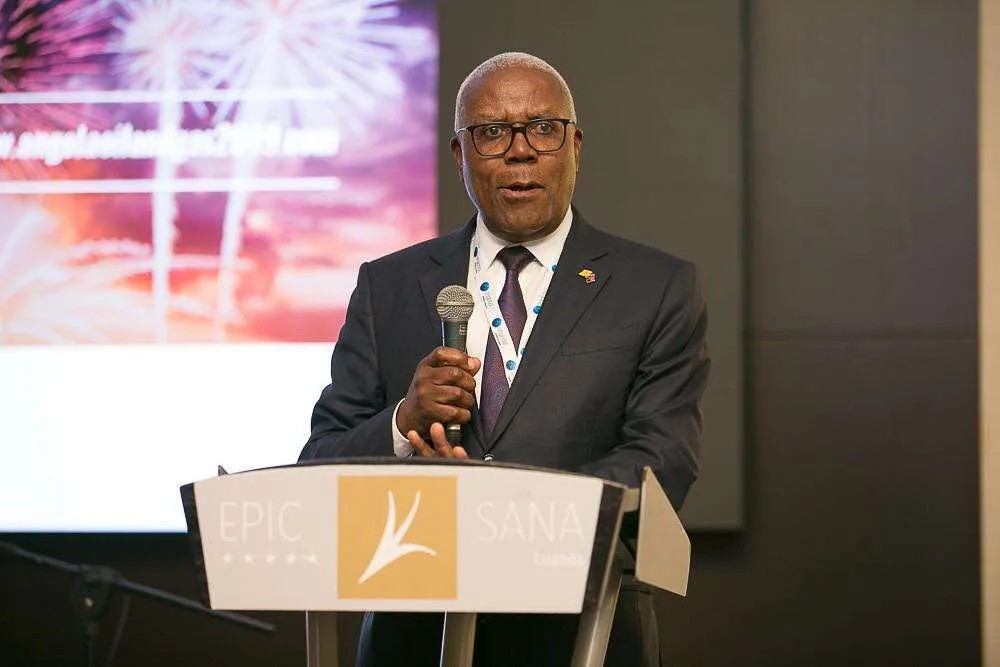
Sebastião Gaspar Martins has spent the year selling a new Sonangol to the world. The chairman of Angola's state oil company has toured conferences with the story of a reformed giant, a company that posted a net profit of $946 million in 2025, raised $750 million in a debut international bond in January 2026 and took a $1.75 billion facility from the African Export-Import Bank, all of it built, he says, on governance, transparency and a clean break with the company's opaque past. In the Cayman Islands, away from the conference stages, a different Sonangol was being brought back from the dead, in silence, and neither Martins nor his company has offered the public one word of explanation for it.
On 29 September 2026, an originating application was filed before the Grand Court of the Cayman Islands, in its Financial Services Division, asking the court to restore a company named Sonangol São Tomé e Príncipe to the Cayman Islands register of companies. The application was brought under section 159 of the Cayman Islands Companies Act, the provision that returns a struck off company to legal life. The company carries Cayman registration number 350778. A company arrives at that courtroom by one road only. It has first been struck off the register, and in the Cayman Islands a struck off company is dissolved. In law, Sonangol São Tomé e Príncipe had ceased to exist.
The application tells the court almost nothing. It rests on an affidavit sworn on 24 September 2026 by the company's two directors, Antonio Eduardo Joao Muginga and Antonio Jose Cardoso Policarpo, and it was filed on the company's behalf by Cayman Fiduciary Limited, a corporate services firm at Landmark Square, 64 Earth Close, Camana Bay, Grand Cayman, through its director Robin Garnham. The grounds for the restoration, the reasons the court is being given, sit inside that affidavit. The application itself states no date for the strike off, no reason the company was allowed to die, and no reason it must live again. Documents in possession of SecretsReporters establish the filing, the directors, the registration number and the date. They do not establish, because the applicants have chosen not to say publicly, what this company holds, what it owes, or what it is being revived to do.
The name the applicants are reviving is not an obscure one inside the Sonangol group. Sonangol's own published structure has long listed a São Tomé exploration arm, Sonangol São Tomé, constituted in 2002 for the prospecting and research of hydrocarbons, held 70 per cent by Sonangol and 30 per cent by the State of São Tomé e Príncipe. São Tomé e Príncipe, the twin island nation in the Gulf of Guinea, sits on one of the last undrilled oil frontiers in West Africa, and Sonangol is one of the two foreign pillars of its petroleum future. In the country's exclusive economic zone, Sonangol holds 30 per cent of Block STP01 and 30 per cent of Block STP02, in both cases beside the French major TotalEnergies, which operates the two blocks, and the São Toméan state petroleum agency ANP-STP. TotalEnergies farmed into Block STP02 in June 2024, and a 3D seismic survey of the block began in 2025. These are live, appreciating interests in an emerging oil province, held in part under the Sonangol São Tomé name.
Sonangol's grip on São Tomé runs deeper than the offshore blocks. The Angolan state company holds the majority of ENCO, São Tomé's national fuel company, and is the islands' primary supplier of fuel and their sole supplier of butane and liquefied gas. São Tomé's state electricity company has for years failed to pay for the fuel it burns, and the debt chain running from the electricity company through ENCO to Sonangol stands, on figures aired in São Tomé this October, above $190 million, in a country that was queueing for fuel the same month its supplier's parent was in a Cayman courtroom reviving a dead company in silence. It is against that position, a state oil company functioning as creditor, fuel lifeline and exploration partner to a small island nation, that the questions around registration number 350778 must be answered.
For the restoration is, on its face, an admission of failure inside the house Martins claims to have cleaned. A company in a group that reports close to a billion dollars of annual profit does not fall off a companies register by accident at this level. Strike off follows default, most commonly the failure to file or to pay the fees that keep a company alive, and it leaves every asset the company held in legal limbo for as long as the dissolution stands. If the Cayman company carried any part of Sonangol's São Tomé position, contracts, accounts or receivables, then for the whole period of its death the Angolan state's interest in that position sat inside a company that did not exist. If it carried nothing, the question inverts. Why does a reformed, transparent Sonangol keep a dormant Cayman vehicle for São Tomé at all, and why spend money in the Grand Court to resurrect it in September 2026, weeks after its chairman closed a $1.75 billion facility and preached governance in Luanda and Lisbon?
Martins cannot plead distance from the structure. He has chaired Sonangol since 2019, through the whole period in which this company lived, died and was carried to court for revival. The restructuring he advertises included a comprehensive review of the group's asset portfolio and the divestment of holdings that no longer fitted its strategy, a review in which a struck off Cayman subsidiary either escaped notice or was left where it fell. The debut bond he sold to international investors in January 2026 was sold on the strength of that review and of the governance story attached to it. The investors who bought it were not told that a piece of the group, in an offshore secrecy jurisdiction, had ceased to exist in law and was being quietly restored to life eight months later.
The Cayman Islands is not a neutral address in Sonangol's history. It is the jurisdiction in which the Sonangol group has for decades parked the offshore limbs of its empire, and a restoration under section 159 has the legal effect of pretending the strike off never happened. The company is deemed to have continued in existence throughout, its acts in the dead years validated, its position unwound without a public accounting of the gap. That is the order Muginga and Policarpo have asked the Grand Court to make. What happened inside Sonangol São Tomé e Príncipe during the years it did not exist, what was signed, held or moved in its name, and who inside Sonangol in Luanda signed off on its death and its resurrection, are questions the filing does not answer and the affidavit, sworn for the court alone, is designed to keep from everyone else.
SecretsReporters contacted Sonangol for response but they gave no response as at the time of publishing.
Get every exclusive first. Follow Secrets Reporters on WhatsApp:
Follow Secrets Reporters on WhatsAppFollow Secrets Reporters on WhatsApp: join the channel for every exclusive the moment it publishes.