
Boardroom Scandals
National Shame: SecretsReporter’s Investigation Reveals How Anyone Can Get Radio Nigeria Staff ID for ₦3,000 With Zero Checks

Secrets Reporters
At the Federal Radio Corporation of Nigeria (Radio Nigeria), staff are working with expired identity cards, self-produced fakes, and inconsistent designs more than two years after the last official cards expired in 2023, exposing deep neglect, administrative failure, and serious security lapses at one of the country’s oldest public broadcasting institutions.
An investigation has revealed that the Federal Radio Corporation of Nigeria, popularly known as Radio Nigeria, under the leadership of Dr. Mohammed Bulama, has failed to issue updated official identity cards to its staff since the last official cards expired in 2023.
Since then, staff of the agency have continued to work with expired ID cards or have been left to produce new ones by themselves. This means that workers in a federal government agency are being made to take personal responsibility for a document that should ordinarily be produced, controlled, and issued by the institution.
For any serious organisation, an identity card is not merely a badge. It is a symbol of authority. It is proof of employment. It is a security document. It tells the public who is genuine and who is not. It allows a staff member to enter offices, cover assignments, attend official events, and represent the institution in public spaces.
But at Radio Nigeria, that basic system has been weakened.
Findings showed that the agency currently has two different ID card designs in circulation. While many staff members still use the old design, others use a newer design. The old official ID cards expired in 2023, yet the agency has not provided a uniform replacement for all staff.
This has created confusion within the institution and raised serious questions about security. When a government agency allows staff members to make their own ID cards, it also creates room for outsiders to do the same. Anyone with basic design knowledge can reproduce a similar card, print it, wear it, and claim to be a staff member of Radio Nigeria.
This was tested during the investigation when one of our correspondents obtained a Radio Nigeria ID card for ₦3,000. During the process, it was discovered that Radio Nigeria had no official documentation system to identify or verify staff members. It was also discovered that there was no accessible database to confirm whether a staff number was genuine or fraudulent.
Our correspondent was able to receive his own ID card using false information and photographs despite not being a staff member of the agency. The ID card that was issued to our correspondent was said to be the old ID card design, which, according to findings, is no longer in use. The updated one, although expired, was totally different from the one received by our correspondent; see images below:
Above is images showing the front and back of the old ID card design paid for and received by our correspondent, with an expiry date of 2029 despite not being a staff member.
Above is a back-view image of a senior staff ID card, said to be the new ID card design, which expired long ago in 2023 and is still being used by their staff.
However, when this media house put a call across to the Director of Corporate Development & Communications, Osana Omame, to ask about the variant ID card in existence and about staff printing their ID cards by themselves, he noted that he is not aware of ID cards being printed outside, disclosing that the agency has only one ID card in use and it has a centralised issuance. He added that those ID cards that have been printed outside are not being authorised by the agency. He failed to clarify which is the authentic variant of the ID card in use among the two ID cards above.
In a country where impersonation, fraud, and insecurity remain serious concerns, this is not a small administrative failure. It is a dangerous gap.
Radio Nigeria is not an ordinary private organisation hidden in a corner. Its staff members cover government activities, national events, political functions, public ceremonies, and sensitive assignments. They interact with public officials, security personnel, communities, and institutions. Their identity cards open doors. Their identity cards create access. Their identity cards carry the name of the Nigerian state.


Breaking The Law: Nigeria’s Finance Ministry Routes Over ₦208 Million in IMF, World Bank Travel Payments Through Single Beneficiary Mariam Lawal
Secrets Reporters A review of official government payment records by SecretsReporters has uncovered more than ₦208 million in Federal Ministry...


SPECIAL REPORT: Ebonyi Governor Nwifuru Release N7.3 Billion To Purchase Vehicles, Zero Kobo Released For Hospitals
Secrets Reporters For residents of many rural communities in Ebonyi State, falling sick often means confronting a healthcare system already...

Crimes series: How Former NNPC Boss Bala Wunti-Led NAPIMS’ Paid ₦1.27bn As Investment To A Questionable Company Bypassing Presidential Approval
Secrets Reporters Documents obtained by SecretsReporters have raised questions over a ₦1,270,826,725 investment made by the National Petroleum Investment Management...


UNIZIK inaugurates Afreximbank-backed trade research centre to advance AfCFTA
The Nnamdi Azikiwe University, Awka, has inaugurated the Prof. Ngozi Egbuna International Centre for Regional Integration and Trade Research, an...

Army Builds Schools, Town Halls as Questions Grow Over Nigeria’s Deepening Security Crisis
Secrets Reporters As Nigeria continues to battle kidnappings, banditry, insurgency and violent attacks across several states, the Nigerian Army has...
Emem Usoro Scandal: Journalist Stanley Ugagbe Remanded in Kuje Prison Over Cybercrime Charges
Secrets Reporters Journalist Stanley Ugagbe has been remanded at the Kuje Correctional Centre by the Federal High Court in Abuja...

Fresh Transparency Concerns Rock NUPRC as Stakeholders Demand Forensic Audit of 2025 Oil Licensing Round
Secrets Reporters Fresh concerns have emerged over the integrity of Nigeria’s 2025 oil and gas licensing exercise, with industry stakeholders...
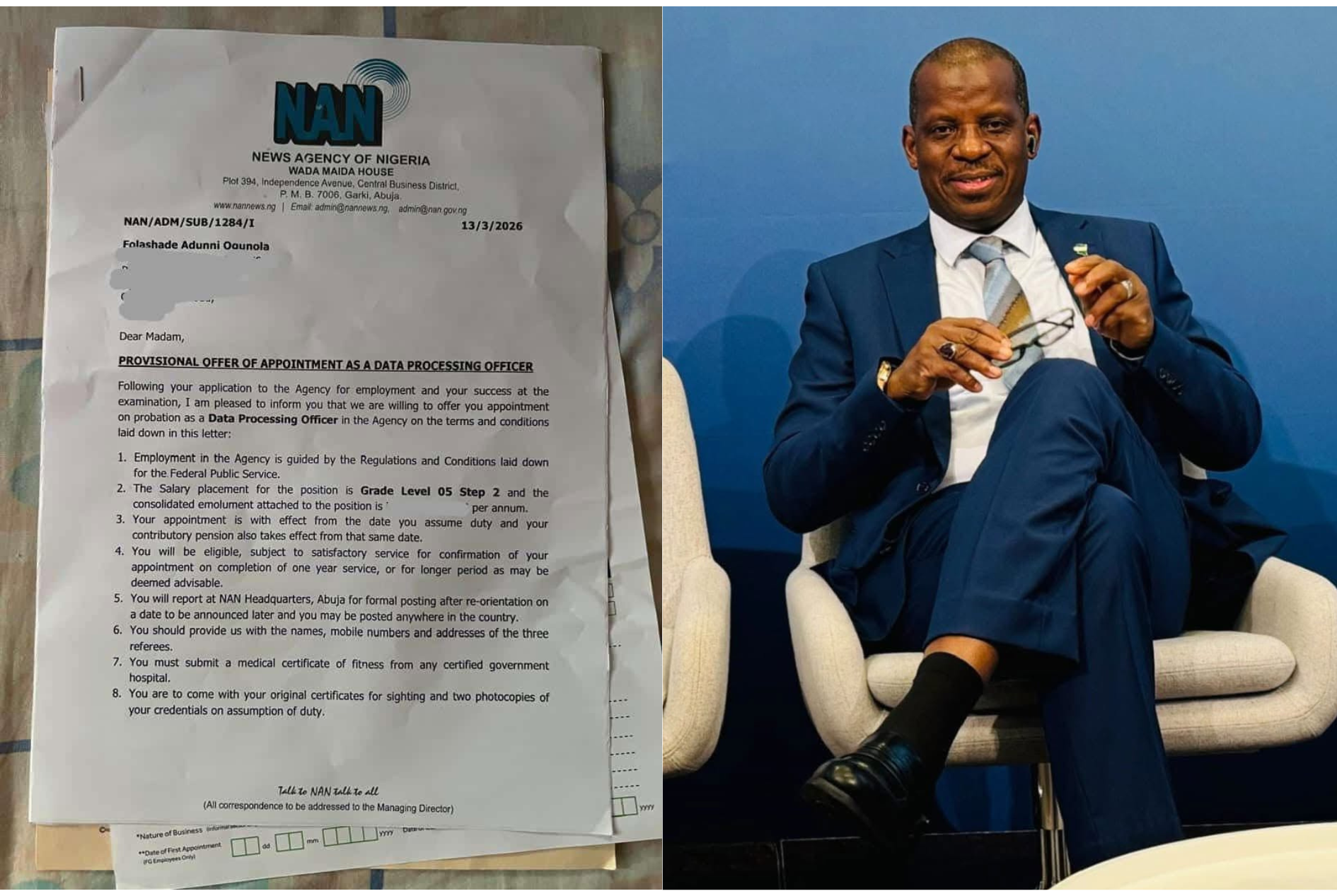
ICPC Probes News Agency of Nigeria Over Alleged Recruitment Irregularities After Secrets Reporters Expose
SecretsReporters The Independent Corrupt Practices and Other Related Offences Commission (ICPC) has commenced an investigation into alleged recruitment irregularities at...
While David Umahi Walks Free Of Homicide, Police File Six-Count Charge Against Fejiro Oliver And Ugagbe Over Reports on CBN Deputy Governor Emem Usoro
Secrets Reporters The Nigeria Police Force has filed a six-count criminal charge before the Federal High Court in Abuja against...

Again Police Detain Journalist Stanley Ugagbe Ahead of Secret Planned Federal High Court Arraignment On Orders of CBN Deputy Governor Emem Usoro
Secrets Reporters Information reaching SecretsReporters from a credible source has revealed that a senior reporter with SecretsReporters, Stanley Ugagbe, has...
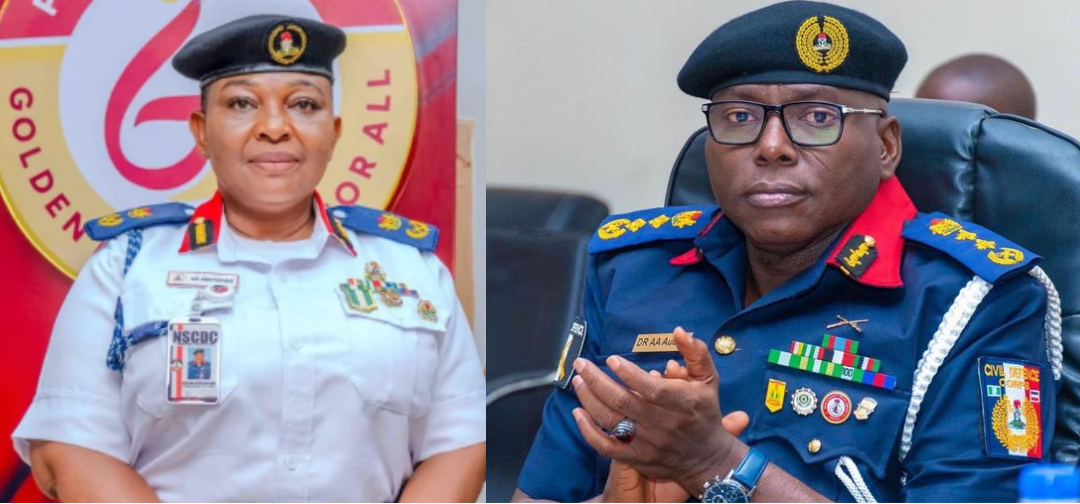
Sabotage, Corruption, Tribalism and Financial Recklessness Rocks Akwa-Ibom NSCDC Boss, Geraldine Abetianbe
Secrets ReportersThe Nigeria Security and Civil Defence Corps, NSCDC, Akwa Ibom State Command is in turmoil following a string of...
The Tax That Vanished: ₦262.1m Payment Into Personal Account, ₦192.4m Withholding Tax Shortfall Rocks NNPC Bala Wunti-Led NAPIMS
Secrets Reporters Federal auditors are currently in awe at how tax deductions and payment procedures at the National Petroleum Investment...

3 Nigerian journalists harassed with detention, summons, punitive bail conditions
The Committee to Protect Journalists calls on Nigerian authorities to stop harassing journalists, following the detention of journalist Zainab Sodiq...
Exclusive: Nigerian Police Packs Treasury ₦1.09 Billion As Full Payment To New Company Against Procurement Law
Secrets Reporters A review of federal treasury payment records has revealed that the Nigeria Police Force, through its Police Formations...
NLNG General Manager By Day, Trackion Energy Limited Director By Night: How Sophia Horsfall Violate Laws Of The Federal Republic Of Nigeria
Secrets Reporters Sophia Horsfall, the general manager of external relations and sustainable development at Nigeria’s Liquefied Natural Gas (NLNG), has...
Editorial: Democracy Dies in Secret Detention; Why Nigeria Must End the Culture of Unannounced Arrests
A democracy governed by the rule of law cannot permit citizens to vanish without explanation. Yet, in Nigeria, a disturbing...
Nigerian Government Accuses Secrets Reporters Publisher Fejiro Oliver of Espionage, Invites Him For Questioning Days After Kidnapping Its Reporter
Secrets Reporters The Nigeria Police Force National Cybercrime Centre (NPF-NCCC) has invited the Publisher and Editor-in-Chief of Secrets Reporters, Mr....
BREAKING: Abducted Secret Reporters Journalist Stanley Ugagbe Regains Freedom
Secrets Reporters Stanley Ugagbe, the abducted investigative journalist with Secrets Reporters, has regained his freedom after spending several days in...
Asaba King, Prof. Azinge Bans Deltans From Selling Ogbono In Markets And Hotels, Says It’s Against Tradition
Secrets Reporters The traditional authorities of Asaba Kingdom have announced a ban on the sale of ogbono seed, locally known...
IPI Nigeria demands immediate release of Journalist Stanley Ugagbe
The Nigerian National Committee of the International Press Institute (IPI Nigeria) has condemned the alleged abduction and continued detention of...