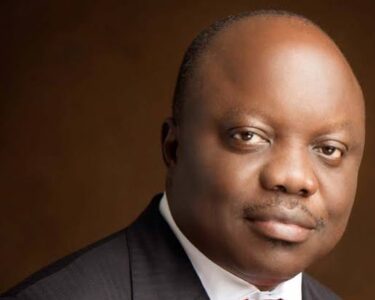

 By
By Inibehe Effiong
Permit me to begin this legal discourse by expressing unreserved gratitude to the Special Assistant on Media and Publicity to the Executive Governor of Kaduna State, Mr Samuel Aruwan, for furnishing me with the electronic copy of the Kaduna State Religious Preaching Bill 2016 which is currently before the Kaduna State House of Assembly for consideration.
Mr Aruwan commendably exuded responsibility by granting my request for a copy of the Bill within twenty four hours of request. On his own volition, he equally forwarded copies of the Regulation of Religious Preaching Edict No. 7 of 1984 and the Regulation of Religious Preaching (Amendment) Edicts No. 1 of 1987 and No. 6 of 1996 respectively, which according to him, are the precursors to the 2016 Bill. Such admirable responsiveness to the public and sense of duty is a rarity in the contemporary Nigerian public service.
I need to caution that this piece may be suitable for people who are impatient with scholarship and intellection. Readers should kindly indulge the detailed and long narrative nature of this essay. It is irresistible given the serious nature of the subject matter.
Before dissecting the Kaduna State Religious Preaching Bill 2016 (hereafter referred to as ‘the Bill’), it is imperative to examine the history and substance of the Regulation of Religious Preaching Edict No. 7 of 1984 (subsequently referred to as, the 1984 Edict’) and the amendments made thereto in 1987 and 1996.
The 1984 Edict was promulgated by the then Military Governor of Kaduna State, Air-Commodore Usman Muazu, on 17th July, 1984 following the Maitatsine riots in some parts of Northern Nigeria at the time. The Edict provided inter alia, for the mandatory licensing of preachers. It also restricted the playing of religious cassettes to homes, banned the use of abusive language against any person or religious organisation or religious leader. The Edict expressly banned the playing of cassettes containing religious recordings in public places, the use of loudspeakers for religious purposes other than in a Church or Mosque, the abuse of religious books and the use of such expressions as “infidels,” “non-Islamic,” or “pagans” in describing other religious groups.
The penalty for violating the 1984 Edict was two years’ imprisonment with an option of fine.
On the 9th of March, 1987 the then Military Governor of Kaduna State, Lt. Col. Abubakar Umar, amended the 1984 Edict and expunged the option of fine and extended the term of imprisonment upon conviction to five years.
On the 25th of November, 1996, Lt. Col. Hamid Ibrahim Ali, the Military Administrator of the State at the time further amended the 1984 Edict by limiting the validity of a preaching license in Section 7 (c) of the Edict to a period not exceeding six months subject to revocation at any time.
For a better appreciation and understanding of the issues under consideration, the contents and provisions of the Bill will be reproduced seriatim in all material respects.
The Bill has 15 sections. The long title to the Bill states that it is “a Bill for a Law to substitute the Kaduna State Religious Preaching Law, 1984” (the 1984 Edict). Essentially, this implies that the Bill is intended to replace the 1984 Edict mutatis mutandis (necessary changes having been made).
Sections 1 and 2 of the Bill provides for the citation and commencement clauses. Section 3 is the interpretation section. Section 4 recognises Islam and Christianity as “the two major religions in the State” (sic) and establishes three committees to regulate them. Namely: (a) A committee of Jama’atu Nasir-Islam with equal representation of Izala and Darika religious groups in the case of Muslims; (b) A committee set up by the Christian Association of Nigeria in the case of Christians. (c) The inter-faith ministerial committee to be appointed by the Governor.
The membership of the ministerial committee is stipulated in Section 4 (2) to comprise of the following: (i) A Chairman to be appointed by the Governor on the recommendation of the Secretary to the State Government; (ii) The Special Adviser to the Governor on Internal Security; (iii) The most senior adviser of the government advising the Governor on inter-faith matters; (iv) A member representing the Jama’atu Nasir-Islam and the Christian Association of Nigeria; (v) A representative of the Ministry of Justice; and (vi) One representative each from the Nigerian Police, the Department of State Security and the Nigerian Security and Civil Defence Corps not below the rank of Superintendent of Police of its equivalent.
Section 5 of the Bill mandates committees of the Jama’atu Nasir-Islam and the Christian Association of Nigeria to issue licences to preachers as approved by the ministerial committee. A licence shall be issued for a period not exceeding one year. “A sponsored external preacher shall be issued a permit for the period of the event.” (sic). Section 6 (1) of the Bill establishes in each Local Government Area “a committee to screen applications for licences and recommend same to the ministerial for approval. (2) The committee shall consist of the following members:- (a) the Chairman and Co-Chairman each representing; the two major religions to be appointed by the Governor on the recommendation of the Local Government Chairman of the Area (b) a representative of the Police not below the rank of Assistant Superintendent of Police; (c) two Muslim, one representing the Izala and Darika religious groups respectively (d) two representative of Christian Association of Nigeria”.
The committee established in each local government area under section 6 supra (above) is mandated by Section 7 of the Bill to “ensure compliance with the terms of the licences so issued; and register accredited preachers of all religious groups and organizations operating in the Local Government Area”. Provided that the permit to be issued to the licensed preachers shall specify the duration or the number of occasions it is to be used.
According to Section 8 of the Bill, “The Kaduna chapter of the Jamaátu Nasil Islam and the Christian Association of Nigeria shall have and keep records of the Churches and Mosques including the data of all its preachers in the State”
By Section 9 of the Bill, “All cassettes, CDs, Flash drives or any other communication gadgets containing religious recordings from accredited preachers may be played in the following places only:- (a) inside one’s house; (b) inside entrance porch (Zaure) (c) inside the Church; (d)inside the Mosque and (e) any other designated place of worship.” Any cassette containing religious recording in which abusive language is used against any person or religious organization or religious leaders (past or present) is prohibited in the State by virtue Section 10 of the Bill.
Section 11 of the Bill provides that members of the ministerial committee may be paid such allowances as may be determined by the Governor.
Notably, Section 12 of the Bill creates various offences thus: “A person shall be guilty of an offence who, in contravention of this law; (a) preachers without a valid licence; (b) plays religious cassette or uses a loud speaker for religious purpose after 8pm in a public place; (c) uses a loudspeaker for religious purpose other than inside a Mosque or Church and the surrounding arrears outside the stipulated prayer times; (d) uses a loudspeaker in vehicles plying the streets with religious recording; (e) abuses religious books; (f) incites disturbance of the public peace (g) abuses or uses any derogatory term in describing any religion: or (h) carries weapons of any description whether concealed or not in places of worship or to any other place with a view to causing religious disturbance shall be guilty of an offences.”
Section 13 is the punishment section which states that “A person who commits an offence under the provision of this law shall be liable on conviction to a term of imprisonment not exceeding two years or a fine of two hundred thousand naira or both; and have his licences revoked.”
Section 14 of the Bill vest jurisdiction in the sharia courts and customary courts to try violators of the proposed law summarily and shall, on conviction give order for the forfeiture or destruction of any vehicle, equipment, instrument, gadget or book or other material carrying any offensive message.
Lastly, the Kaduna State Regulation of Religious Preaching Edit No. 7 of 1984 is repealed by Section 15 of the Bill.
Unsurprisingly, the Bill has generated heated debates across the country with some religious leaders issuing ultimatum to the Governor of Kaduna State, Mallam Nasir Ahmad El-Rufai, to either retrieve the Bill from the State House of Assembly or face “serious consequences”. So far, the arguments advanced in support and against the Bill has been largely tainted with sentiments and emotion.
However, one question that continues to agitate the minds of legal experts, religious leaders, the media, civil society and the teeming public is: Can the Bill pass the test of constitutional validity? In other words, are the provisions of the Bill consistent with the provisions of the Constitution of the Federal Republic of Nigeria 1999 (as amended)?
This is the constitutional question which I intend to address, and hopefully resolve.
It is elementary that by virtue of Section 1 (1) & (3) of the Constitution of the Federal Republic of Nigeria 1999 (as amended), (subsequently referred to as the ‘1999 Constitution’) the Constitution is supreme and if any other law is inconsistent with the provisions of the Constitution, the Constitution shall prevail and that other law shall be declared null and void to the extent of its inconsistency. See F.R.N. v. Ifegwu (2003) 15 NWLR (Pt. 842) 113; A-G., Abia State v. A-G., Federation (2002) 6 NWLR (Pt. 763) 264; Abacha v. Fawehinmi (2000) 6 NWLR (Pt. 660) 228.
A careful and dispassionate perusal of the Bill shows litany of apparent, inherent and indisputable provisions in it which conflicts with the letters and spirit of the 1999 Constitution. The Bill in my respectful view, is so constitutionally defective that there is clearly nothing left for a serious parliament to consider. The conflicting and inconsistent provisions in the Bill are too obvious to ignore; it cannot survive the surgical eyes of the courts.
The Bill is unconstitutional for the reasons stated below:
The Bill has expressly adopted Christianity and Islam as the official state religion(s) in Kaduna State contrary to the express provisions of the Constitution. For clarity, Section 10 of the 1999 Constitution states that: “The Government of the Federation or of a State shall not adopt any religion as State religion.” Section 4 of the Bill declares Islam and Christianity as “the two major religions in the State”. The Bill goes further to establish committees to regulate the two religions.
It is instructive to note that the marginal note to Section 10 of the 1999 Constitution reads “prohibition of State Religion”.
The 1999 Constitution has effectively and expressly prohibited every State in Nigeria and the federal government, including the Kaduna State House of Assembly, from enacting any piece of legislation which purports to adopt any religion or religions over others. By specifically identifying Islam and Christianity as “the two major religions” in Kaduna State, and establishing committees to regulate them, the Bill has literarily set-fire on the provisions of Section 10 of the 1999 Constitution.
It is needless to say that there are different religions in Kaduna State, other than Islam and Christianity, whose adherents are neither Muslims nor Christians. It is not within the legislative powers of the Kaduna State House of Assembly to determine which religion is major and which is minor. Such discriminatory legislation offends Section 42 of the 1999 Constitution which prohibits discrimination on the basis of religion among others.
The Bill audaciously infringe on the constitutional rights of the citizens of Nigeria in Kaduna State to freedom of thought, conscience and religion and freedom of assembly and association. Section 3 of the Bill defines a “preacher” as “a person duly licenced by Jama’atu Nasil-Islam or Christian association of Nigeria , to preach.”
This definition is bereft of any legal basis. Section 38 (1) of the 1999 Constitution emphatically states that “Every person shall be entitled to freedom of thought, conscience and religion, including freedom to change his religion or belief, and freedom (either alone or in community with others, and in public or in private) to manifest and propagate his religion or belief in worship, teaching, practice and observance.”
Sections 5, 6 & 7 of the Bill establishes committees in each local government area to screen and issue preaching licence to preachers and permits to the so-called “sponsored external preachers”, and ensure compliance with the terms of the licences and permits. This provisions are offensive to the fundamental right to freedom of religion in Section 38 of the 1999 Constitution.
I wish to restate three basic limbs to the constitutional right to freedom of religion under Section 38 of the 1999 Constitution supra. That provision guarantees the right of every person to belong to any religion and the right to change one’s religion; under the provision, every person is free to practice any religion, including Islam and Christianity, either ALONE or in community with others. Furthermore, every person is free to manifest his religion or belief in PUBLIC or in private in worship, teaching, practice and observance.
A person can decide to practice his Christian or Islamic religion and belief alone without regard or reference to other members of the society or the Christian Association of Nigeria (CAN) and the Jama’atu Nasir-Islam (JNI), respectively. It is manifestly unconstitutional for any government to seek to legislate on what qualifies a person to be a Christian or an Islamic preacher. That is a matter for God and Allah to decide, respectively.
A paster in Kaduna for can decide to establish a Church without joining the CAN. No person or institution in Nigeria can legally require such a pastor to join CAN and obtain a preaching licence as preconditions for manifesting or propagating his Christian religion and belief in public or in private.
Lest we forget, in the celebrated case of Inspector General of Police v. All Nigeria Peoples Party and Ors (2007) 18 NWLR (Pt.1066) 457, the Court of Appeal in a landmark judgment, declared as unconstitutional the provisions of the Public Order Act, Cap. 382 L.F.N. 1990 which requires Nigerians to obtain a Police permit before staging a protest or peaceful demonstration. The Appeal Court declared that the requirement of Police permit as pre-condition to protest is a violation of the fundamental right to freedom of expression and association. They appellate court rejected the argument of the Police that such permit was in the interest of public safety and security.
If Police permit is not required as a pre-condition to holding public rallies, peaceful demonstrations and protests, why should any State government even contemplate issuing licences to religious preachers or determining who is eligible to be a religious preacher in the 21st century Nigeria?
The law is settled that freedom of association includes freedom not to belong to an association.
In the celebrated case of Agbai v. Okagbue (1991)7 NWLR (Pt. 204) 391 one of the issues for determination was whether the respondent who objected to membership of an age grade association on religious grounds could be compelled to do so or could be deemed to be a member willy-nilly. The respondent maintained that he was not a member of the age-grade and that his religion as a Jehovah-Witness forbade him to join. The Supreme Court per WALI J.S.C. held:”The 1963 Constitution, Section 24(1) guaranteed all Nigerian citizens freedom of conscience, thought and religion. The respondent is entitled to hold to the tenet of his religion, thought and conscience which prohibit him from joining the age grade. Any custom that holds otherwise is contrary to the Constitution and therefore null and void to that extent.”
Choice of religious sect is a matter of personal convictions and conscience.
In the case of Theresa Nwafor Onwo v. Oko (1996) 6 N.W.L.R. (pt. 456) 584 at 587 the applicant claimed damages against the respondent for shaving her hair, assaulting and locking her up as incidents of mourning for her late husband. According to her, that offends her religious belief and devotion. Although the trail court dismissed her application, the Court of Appeal allowed her appeal.
It is on record that the Catholic Church in Nigeria suspended her membership of CAN in September 2012.
The Constitution does not place restrictions on places where a person can manifest or propagate his religion. On the contrary, Section 38 (1) of the 1999 Constitution expressly allows for public manifestation and propagation of religion. Therefore, the provisions of Section 9 of the Bill which limits the playing of all cassettes, CDs, Flash drive or any other communication gadgets containing religious recordings to the inside of one’s house, entance porch, inside the Church and Mosque and any other designated place of worship is unconstitutional, null, void and of no effect whatsoever.
Going by the wordings of the Bill, it will be an offence, for example, for a person to play cassettes inside a vehicle on the road in Kaduna State If the Bill is passed into law. This Bill is not only unconstitutional but absurd.
Section 10 of the Bill prohibits any cassettes which contains “abusive language” against any person, religious organization or religious leaders (past or present). Strangely, there is no definition of the phrase “abusive language”in the Bill. The consequence is that this provision is susceptible to mischievous inferences which may invariably lead to the violation of the fundamental right of the citizens to freedom of expression and the press under Section 39 of the 1999 Constitution.
Another grave defect in the Bill is the vesting of summary jurisdiction to try violators (sic) of the provisions of the Bill in the Sharia Courts and Customary Courts. The Bill does not state specifically who is subject to this courts. If we can logically infer that Muslims are the ones subjected to the Sharia courts, can we equally infer that Christians are subject to the Customary courts? Certainly not. Customary courts do not exercise jurisdiction over Ecclesiastical matters. Unlike in Islam where there is near parity between religion and customs/traditions, Christianity is not fused with custom. It is indefensible for the Kaduna State Government to seek to subject Christians to the jurisdiction of Customary courts. Customs in most instances are inconsistent with the tenets of the Christian faith.
It should be noted that the 1984 Edict which Section 15 of the Bill seeks to repeal came into force during the military era. However, with the coming into force of the 1999 Constitution, the Edict became an existing law by virtue of Section 315 (1) (b) of the 1999 Constitution and is deemed to be a Law made by the Kaduna State House of Assembly. However, the point should be made that the Edict (now Law) is still subject to the constitutional validity test. Indeed, Section 315 (3) of the 1999 Constitution expressly subjects the Edict to the jurisdiction of the courts to declare it invalid where any of its provisions offends the Constitution or an Act of the National Assembly or any other Law.
This point is significant because the 1984 Edict cannot survive the constitutional validity test. Being the forerunner to the Bill, the Edict is itself unconstitutional, null, void and of no effect whatsoever.
Once it is shown that an existing law is not within the legislative powers of the National Assembly or a State House of Assembly as the case may be, the court has a duty to declare same null and void. The Supreme Court decisions in the celebrated cases of Abacha v. Fawehinmi (2000) 6 N.W.L.R. (Pt. 660) 228 and Attorney General of Lagos State v. Attorney General of the Federation & Ors (2003) 12 N.W.L.R. (Pt. 833). P.1 are instructive in this regard.
The Blue Pencil rule of statutory interpretation allows for the severance of invalid portions of an enactment from the valid portions. However, it is clear from the submissions earlier canvassed that the entire provisions of the Bill (particularly Sections 3, 4, 5, 6, 7, 8 ,9, 10, 11, 12, 13 and 14 of the Bill) runs contrary to the express provisions of the Constitution.
My humble view is that there is nothing in the Bill that justifies its preservation. No matter the perceived nobility of Governor El-Rufai’s intention or motives for initiating this Bill, the Constitution is supreme without exceptions.
Admittedly, Kaduna State has been a hotbed for violent religious clashes over the years. The 2006 riots over the Danish cartoons, the Miss World riots and the 2011 post-election violence are just few examples. What is however clear is that religious riots are usually orchestrated by bigoted fellows who believe that their religion has been defamed or blasphemed and that they have a divine duty to fight, maim, kill and destroy, all in the name of defending their religion.
How many persons have been successfully prosecuted and convicted since the promulgation of the 1984 Edict? This is the question that Governor El-Rufai should answer.
I dare say that the solution to this perennial menace does not lie in encroaching on sacred provisions of the Nigerian Constitution. The Kaduna State government cannot use an apparently unconstitutional legislation (the 1984 Edict) or proposed legislation (the 2016 Bill) as a weapon to fight religious extremism.
No government in Nigeria, federal or state, can validly subject Nigerians that have elected to manifest or propagate their religion or belief as Christian or Islamic preachers to the requirement of obtaining licence. That is not the business of the government. We have a duty to uphold the secular character of the Nigerian state. The various offences in Section 12 of the Bill are ultra vires the legislative powers of the Kaduna State House of Assembly. The Constitution cannot allow any State to dabble into the religious affairs of the citizens to the extent of establishing the so-called “inter-faith ministerial committee” to regulate the practice of religion.
There are ample provisions under the Penal Code Law, Laws of Kaduna State 1991 that the State government can effectively deploy to checkmate violence, riots, incitement, public nuisance, etc. There are equally offences relating to religious worship under the Penal Code Law of Kaduna State. Frankly, the issue is not inadequacy of law but the lack of political will to enforce it.
The Kaduna State Government should immediately retrace from this provocative and unconstitutional expedition by withdrawing the Bill. The 1984 Edict should be repealed. There is no need creating a rancorous atmosphere that is capable of inciting members of the public and creating the very religious acrimony and hostility that the Bill purports or seeks to cure. I implore persons and organizations who are aggrieved by the Bill to seek redress in a court of competent jurisdiction.
Inibehe Effiong is a Constitutional Lawyer and the Convener of the Coalition of Human Rights Defenders (COHRD).
inibehe.effiong@gmail.com