 By
Secrets Reporters
A review on the Federal Medical Centre, Bida in 2023, finds ₦32,381,855.00 in public money warehoused in the private bank account of a staff member. Now going back to the 2022 review of financial records that came first , this have already flagged the same practice: ₦37,889,705.86 sitting in a staff member’s private account, in breach of Paragraph 713 of the Financial Regulations 2009, which deems any officer who pays public money into a private account to have acted with fraudulent intention.
Two consecutive years. Two reviews. The same finding, in the same institution, under the same Medical Director.
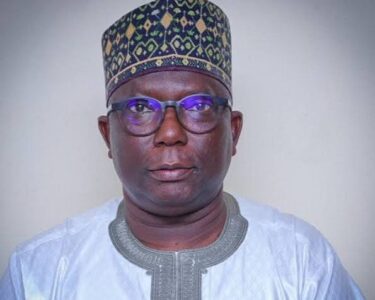
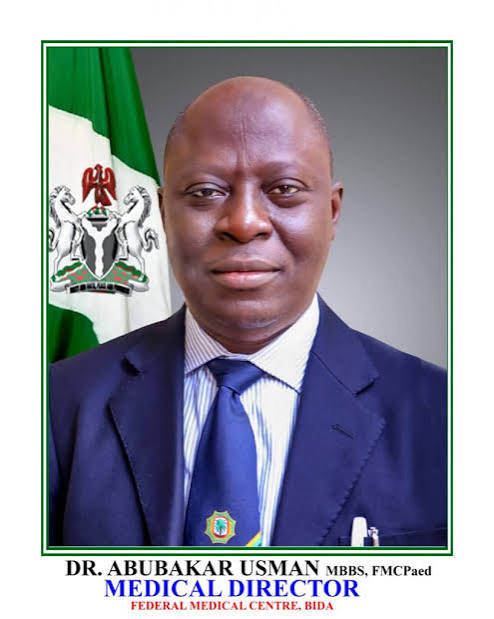
Dr. Usman Abubakar has led the Federal Medical Centre, Bida, since 14 September 2021 covering the entirety of the 2022 financial year and the whole of 2023 as well. In April 2026, President Bola Tinubu reappointed him for a second term.
That reappointment is worth pausing on. It came after the 2023 review findings were already in existence. Whatever the considerations behind it, the effect is that the officer in charge during both reviewed periods will continue in the role while the questions raised by those reviews remain unanswered.
The 2022 review recorded ₦557,903,249.92 in financial irregularities across seven quantified findings, plus a failure to submit reviewed financial statements for the year under review.
The warehoused ₦37.89 million was one of them. The largest was ₦266,599,590.00 in contracts deliberately split to circumvent the approval threshold and tender procedures, a breach of Paragraph 3117 of the Financial Regulations 2009, covering irregular award of contracts.
Contract splitting works by turning one large award into several smaller ones. A contract big enough to require open competitive tender is broken into pieces, each of which falls below the threshold and can be awarded with far less scrutiny. The competition that would have driven down prices never happens. The process designed for the most valuable contracts is bypassed precisely where it matters most. At ₦266.6 million, the finding accounts for nearly half of the total irregularities recorded against the Centre.
Then there was the Trauma Centre. The contract for its construction at the main hospital was awarded to Lexington Global Investment Ltd, one of three companies listed by the Bureau of Public Procurement. The payment went instead to Lexington Technologies Ltd, described as a subsidiary, upon presentation of a Power of Attorney. Management’s explanation was found unsatisfactory.
The problem is not only that the money went elsewhere. It is that the company that received it was never assessed. The Centre had skipped the due diligence required by Sections 16(7), 23(10) and 32(3)(i) of the Public Procurement Act 2007 verified professional and technical qualifications, financial capability, and evidence of similar completed or ongoing projects before award. Whoever was paid, the review had no basis to conclude they were qualified to build a trauma centre.
₦97,000,000.00 was flagged over a mismatch between equipment specifications advertised at tender stage and those stated in the letters of contract award that followed. In effect, bidders priced one thing and the Centre bought another which undermines the entire logic of competitive tendering.
₦79,450,000.00 was awarded for a contract without due process. ₦53,000,000.00 was paid for a contract that was never executed money released for work that did not happen. ₦15,993,238.06 in internally generated revenue was under remitted to the Consolidated Revenue Fund, meaning money the Centre earned was not passed on to the government as required. ₦7,970,716.00 was tied to irregularities in the receipt and usage of diesel.
And separately, the Centre did not submit its reviewed financial statements for the year. Without them, there is no independent, verified account of how the Centre’s finances were handled across the period which is the very purpose the statements are meant to serve.
The Medical Director is directed to account for each sum before the National Assembly’s Public Accounts Committee, recover and remit the amounts to the Treasury, and submit the outstanding audited financial statements.
Taken together, the 2022 and 2023 audits describe more than a set of isolated lapses. They describe a pattern: contracts split, due diligence skipped, specifications changed after tender, public money held in private accounts, and financial statements not submitted for review. Two consecutive years of findings have now flagged the same institution for the same kinds of failures and in one case, for the identical practice of warehousing public money in a staff member’s private account.