 By
Secrets Reporters
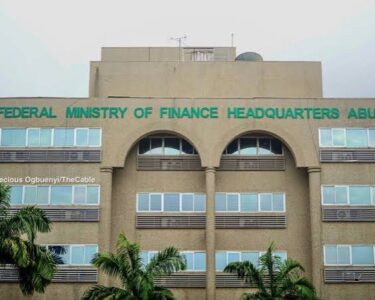
A staggering ₦45.2 million meant for contractors who built and furnished the offices of Nigeria’s finance ministry was instead wired into the private bank account of a single ministry official, according to a newly surfaced audit finding that casts a harsh light on financial controls inside the very institution responsible for guarding the nation’s treasury.
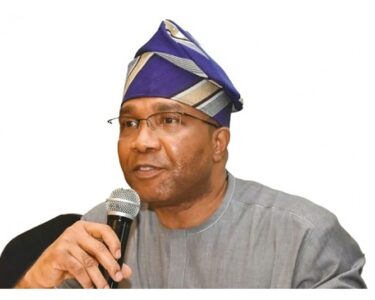
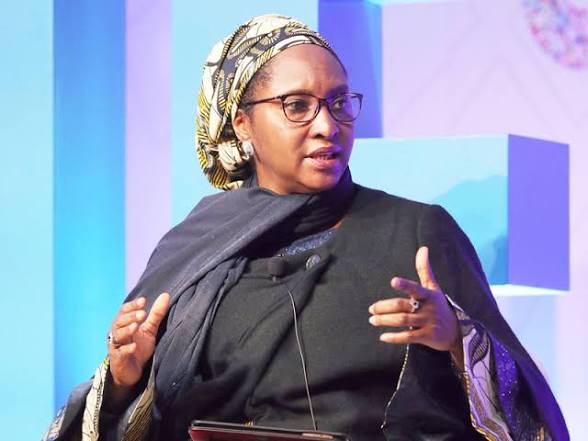
The money, which included ₦4.29 million for installing office furniture in the Minister’s own office, was diverted during a period when Dr. Zainab Ahmed was the Minister of Finance, Budget and National Planning and Dr. Mahmoud Isa-Dutse served as Permanent Secretary following the 2019 reshuffle of permanent secretaries.
The finding, buried in the Office of the Auditor-General’s report, details how ₦45,214,294.05 owed to multiple contractors was routed into one officer’s personal account rather than being paid through the government’s integrated payment system.
Beyond the furniture installation in the Minister’s office, the diverted sums included ₦3,950,625.00 for separate works, ₦12,942,990.59 owed to an insurance broker, and a hefty ₦24,025,434.08 owed to another contractor.
Ministry management, in its response to the auditors, blamed the diversion on a rocky technology upgrade. They explained that the migration from GIFMIS 1 to GIFMIS 2 stripped out the “Expense Request” module used for third-party payments, forcing a scramble to enroll new role-players. Rather than let contractors wait and risk lawsuits officials said they routed the money through the officer’s personal account and then forwarded it to the intended beneficiaries, with tax deductions remitted through Remita.
The explanation, however, sits uncomfortably against the regulations cited by auditors: Financial Regulations 2009 paragraphs 613 and 713, which govern the handling and disbursement of public funds.
Auditors flagged the arrangement as a direct risk of loss and diversion of public money, a risk that materialized in the simplest possible way: public funds sitting in a private account, outside the traceable channels designed to prevent exactly this kind of abuse.
The revelation is particularly awkward for a ministry that has repeatedly pledged transparency. Just last year, Accountant-General of the Federation Oluwatoyin Madein used a finance ministry forum to declare that “transparency doesn’t end with finances” and that every asset bought with public money must be accounted for.
The audit suggests that in at least this instance, the accounting fell short not because the money vanished entirely, but because it took a detour through a personal pocket on its way to the public’s business.
Follow Secrets Reporters on WhatsApp: join the channel for every exclusive the moment it publishes.