
Corruption
₦69.7Million Gombe Teaching Hospital Spending Under Scrutiny Over Unapproved Budget Transfers

Secrets Reporters
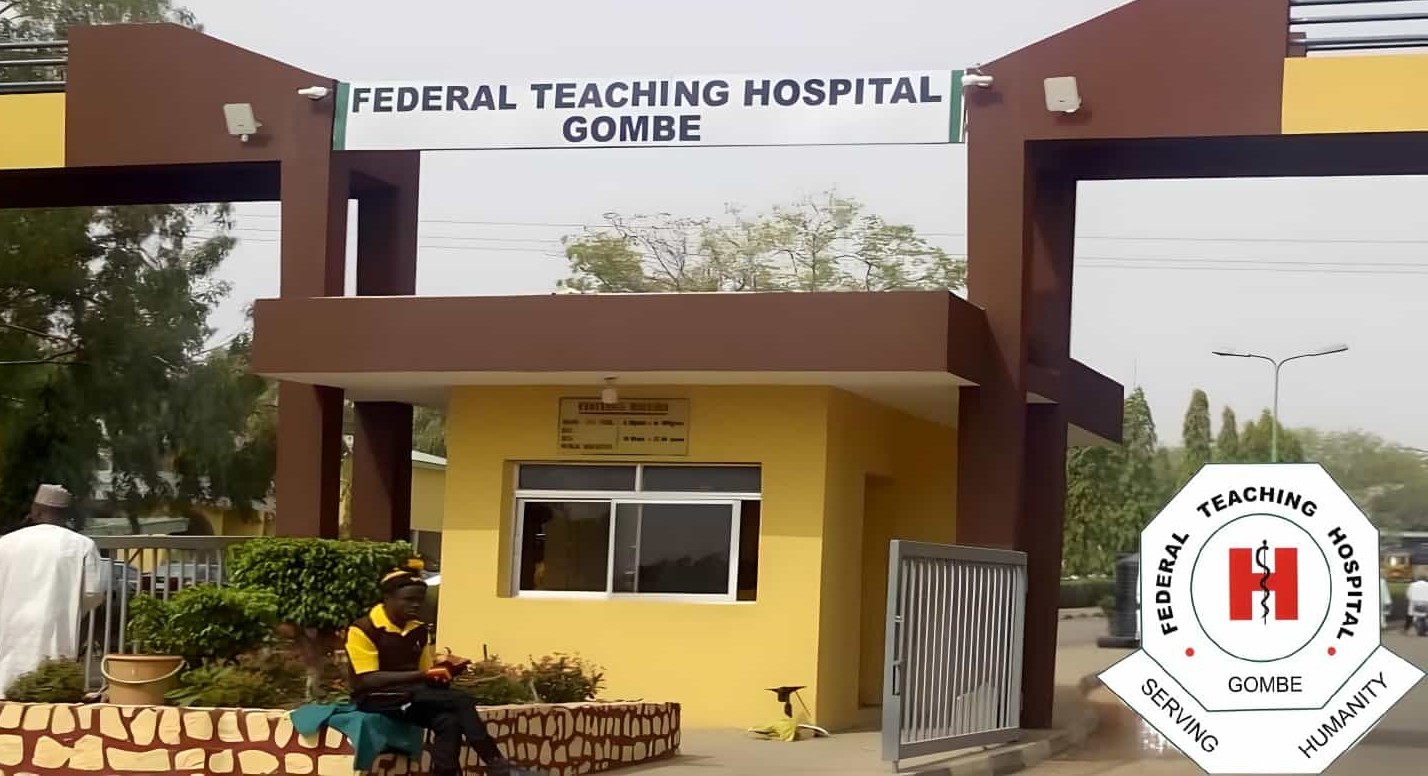
Behind the figures buried in the financial records of the Federal Teaching Hospital, Gombe, lie millions of naira meant for specific government purposes that were moved across expenditure lines without the required approvals, while another ₦2.64 million in statutory stamp duty was left undeducted, discovered in a review of the hospital’s financial records by SecretsReporters
Three separate issues totalling ₦69.7 million, including ₦57.2 million spent on academic and professional sponsorship training from a capital expenditure vote without virement approval and another ₦9.86 million used for capital expenditure items from a recurrent expenditure sub-head without the required authorisation.
The largest financial irregularity is the sum of ₦57,202,291.50 spread across 239 payments for academic and professional sponsorship training.
According to findings, the expenditure was made from the Capital Expenditure sub-head without approval for virement from the Minister of Finance or the National Assembly. The transaction is not in line with Section 27(1)-(2) of the Fiscal Responsibility Act 2007 and carries the risks of misapplication and misappropriation of public funds.
Reacting, the management said the hospital’s 2020 budget under Research and Development contained a provision for training and that it had obtained approval from the Budget Office to spend on training.
A further ₦9,856,954.42, covering 98 payments, was spent on capital expenditure line items from a recurrent expenditure sub-head, also without the required virement approval. The transaction violates Section 27(1)-(2) of the Fiscal Responsibility Act 2007, with the transaction carrying the risk of misapplication and diversion of public funds.
Management’s response to the transaction was brief, stating that the matter was “noted for future correction”.
Also discovered is a separate failure involving ₦2,649,630.55 in statutory one percent stamp duty on contracts executed in 2020.
The amount was not deducted as required under Treasury Circular TRY A1&B1/2017, exposing the government to possible loss of revenue and diversion of public funds.
Management explained that the GIFMIS platform had no provision for the deduction in 2020, adding that deductions began in 2021 after contractors were advised to pay the one per cent stamp duty directly to FIRS before receiving contract payments.



₦69.7Million Gombe Teaching Hospital Spending Under Scrutiny Over Unapproved Budget Transfers
Spread the loveSecrets Reporters Behind the figures buried in the financial records of the Federal Teaching Hospital, Gombe, lie...


Nigeria Atomic Energy Commission Chairman Yusuf Ahmed Spent N47 Million Flying to Six Countries in 2023 While Nigeria’s Only Two Nuclear Waste Away
Spread the loveSecrets Reporters Prof. Yusuf Aminu Ahmed ran Nigeria’s Atomic Energy Commission (NAEC) for the whole of 2023 as...


Aspiring Political Criminal: Ogun APC Senatorial Aspirant Otunba Muraina Olatunji Banjoko Accused of Land Grabbing, Intimidation and Use of Force
Spread the loveSecrets Reporters As Otunba Muraina Olatunji Banjoko, popularly known as Threeco, intensifies his campaign for the All...

Exclusive: NIMASA DG Dayo Mobereola Burnt N1.83 Billion on Air Tickets and Visas, N687 Million For International Meeting In Just One Year
Spread the loveSecrets Reporters The Nigerian Maritime Administration and Safety Agency (NIMASA) recorded ₦1,826,557,876 on four air-ticket and visa expense...

Exclusive: ₦386 Billion Meant To Feed Nigeria, A Rotting Bullion Van And 77 Boxes Of Cash Nobody Checked Rocks Yemi Cardoso’s Tenure As CBN Governor
Spread the loveSecrets Reporters SecretsReporters had earlier exposed ₦1.37 trillion in unrecovered state loans and unaccounted distressed-bank facilities sitting inside...


Azaman: Idris Musa As NOSDRA DG Disbursed Over ₦109.06 Million In Questionable Payments To Contractor For One Coastline Mapping Job And More Money To Non-Existing Company
Spread the loveSecrets Reporters Idris O. Musa was already in the fifth year of his reign as Director-General of the...


Nigeria Misses World Cup, Yet NSC Budgeted ₦6.44bn for 2026 Qualifier Support Group
Spread the loveSecrets Reporters Nigeria’s failure to secure a place at the 2026 FIFA World Cup casts a striking...


Exclusive: Nigeria’s Chief of Air Staff Hasan Abubakar Personally Approved N238 Million in Air Force Contracts That Defied His Own Government’s Procurement Threshold
Spread the loveSecrets Reporters Nigerian Air Force Base Makurdi, home to Tactical Air Command, is the nerve centre of NAF...

Maritime Academy Oron Routed Rector Duja Effedua’s Travel Money Through His PA And Couldn’t Prove A World Maritime Sponsorship Ever Reached Its Destination
Spread the loveSecrets Reporters The Maritime Academy of Nigeria in Oron trains the merchant navy officers, marine engineers and nautical...


Exclusive: Nasty Details Of How Ortom As Benue Governor Took a N10 Billion Loan From Bank To Build Roads and Spent Part of It on Burials, a Birthday and a Newspaper Anniversary
Spread the loveSecrets Reporters SecretsReporters has found documents where Benue State under then Governor Samuel Ortom borrowed N10 billion...


Surveyor-General Oladele Ewulo Faces Questions Over Alleged Fake Certificates of Occupancy and Survey Irregularities in Ogun Land Deals
Spread the loveSecrets Reporters The integrity of land administration in Ogun State has come under renewed scrutiny following allegations...


Exclusive: Africa’s Richest Woman Folorunsho Alakija’s FAMFA Oil Illegally Kept a $200 Million Private Jet Fleet in Nigeria for Over a Decade While Owing N8.85 Billion in Unpaid Customs Duty
Spread the loveSecrets Reporters A SecretsReporters investigation can reveal that FAMFA Oil Limited, the company that made Folorunsho Alakija...

DIG Fayoade Mustapha Adegoke Under Fire as Zone 2 Petitions Allege Police Inaction in Ogun Land Fraud and Intimidation Cases
Spread the loveSecrets Reporters A series of formal petitions lodged with the Nigeria Police Force Zone 2 Command Headquarters in...

Investigation: SEEPCO’s Anthony Chukwueke Was the FG Regulator Sacked in 2007 for Improperly Awarding Oil Licenses and Is Now Chairman of the Company That Walked Away With Nigeria’s Richest Well – Part One
Spread the loveSecrets Reporters A SecretsReporters investigation can reveal that the man now chairing Sterling Oil Exploration & Energy Production...

Exclusive: Niger Delta Suffers While MDGIF Director Oluwole Adama Hides N12.9 Billion Natural Gas Fund
Spread the loveSecrets Reporters The Executive Director of Midstream and Downstream Gas Infrastructure Fund (MDGIF), Mr Oluwoke Adama has...

CBN Deputy Governor Emem Usoro Who Was Side Chic To A Married Man Accused Of Watching Him Take His Last Breath, Buried Him Alone And Took His Death Certificate From His Wife
Spread the loveSecrets Reporters A formal petition delivered to President Bola Tinubu has accused Emem Nnana Usoro, Deputy Governor of...


Stolen funds? ₦76 Billion Paid Out To Non Existing Poor Nigerians By Bola Tinubu Government Through Nigeria’s Cash Transfer Programme
Spread the loveSecrets Reporters In January 2024, President Bola Tinubu suspended Halima Shehu, then Chief Executive Officer of the National...


RCICA Lagos: ₦303 Million Assets Uninsured, ₦7.7m Payments Tied to Regulatory Breaches Under the Leadership Of Wilfred Ikatari
Spread the loveSecrets Reporters At the Regional Centre for International Commercial Arbitration (RCICA), Lagos, a review of its financial...


How Ahmed Bolaji Nagode’s Led NAPTIN Swallowed ₦2.77 Billion in Public Fees That Never Reached Nigeria’s Treasury
Spread the loveSecrets Reporters The National Power Training Institute of Nigeria (NAPTIN) trains the engineers and technicians who keep the...


Less Than Four Months to 2027 Election, Sagitarian Law Firm Asks EFCC to Reopen, Prosecute Atiku Over 2006 Financial Crimes Case
Spread the loveSecrets Reporters A legal firm, Sagitarian Law Firm, has asked the Economic and Financial Crimes Commission (EFCC)...