 By
By Secrets Reporters
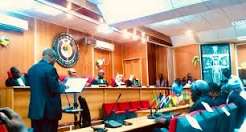
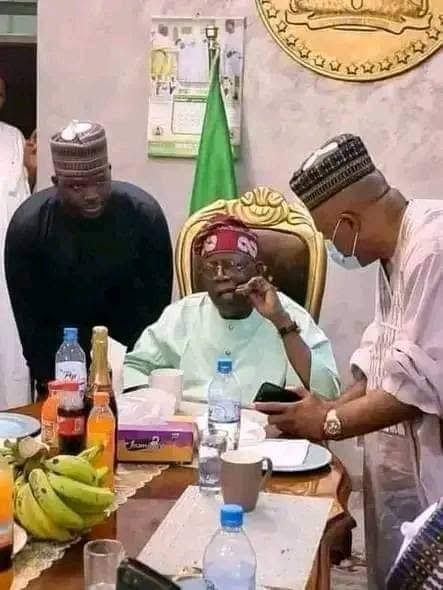
On March 31, 2026, a letter arrived at the National Assembly carrying a familiar request from President Bola Ahmed Tinubu. The President sought legislative approval to secure another $6 billion in external borrowing, describing the facility as essential for financing critical infrastructure and supporting Nigeria’s development agenda. As usual, Godswill Akpabio as Senate President speedily approved it.
It was not the first such request, nor was it likely to be the last.
Since assuming office on May 29, 2023, the Tinubu administration has embarked on one of the most ambitious borrowing programmes in Nigeria’s recent history. In less than three years, the Federal Government has secured approvals for tens of billions of dollars in foreign loans, alongside financing in euros and Japanese yen, domestic bond issuances, pension obligations, and other debt instruments intended to fund roads, railways, power projects, hospitals, schools, housing, agriculture, water resources and national security.
Government officials insist the borrowing is both necessary and strategic. They argue that decades of underinvestment left Nigeria with an infrastructure deficit too vast to be financed through annual government revenues alone. According to the administration, borrowing is the fastest route to modern highways, improved healthcare facilities, better schools, expanded electricity supply and stronger economic growth.
Yet, as the volume of approved loans continues to grow, so too do questions about transparency, affordability and whether Nigerians are seeing value for the debt their country is accumulating.
An investigation by SecretsReporters, based on publicly available records from the National Assembly, budget documents and government announcements, shows that the Tinubu administration has obtained approvals running into tens of billions of dollars in external financing, in addition to substantial domestic borrowing commitments.
While public debt is not divided into individual bills payable by citizens, economists note that every naira used to service government loans ultimately comes from public revenue taxes, oil earnings, customs duties and other national income that could otherwise be spent on healthcare, education, security or social welfare.
A Borrowing Programme of Historic Scale
Official approvals obtained since 2023 illustrate the pace at which the Federal Government has expanded its borrowing programme.
Among the largest was the National Assembly’s approval of a financing package comprising more than $21 billion in foreign loans, €4 billion in European financing, ¥15 billion in Japanese financing, a $65 million grant, and hundreds of billions of naira in domestic debt instruments.
The administration says the facilities will finance projects across key sectors, including transport infrastructure, healthcare, education, agriculture, housing, electricity, irrigation, flood control and national security.
A review of major approvals announced between 2023 and 2026 paints a picture of an administration relying heavily on debt financing to sustain its development agenda.
| Year | Approved Financing | Purpose |
| 2023 | $7.8 billion + €100 million | Infrastructure, healthcare, education, agriculture, security and economic reforms |
| 2023 | $750 million | Power sector recovery and electricity reforms |
| 2023 | $700 million | Education and human capital development |
| 2024 | $1.57 billion | Healthcare, irrigation, flood management, education and power |
| 2025 | $21.19 billion | Infrastructure, healthcare, housing, education, security and budget support |
| 2025 | €4 billion | Development financing |
| 2025 | ¥15 billion | Development support programmes |
| 2025 | $2 billion | Domestic foreign currency facility and budget support |
| 2025 | ₦757.98 billion | Pension bond obligations |
| 2025–2026 | Funding approvals | Eastern Rail Corridor rehabilitation |
| 2026 | $747 million | Lagos-Calabar Coastal Highway |
| 2026 | $516 million | Sokoto-Badagry Super Highway |
Taken together, these approvals represent one of the largest borrowing programmes undertaken by a Nigerian administration within such a short period.
Following the Money – The Companies Behind Nigeria’s Multi-Trillion-Naira Infrastructure Contracts
As Nigeria’s public debt continues to climb, another question has begun to dominate public discourse.
Increasingly, attention is turning to where the borrowed money is going, who is executing the projects, and whether the procurement process is sufficiently transparent and competitive.
Infrastructure spending accounts for a substantial share of the loans approved by the National Assembly over the past three years. Roads, bridges, railways, housing projects and other public works have featured prominently in virtually every borrowing request submitted by President Bola Ahmed Tinubu.
These projects are intended to modernize Nigeria’s ageing infrastructure, stimulate economic growth and create jobs.
But an analysis of publicly announced contract awards shows that a significant number of the country’s largest infrastructure projects have been awarded to a relatively small group of construction firms, prompting questions from procurement experts and transparency advocates about competition, value for money and public accountability.
A Familiar Name Emerges: The Chagoury Connection
Among the companies repeatedly appearing in major federal infrastructure projects is Hitech Construction Company Limited, one of Nigeria’s oldest engineering and construction firms.
Hitech has become one of the most visible contractors under the Tinubu administration, handling some of the country’s most ambitious and expensive road projects.
The company’s profile has grown significantly following the award of the Lagos–Calabar Coastal Highway, a flagship infrastructure project expected to stretch approximately 700 kilometres along Nigeria’s Atlantic coastline.
Government officials describe the highway as a transformational investment that will improve regional connectivity, boost tourism, stimulate commerce and open new economic corridors across several coastal states.
Hitech Construction is widely associated with the Chagoury Group, the diversified Nigerian-Lebanese conglomerate founded by businessman Gilbert Chagoury.
For decades, the group has maintained a significant presence in Nigeria across construction, manufacturing, real estate, hospitality and other sectors.
In the case of the Chagoury Group, public discussion has extended beyond infrastructure projects to include reported personal and business relationships involving senior political figures.
Among the issues that have circulated in public discourse are reports linking Seyi Tinubu, the President’s son, to CDK Integrated Industries Limited, a company reported to have business associations with the Chagoury Group.
Under the Tinubu administration, companies linked to the group have secured several high-value infrastructure contracts, making the conglomerate one of the most prominent beneficiaries of federal public works.
A review of Federal Executive Council announcements, budget documents and official project approvals indicates that contracts running into trillions of naira have been awarded to companies associated with the group.
Among them are:
- The Lagos–Calabar Coastal Highway.
- Sections of the Sokoto–Badagry Super Highway.
- Major bridge and expressway construction projects.
- Other strategic federal infrastructure developments announced since 2023.
The concentration of these awards has generated increasing debate among governance experts, who argue that projects financed through public borrowing should be subjected to rigorous procurement oversight and transparent competitive processes.
The Debt Burden in Perspective
Analysis by SecretsReporters, based on publicly announced borrowing approvals between 2023 and 2026, indicates that the Tinubu administration has secured legislative approval for financing commitments worth approximately ₦75 trillion, using an exchange rate of ₦1,500 to one U.S. dollar and prevailing conversion rates for other approved foreign currencies.
The estimate includes dollar-denominated loans, euro financing, Japanese yen facilities, domestic borrowing, pension bond obligations and other publicly announced financing arrangements.
Spread across Nigeria’s estimated population of 250 million people, the borrowing commitments amount to the equivalent of roughly ₦300,000 per citizen.
For a household of six, that represents about ₦1.8 million in public debt obligations. although no citizen is directly billed. Instead, the obligation is carried collectively through government finances, with debt repayments increasingly consuming a significant share of annual public revenues. The implication is simple: every new loan approved today becomes part of the financial responsibility of present and future generations.