 By
By By Victor Otuya
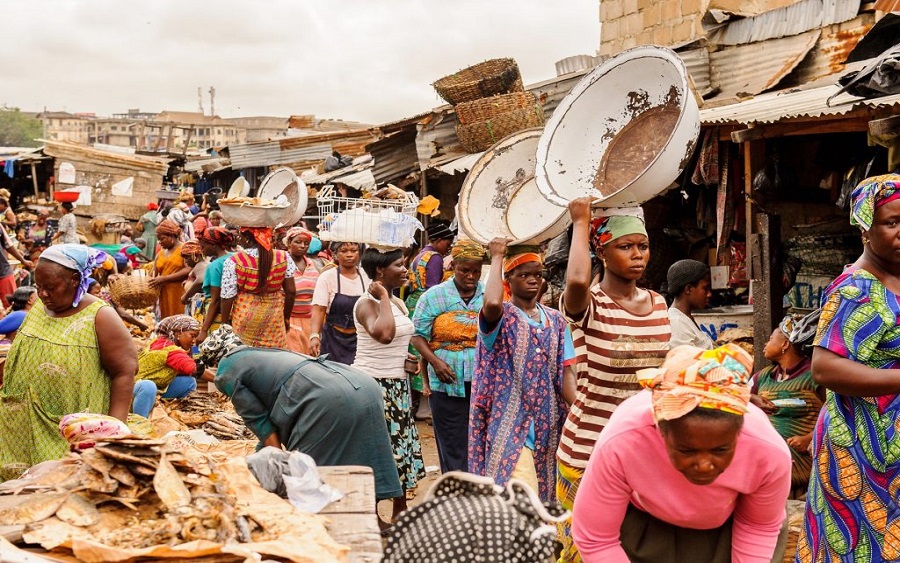
Nigeria is a country blessed beyond measure. Nigeria is blessed with oil that flows beneath our soil, with gas that lights up the world, with gold, limestone, cocoa, fertile land that can feed a continent, and with over 230 million resilient, hardworking, brilliant people. Yet, for the average Nigerian today, this blessing feels like a curse. For the market woman in the village, for the okada rider in the cities, for the young unemployed graduate hawking phone accessories, for the farmer the rural communities, Nigeria has become a nation where the poor can no longer breathe.
To breathe is to live. To breathe is to have room, to have air, to have hope that tomorrow will be better than today. But what happens when every single policy, every single price in the market, every single trip to the hospital becomes a hand around the throat of the poor man?
Walk into any market in Nigeria, and you will hear the same lamentation. A bag of rice that was ₦8,000 in 2015 is now ₦95,000. A crate of egg that was ₦700 is now ₦6,500. A litre of fuel that was ₦87 is now over ₦1,200 in many states. The poor Nigerian is not asking for luxury. He is not asking for a house in Banana Island or a Prado jeep. He is simply asking to feed himself and his children twice a day and to send them to a public school where the roof is not leaking. The poor are also asking to go to a public hospital and find paracetamol.That basic dignity has been taken away.
The tragedy of Nigeria is not poverty of resources, but poverty of leadership and the deliberate strangulation of the common man. Let us look at the chokehold on five fronts.
1. The Economic Chokehold: Subsidy Removal Without Safety
Every Nigerian understood that fuel subsidy was unsustainable. Even the poorest man knew it was being abused by the rich. But what we did not expect was its removal without any cushion. In one night, we were told to tighten our belts, but the government did not tighten its own.
The cost of transportation tripled overnight. A worker earning ₦70,000 minimum wage now spends ₦30,000 just to get to work. The tomato seller who brings her goods from the farm now pays double for transport, so she doubles the price. Inflation is not a number on the National Bureau of Statistics sheet; it is hunger in the stomach of a child who goes to bed at 8 pm because there is no food.
The naira has been floated, devalued, and battered. For the rich man with dollars in his domiciliary account, this is business. For the poor man whose salary is in naira, it is death. His salary has not increased, but his life has become three times more expensive. He can no longer breathe. The worst of all is the pain of the unemployed and vulnerable citizens. They earned nothing from the common purse, yet they are made to carry heavy yoke heavier than those who earned.
2. The Healthcare Chokehold: A Death Sentence For Being Poor
Fall sick in Nigeria as a poor man, and you will understand what it means to be unable to breathe. Our general hospitals have become mere consulting clinics. No drugs, no light, no bed space, and of cause no doctors.
Doctors and nurses, frustrated by poor pay and poor conditions, have left in droves to the UK, Canada, and Saudi Arabia. The few left are overworked and underpaid. The poor woman in labour is asked to go and buy gloves, disinfectant, and even fuel for the generator before she can be attended to. If she cannot afford it, she dies with her baby. And we move on.
The National Health Insurance Scheme covers less than 10% of Nigerians. The rest pay out of pocket. A simple malaria treatment now costs ₦15,000 in a private clinic. How does a man earning ₦70,000 feed his family and treat malaria three times a month? He resorts to self-medication, to herbs, to prayer. Many times, it fails. In Nigeria, poverty is a pre-existing condition that kills faster than any disease.
3. The Educational Chokehold: The Ladder Has Been Removed
Education used to be the ladder through which the poor man’s child could climb out of poverty. Awo’s free education, the scholarship schemes of the 70s and 80s, produced professors from homes of farmers. That ladder has been completely removed.
Public primary schools are dilapidated. In many villages in Nigeria children still sit on the bare floor. Public universities are on strike for eight months in every two years. And now, university fees have been increased by 300% to 500% under the guise of autonomy. The federal government says students can take loans. How does a 19-year-old whose father is a petty trader repay a loan when there are no jobs?
So the poor man’s child drops out. He becomes an okada rider, a yahoo boy, a political thug for the same elites who denied him education. We have created a system where the children of the rich go to private universities in Nigeria and abroad, while the children of the poor are locked out. When you deny a generation education, you are telling them they have no future. You are stopping them from breathing.
4. The Security Chokehold: The Poor Are Not Safe Anywhere
Insecurity in Nigeria has become a tax on the poor. The rich man lives in an estate with private security, moves with police escort, and flies over bad roads. The poor man is left at the mercy of kidnappers, bandits, and unknown gunmen.
The farmers in many villages in Nigeria cannot go to farm because of herdsmen attacks. So they stays at home, hungry, and displaced in an IDP camp. The trader on the East-West road cannot travel because of kidnapping. The cost of food goes up because food cannot move from the North to the South.
To be poor in Nigeria today is to be unsafe in your own home, on your own road, and on your own farm. The government announces huge billions for security, but in the village, the poor man still sleeps with one eye open.
5. The Psychological Chokehold: A Nation of Anger and Hopelessness
Perhaps the most dangerous chokehold is the psychological one. The Nigerian poor has lost hope. He watches on Instagram how Senators take home ₦30 million monthly in allowances, how Governors buy new SUVs for themselves while telling workers there is no money to pay pensions. He sees how billions are looted and the culprit gets a chieftaincy title after a plea bargain.
He queues for palliative rice that never reaches him. He watches politicians share money during elections and disappear after. He is told to be patient, to sacrifice, to bear the pain of reforms, but he sees no sacrifice from the top.
This creates a nation of angry, depressed, and tired people. Young men are japa-ing not just for money but to breathe. Young women are giving up. Suicide and mental illness are on the rise, but we don’t talk about it.
Nigeria is sitting on a time bomb. History teaches us that when the poor can no longer breathe, they will eventually struggle for air by any means necessary. The EndSARS protest was a warning. The anger on the streets is not just about police brutality; it is about a system that has squeezed life out of its people.
What Must Be Done?
This country can still breathe again, but we must act now.
First, reforms must have a human face. You cannot remove subsidy and float the naira and then wait for the market to fix it in two years. People will die before two years. There must be genuine, direct support – not palliative that ends in warehouses, but subsidized transport, true price control on food, and a living wage that is truly living.
Second, we must cut the cost of governance drastically. Nigeria cannot afford a bicameral National Assembly that consumes over ₦300 billion a year in a country where 133 million people are multidimensionally poor. We cannot afford 48 ministers and hundreds of aides. Leadership must sacrifice first.
Third, we must invest in the poor directly – in primary healthcare, in basic public schools, in agriculture. The money we save from subsidy must be seen in our clinics, not in new presidential jets.
Finally, we need a government that listens. The poor are not statistics. They are humans who need to be looked in the eye.
Nigeria is a great nation. But greatness is not measured by the GDP, by the skyscrapers in Abuja, or by the billions in foreign reserves. Greatness is measured by how a nation treats its poorest citizen. By that standard, we are failing.
The government must loosen the hand around the neck of the poor Nigerians. The system must let him breathe because when the poor can no longer breathe, the whole nation will eventually suffocate.
Victor Otuya, a journalist, wrote from Asaba, Delta State.