 By
Secrets Reporters
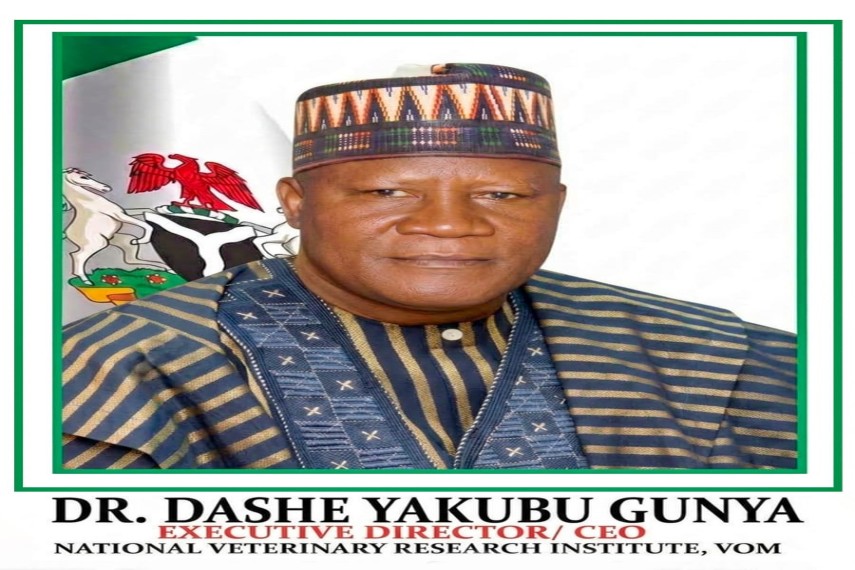
A federal veterinary training institution in Plateau State, under the leadership of Dr. Yakubu Dashe Gunya, has come under scrutiny following revelations that contracts worth ₦1.56 billion were reportedly awarded without the approval of its Governing Council, the body legally empowered to authorize expenditures of such magnitude.
The development raises concerns about compliance with established procedures and the responsible use of public funds. Beyond the financial implications, it is important to ensure that resources meant to strengthen veterinary education, improve institutional capacity, and serve the wider public are managed in the best interests of society.
As questions emerge over the circumstances surrounding the contracts, a transparent review of the process would help clarify the issues, protect public trust, and reinforce the institution’s commitment to its educational and public service mandate.
The Federal College of Animal Health and Production Technology, Vom, in Jos South, Plateau State, has trained Nigeria’s veterinary and livestock technicians since 1941, earning its place as the first institution in West Africa to produce graduate veterinary surgeons. But a Federal Government review of the college’s 2024 financial year has exposed ₦1,685,196,871.88 in irregularities across five findings, with one governance failure dwarfing all others.
At the heart of the scandal is a single finding: ₦1,556,572,994.00 more than ₦1.55 billion, representing over 92 per cent of everything flagged in the review was spent on contracts awarded without confirmation by the college’s political head, meaning the Governing Council or supervising authority responsible for approving major expenditure was bypassed entirely.
Dr. Jude Obi Okpara currently serves as Provost and Chief Executive Officer of the college. Whoever held that office when the ₦1.56 billion in contracts moved without governing authority sign-off bears direct responsibility for the finding, and the current leadership inherits the obligation to explain how contracts of such magnitude proceeded without the basic institutional approval every public expenditure of this size requires.
A veterinary training college spending ₦1.56 billion on contracts that never received sign-off from its own governing authority is not a technicality. It means the single largest financial decision in the college’s 2024 year effectively had no institutional check on it at all the exact failure point procurement governance exists to prevent.
The review did not stop at the contracts. A further ₦98,490,878.88 involved extra-budgetary expenditure from the college’s internally generated revenue spending beyond what the approved budget allowed. ₦14,795,500.00 in cash advances were granted above the approved limit. ₦10,770,999.00 sat as unretired cash advances. And ₦4,566,500.00 was spent on irregular subscriptions and conference payments.
Two further compliance failures round out the picture: unsubstantiated transfers to the college’s new IPPIS account, and non-submission of audited financial statements.
The laws broken here are direct. Standard public institution governance rules require Governing Council or ministerial confirmation before contracts above a defined threshold can proceed bypassed entirely for ₦1.56 billion. The Financial Regulations 2009 prohibit extra-budgetary expenditure without proper authorisation violated by ₦98.49 million. Treasury Circular guidance on cash advance ceilings was breached by ₦14.8 million granted above the limit. And the statutory requirement to submit audited financial statements for public scrutiny was not met at all.