 By
Secrets Reporters
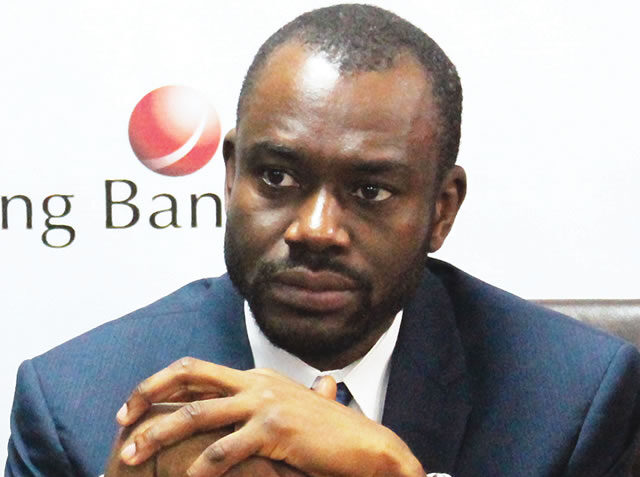
The declaration sits in an appendix, in a table of outside appointments, inside a governance report that Sterling Bank Plc filed about itself. The document is the bank’s Report on Compliance with the Nigerian Code of Corporate Governance 2018, prepared on the Financial Reporting Council template and signed at the back by the bank’s chairman and by its Managing Director and Chief Executive Officer, Abubakar Suleiman, in his own hand. In Appendix II of that report, under the heading Concurrent Directorships, the bank lists six outside boards for its chief executive. The fifth name on the list is Ananse Internet Group. Ananse Internet Group is not a Nigerian company. It is a company incorporated in Mauritius, in the Indian Ocean, registered on 6 December 2011 under registration number C106712, and the man who runs one of Nigeria’s licensed commercial banks sits on its board.
The filing walks the seat into the record twice. In the body of the compliance report, the bank answers the direct question put to every reporting company: is the MD/CEO serving as a non-executive director in any other company. The answer printed in the report is yes, and the companies named are the Lagos Business School, the Enterprise Development Center, Black Rising Limited, Noor Takaful, Ananse Internet Group and Criterion Capital Limited. The appendix then repeats the same six names against his name in the concurrent directorships table, against the board table that records his own position: Mr Abubakar Suleiman, Managing Director and Chief Executive Officer, first appointed to the Sterling board on 28 April 2014, managing director effective 1 April 2018. The certification page closes the document with the signatures of the Chairman, Mr Asue Ighodalo, of the governance committee chair, and of Suleiman himself as Managing Director and Chief Executive Officer, declaring the information in the form to be true. The Mauritius seat is therefore not an allegation against the Sterling chief. It is his own bank’s sworn governance disclosure, certified over his own signature.
The declaration did not appear once and lapse. The Sterling Financial Holdings Company Plc annual report for 2024, the published account of the holding company that owns the bank, lists Ananse Internet Group again among the concurrent directorships of Abubakar Suleiman. Year after year, in the group’s own published documents, the seat in the Mauritius company stands in his name alongside the Nigerian seats: the business school, the enterprise centre, the takaful insurer and the capital firm.
What SecretsReporters established from the company’s own published terms is the identity of the firm behind the name in the appendix. Ananse Internet Group trades in fashion. Its own terms and conditions, published for its Kisua clothing business, state the merchant’s full legal identity in plain words: Ananse Internet Group, Mauritius, registration number 106712, a company incorporated in accordance with the laws of Mauritius, with its postal address at River Court, St Denis Street, Port Louis. The registration number in the company’s own terms is the registration number of the company formed on 6 December 2011 and kept at River Court in Port Louis, in the care of River Court Administrators. There is no Nigerian company of that name for the bank’s filing to point at. The Ananse Internet Group of the Sterling appendix and the Mauritius company C106712 are one and the same entity, and its business is the Ananse Africa platform, which connects African fashion designers, artisans and artists to buyers across the world, founded and led by Sam Mensah.
The Mauritius company is no dormant shelf entry. It runs a programme with the Mastercard Foundation, the Ananse 2023 Program, which opened in September 2023 and runs to December 2026, training and supporting young fashion creators, most of them women, inside Nigeria. In June 2025 it signed a five-year partnership with the Federal Ministry of Art, Culture, Tourism and the Creative Economy to build the Ananse Centre for Design in Lagos and a national network of fashion and design hubs, a programme the ministry announced as a vehicle for hundreds of thousands of Nigerian creatives. The sitting chief executive of a Nigerian bank therefore holds a director’s seat in an offshore-registered company that contracts with the Federal Government of Nigeria and with one of the largest philanthropic foundations in the world, while he runs the bank from Marina in Lagos.
Suleiman’s own record is a banker’s record. Born on 19 August 1973, he holds a degree in Economics from the University of Abuja and a master’s degree in Major Programme Management from the Said Business School of the University of Oxford. He worked in tax advisory at Arthur Andersen and in financial markets at Citibank Nigeria, joined the Sterling fold through Trust Bank of Africa in 2003, rose through treasury and the Equatorial Trust Bank merger to Executive Director and Chief Financial Officer, and took the chief executive’s office on 1 April 2018, succeeding Yemi Adeola. Nothing in that published career is Mauritian. The only Mauritian entry in his professional life is the seat in Appendix II.
The law that governs bankers in Nigeria speaks directly to what a man in Suleiman’s chair holds, and where he holds it. It is not the code written for public officers. It is the Bank Employees, Etc. (Declaration of Assets) Act of 1986, the statute written for the banking hall alone. The Act commands every employee of a bank, from the cleaner to the chief executive, to make a full disclosure of all his assets within fourteen days of assuming duty, on a form sworn before the Registrar of a High Court, and it commands him to renew that disclosure every year, and for two years after he leaves the bank. Assets, in the Act’s own definition, run from land and buildings to stocks and shares. The forms pass through the chief executive of the bank to the authority charged with verifying them, which makes Suleiman himself the conduit for the declarations of Sterling’s own staff. And the Act carries teeth: a bank employee who owns assets beyond his legitimate, known and provable income commits an offence punishable with ten years in prison and forfeiture of the excess. The Nigerian Code of Corporate Governance, under which Sterling filed the very report that carries the Ananse line, requires a chief executive’s outside directorships to be disclosed precisely because an undisclosed seat is a conflict that shareholders, depositors and regulators cannot see.
Get every exclusive first. Follow Secrets Reporters on WhatsApp:
Follow Secrets Reporters on WhatsAppFollow Secrets Reporters on WhatsApp: join the channel for every exclusive the moment it publishes.