
 By
Secrets Reporters
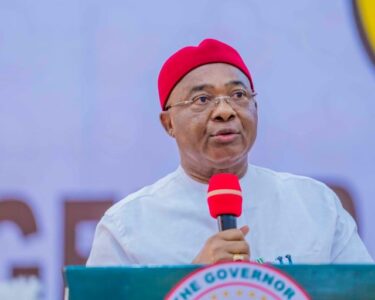
Ebonyi State’s 2026 spending records carry not one security vote but two, written into the same budget year under the government of Governor Francis Ogbonna Nwifuru. Between the Office of the Executive Governor and the Ministry of Internal Security, the two votes carry N12,002,200,000 of public money, every naira of it discretionary, and the state’s own published records contain no figure showing what any of it has bought.
SecretsReporters review of the records shows the first vote sitting in the governor’s own office. In the overhead of the Office of the Executive Governor stands a line named “Security vote (including operations)” carrying N6,000,000,000 for 2026. The same office carries a second security line of its own, a separate provision named “Security services” worth N300,000,000, distinct from the vote and standing apart from it in the same office’s overhead.
The second vote sits inside an entire ministry. The Ministry of Internal Security carries a total provision of N12,466,454,000 for 2026, and within that total stands the ministry’s own security vote of N6,002,200,000. Nearly half of everything budgeted for the ministry is that single line. Between the governor’s vote, the ministry’s vote and the third security line inside the governor’s office, the 2026 records carry N12,302,200,000 under security labels in one budget year.
The ministry’s vote is not standing still. In 2025, the security vote of the Ministry of Internal Security was approved at N5,006,000,000. In 2026 it stands at the figure recorded above, an increase of N996,200,000 in a single year, added on top of the governor’s own vote and his office’s separate security services line.
What the records do not carry is any account of the spending. Ebonyi’s quarterly spending records publish totals at the level of each ministry, department and agency. They do not publish actuals for the lines beneath those totals. There is no figure anywhere in the published records stating how much of the governor’s N6 billion vote was spent in the first quarter of 2026 or in the second, no figure for the ministry’s vote either, and no named expenditure against any of the three security lines. The money is approved in the open, under labels the records themselves print. Its spending is recorded nowhere the public can read.