 By
Secrets Reporters
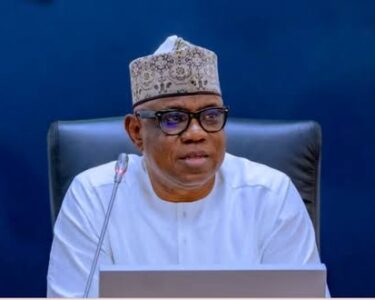
Prof. Yusuf Aminu Ahmed spent his final months as Chairman/CEO of Nigeria’s Atomic Energy Commission (NAEC) presiding over the single largest one-day payment run SecretsReporters has found in the Commission’s records: N298,711,145.69, paid on 10 May 2024 to ten different companies in twelve separate transactions, every one of them carrying the same base payment reference and every one of them for a workshop, outreach event or technical meeting tied to Nigeria’s nuclear power ambitions. That single day accounted for 62% of everything NAEC spent on companies and individuals in the whole of 2024, a year Ahmed led for all but its final six weeks, before handing over to Engr. Dr. Anthony Ekedegwa on 15 November 2024, ten weeks after his own three-year term had technically expired that September.
The twelve payments, on their face, describe a single national programme: Current Joshim Nig Ltd took N59,994,594 for a workshop on Nigerian industry participation in siting the Multipurpose Research Reactor in the Southern Region; Waja Tech Nig Ltd took N39,607,178 to assess research institutions’ capacity for the National Nuclear Energy Programme; Maameenu Integrated Concepts & Konsult Services Ltd took N39,613,860 for a workshop on the same reactor’s design and use; Aimtab Global Services Ltd took N35,693,460 to evaluate nuclear infrastructure readiness for Nuclear Power Plant development; New Balance Corporate Services Ltd took two payments totalling N33,715,440 for a threat-assessment workshop and a separate environmental-safety-documentation workshop; Pebblebridge Limited took N18,400,186 for advocacy events in the North-Central region; Qubthar Essential Investment Ltd took two payments totalling N22,867,515 for a schools outreach programme and a Small Modular Reactor workshop; Postto Integrated Limited took N9,865,987 for a nuclear-security-leadership training; and Glaubig Nigeria Limited took N7,356,452 for a tertiary-education outreach programme. The only payment in the cluster for anything physical went to Hairan Engineering Services Limited, N31,596,474 for equipment and power installation at the Nuclear Technology Centre in Sheda.
Individually, not one of those twelve contracts comes close to the N1 billion threshold that would force NAEC into competitive bidding under the Bureau of Public Procurement’s rules, or even the N500 million prequalification line. Collected together -one date, one base payment reference, ten companies, and a set of workshops and outreach events that read like components of a single, centrally-coordinated public-engagement campaign around Nigeria’s nuclear power programme and the twelve contracts describe exactly the conduct Section 58(4)(d) of the Public Procurement Act 2007 was written to stop: dividing a single procurement requirement into pieces small enough that no one piece ever has to face the scrutiny its true, combined size would demand. Five days later, on 15 May, the same pattern repeated at smaller scale: three more companies paid to rehabilitate three different regional centres namely Mospero Global Resources in Port Harcourt, Kaballero Nigeria Limited in Ile-Ife, Baba Alhaji Enterprises in Zaria, on top of a fourth payment the day before to refurnish the Chairman’s own office.
Ahmed’s personal travel continued alongside the splitting pattern until the very end of his tenure.
On 1 September 2024, two days before his term formally expired, NAEC paid him N27,119,943.50 for a combined Russia-and-Morocco trip covering National Liaison Officer meetings, an African Regional Cooperative Agreement gathering, and the ATOMEXPO 2024 forum on top of N17,296,159 already paid in March for a separate trip to Russia, bringing his personal 2024 travel total to N44,416,102.50 in the eight months before he left office. The same day, NAEC paid separate hosting fees to cover oversight visits from both the House of Representatives Committee on Renewable Energy and the Senate Committee on Atomic and Nuclear Energy, a routine cost of legislative accountability, but one that fell, like almost everything else examined here, entirely within the final year of a Chairman whose signature spending pattern was a national programme broken into pieces too small to count.
By the time Ekedegwa took over in mid-November, only N50.3 million of the year’s N478.4 million had yet to be spent, most of it in routine diesel and office-rent payments including two identical payments of N10,554,464.83 to Crowe Dafinone, the Nigerian member firm of the Crowe Global network, one in late October under Ahmed’s name and one in late December under Ekedegwa’s, one described as a rent balance and the other as a lease renewal, close enough in timing and amount that Financial Regulations’ requirement for verified, non-duplicative payment demands NAEC show they were genuinely two separate obligations rather than one rent bill paid twice under two different labels.