Politics
Brazen Impunity: Nigerian Lawmaker, Miriam Odinaka Onuoha Publicly Celebrates Hijacking FIRS, TETFUND, National Assembly Service Commission Jobs For Constituents; Reveals How NASS Allocates Juicy Jobs To Cronies
Secrets Reporters
When Oluwadarasimi received an email from the Federal Inland Revenue Service (FIRS) notifying her that she had qualified for the next stage of a recruitment process, her joy knew no bounds. A fresh graduate, full of hope and tenacity, she promptly uploaded her credentials as instructed. But to her surprise, another request came a week later, asking for the same credentials. Confused, but obedient, she uploaded them again.
Then came the cold shoulder.
A final message from the agency read: she had been disqualified for “failure to upload her credentials.” She was left stunned—questions hanging in the air, answers nowhere in sight. Like many young Nigerians chasing the elusive dream of federal employment, Oluwadarasimi had walked into a system that often favours connection over competence.
“Secured Federal Employment for Constituents”
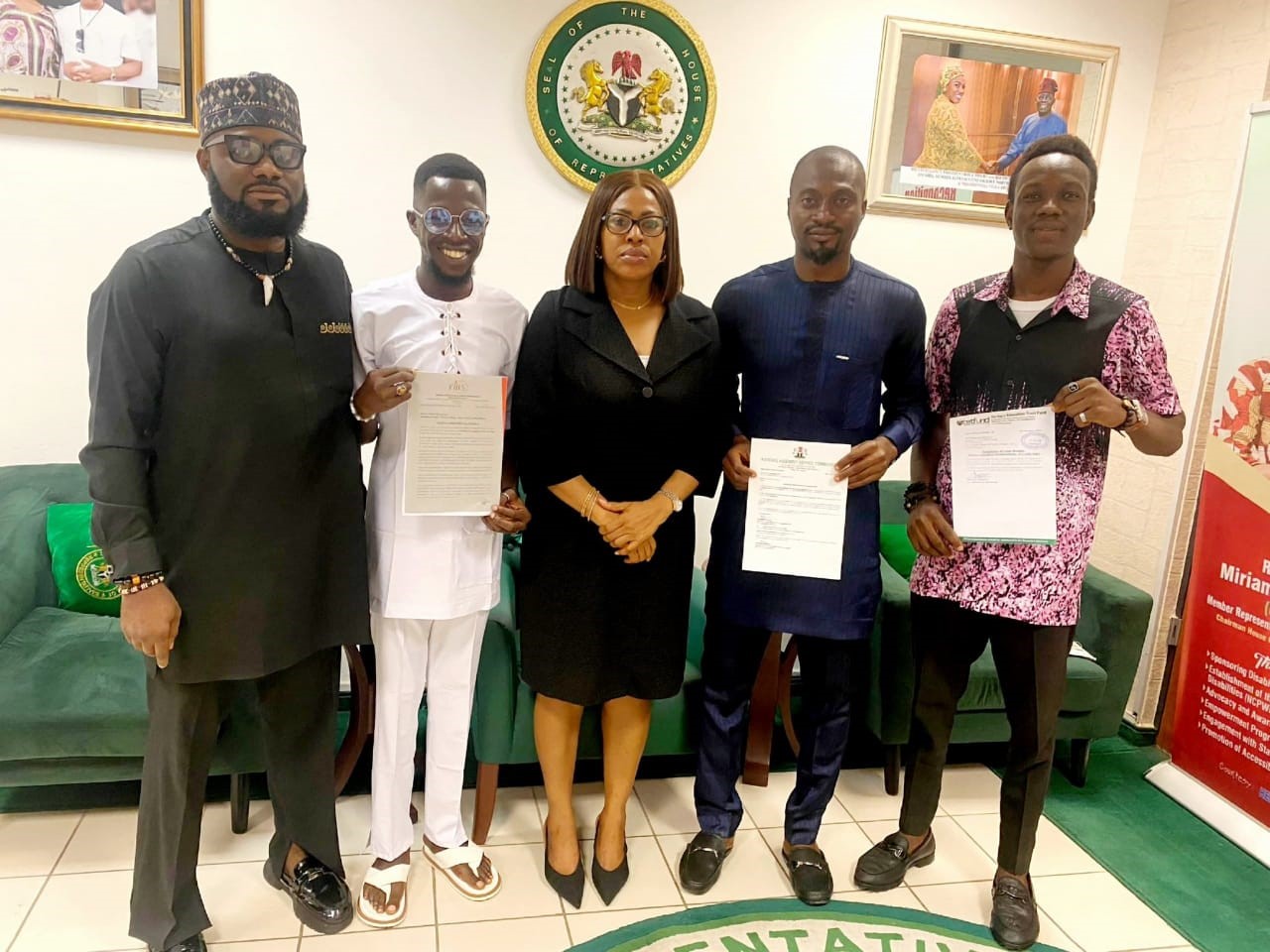
On June 21st 2025, a federal lawmaker, Hon. Miriam Odinaka Onuoha, representing Okigwe North federal constituency of Imo State, publicly announced on her verified X handle that she had “secured federal employment” for some of her constituents into the Federal Inland Revenue Service (FIRS), the National Assembly Service Commission (NASC), and the Tertiary Education Trust Fund (TETFUND). Photographs of smiling beneficiaries standing beside the lawmaker were also shared.
Her post did not raise eyebrows in isolation, but it stirred murmurs in the minds of many, especially those like Oluwadarasimi. Reacting to Onuoha’s post on X, several users wondered that if federal job slots are being distributed through lawmakers, “what then happens to those who apply through official recruitment portals?”
Crunching the Numbers
Nigeria’s National Assembly consists of 360 House of Representatives members and 109 Senators. That makes a total of 469 lawmakers. If each of them secures just three employment slots across major government agencies, that’s 1,407 positions quietly filled—no adverts, no tests, no interviews—just handed out.
Add the 45 serving ministers, and the number grows to 1,542. These figures don’t include influential political aides, governors, or party stalwarts who also wield unofficial access to employment slots in agencies like the CBN, FIRS, NNPC, and TETFUND.
A Look at the Constitution
The 1999 Constitution of the Federal Republic of Nigeria (as amended) outlines the powers and responsibilities of lawmakers under Sections 4 and 88. Lawmakers are empowered to make laws and conduct oversight functions on the executive arm. Nowhere does the Constitution explicitly grant legislators the right to nominate or secure federal jobs for their constituents.
Federal employment, according to civil service regulations and public service rules, is to be handled by recruitment boards and commissions, including the Federal Civil Service Commission (FCSC), in line with federal character principles enshrined in Section 14(3) of the Constitution. This provision mandates equitable distribution of positions among all the states to prevent the dominance of any group or region.
While lawmakers are permitted to recommend candidates or advocate for inclusion—especially for constituents facing hardship—such recommendations are not binding, and certainly not constitutionally mandated.
The Silent Allotments
Despite this, anecdotal evidence and sporadic posts—like Onuoha’s—suggest that slots are routinely allotted to lawmakers in backdoor arrangements. These slots often fall under the radar, bypassing open recruitment.
The actual process remains hazy, shrouded in what many call Nigeria’s “informal quota system.” These are not publicized. No guidelines are issued. There is no oversight. The only consistent pattern is that well-connected individuals tend to get ahead while the rest, like Oluwadarasimi, are left to chase shadows.
The Other Side of the Coin
Some lawmakers argue that helping their constituents secure jobs is a legitimate form of representation. “If I can’t help the people who voted me in, then what am I doing in office?” one unnamed House member told a national newspaper in a past interview.
To them, channeling job opportunities to their districts is a way of “bringing the dividends of democracy” home. But critics say this approach undermines equity and rewards proximity to power rather than merit.
A Brewing Crisis of Trust
As more public agencies open portals for recruitment—often with rigorous processes involving CBT tests and document verification—the parallel system of handpicked beneficiaries risks eroding public trust.
“I studied hard, passed the tests, and got shortlisted,” says another applicant, Bako Musa, from Kaduna. “But then, silence. No feedback. Nothing. Later, I found out that names had been submitted by politicians.”
Where Is the Oversight?
The absence of a clear legal framework governing lawmaker involvement in recruitment opens a grey area where influence thrives unchecked. The Federal Character Commission (FCC), which is meant to ensure equitable distribution of public posts, rarely speaks on such matters, and questions about how these job slots are allocated go largely unanswered.

Politics
Political Rascality: FCT Minister of State Mahmoud Media Aide Bin Usman Rano Appoints Six ‘Special Advisers’ and One PA To Run His Office
Secrets Reporters
Political arrogance does not always arrive with noise. Sometimes, it comes dressed as a press statement, carrying official language, decorated titles and the quiet assumption that public office can be stretched beyond its lawful boundaries.
This was the case with a recent statement issued by Hon. Bin Usman Rano, media aide to Dr. Mariya Mahmoud Bunkure, the Honourable Minister of State for the Federal Capital Territory, announcing the appointment of seven persons to assist in running his office.
Rano, who is himself an aide, appointed Abubakar Alhassan Muhammad Lale as personal assistant. He also named Umar Bashir Umar as Special Adviser on Protocol; Abdullahi Muhammad Ghali as Special Adviser on Media; Bashir Ibrahim Sisay as Special Adviser on Student Matters; Najeeb Garba Lawan Rano as Special Adviser on Youth and Sports; Yusuf Tijjani YT Rano as Special Adviser on Special Duties; and Muhammad Uzairu as Special Adviser on Religious Affairs.
It was not the appointment of a personal assistant that raised issues. Public officers often work with assistants. The concern is the audacity of a ministerial aide appointing six “special advisers” to assist in running his own office, as though the office of a media aide had suddenly become a ministry inside a ministry, a caucus inside a caucus.
The statement did not cite any law. It did not cite approval from the president, the FCT minister, the minister of state, the Office of the Secretary to the Government of the Federation, the head of service or any recognised public service authority. It did not state whether the appointees would be paid from public funds. It did not say whether they would receive official identification, allowances, office space, protocol privileges or any benefit from the FCT Administration.
Instead, it simply announced them as “newly appointed officials” expected to strengthen the operational capacity of the office. That phrase alone should worry every Nigerian who still believes that public office must have boundaries.
Under Nigeria’s constitutional structure, the title “Special Adviser” is not a decorative label to be handed out for political convenience. It is a public-office designation tied to lawful authority, approval, remuneration and responsibility. Section 151 of the 1999 Constitution places the appointment of special advisers within the authority of the president, with their number and remuneration subject to lawful prescription.
Public office is not a personal estate. It is not a reward centre for loyalists. It is not a place where every aide creates his own aides, and those aides carry titles that suggest government authority.
At a time Nigerians are being told to endure economic hardship, reduce waste and accept the high cost of governance as unavoidable, a ministerial aide cannot casually announce six special advisers and expect the public to remain silent.
General News
Ekiti Decide 2026: Inside the Election, Vote Buying, BVAS Lapses and Voter Register Discrepancies Cast Shadow Over APC Landslide
Secrets Reporters
The overwhelming victory recorded by the All Progressives Congress (APC) in Saturday’s Ekiti State governorship election is coming under increased scrutiny as emerging evidence points to widespread vote buying, voter inducement, BVAS irregularities, and discrepancies in voter turnout calculations that have cast a shadow over the credibility of the landslide win.
While election authorities praised the poll for improved logistics, early deployment of personnel, and the peaceful conduct of voting across much of the state, investigations reveal that beneath the orderly process were significant integrity concerns that may have influenced voter behavior and public confidence in the outcome.
According to SecretsReporters findings, vote-buying operations were widespread across several local government areas, with political agents allegedly distributing cash and other inducements to voters in exchange for electoral support. Field operatives reported witnessing coordinated efforts around polling centres where voters were allegedly monitored and rewarded after casting their ballots. The scale of the inducement activities has raised concerns that financial influence, rather than genuine voter preference, may have played a decisive role in shaping the APC’s commanding victory.
SecretsReporters findings also reveal that concerns over ballot secrecy further complicated the integrity of the election. In several polling units, overcrowding and poor crowd control reportedly made it possible for individuals to observe how voters marked their ballot papers. In some locations, voters were allegedly required to display their marked ballots to party operatives before receiving promised payments, reinforcing fears that the election environment may have enabled coercion and compromised the principle of secret voting.
The credibility of the process was also challenged by accreditation anomalies. Reports from the field indicated that some individuals presenting printed voter details were accredited and allowed to vote without physical Permanent Voter Cards (PVCs), while other eligible voters were denied accreditation after the BVAS failed to authenticate their fingerprints or facial biometrics. Technical glitches involving the BVAS were also reported in several polling units before corrective measures were taken.
Adding to the controversy are questions surrounding the voter turnout figures announced after the election. Investigations revealed discrepancies between the voter register used for turnout calculations and the updated register for the 2026 governorship election. The inconsistency has fueled concerns about transparency and accuracy in the management and communication of election data.
Although the official results fell within the expected statistical range of polling-unit returns, suggesting that the final figures may not have been manipulated during collation, election observers argue that the integrity of the process extends beyond result tabulation. The widespread reports of vote buying, voter inducement, accreditation irregularities, and voter data inconsistencies raise fundamental questions about whether the APC’s landslide victory reflected the unfettered will of the electorate.
With attention already turning to the 2027 General Election, the Ekiti governorship poll is likely to reignite national debate over the growing influence of money politics, weaknesses in electoral safeguards, and the urgent need for stronger enforcement against electoral offences.
For many observers, the central question emerging from Ekiti is no longer whether the votes were counted correctly, but whether voters were truly free to make their choices without inducement, pressure, or systemic irregularities.
General News
Vote Buying Scandal Erupts in Ekiti Election Despite Improved Logistics and Early Voting Turnout
Secrets Reporters
Allegations of widespread vote buying have significantly overshadowed what observers describe as improved election logistics during the ongoing Ekiti State governorship election, raising fresh concerns about the credibility of the process.
Investigative field observations from multiple monitoring sources indicate that while the Independent National Electoral Commission (INEC) recorded notable progress in the timely deployment of materials and early commencement of voting across most polling units, the election day has been heavily tainted by reports of financial inducement of voters in several locations.
According to findings by SecretReporters, the election witnessed multiple instances of alleged vote buying across different polling units, where voters were reportedly offered cash and other incentives before and during the voting process. The report noted that these practices appeared to be more visible in areas with high voter concentration, raising concerns about the integrity of voter choice.
SecretReporters further observed that despite improved logistics and faster polling unit openings compared to previous elections, the scale of alleged vote trading significantly undermined the credibility gains recorded in election administration.
The findings also suggested that enforcement against electoral malpractice appeared weak in several locations where such incidents were reported.
Despite these allegations, observers noted that election logistics represented a clear improvement compared to previous cycles, with a significantly higher percentage of polling units opening early and voting commencing on schedule in most locations.
However, the contrast between improved operational efficiency and persistent electoral malpractice has raised questions about enforcement and deterrence mechanisms on election day, particularly in hotspot areas where tensions and isolated violence were also reported.
Security presence was deployed across several local government areas, including Ikole, Oye, and Ilejemeje, where sporadic disruptions were recorded, although the general atmosphere was described as largely peaceful.
Attention has also focused on INEC’s use of the Bimodal Voter Accreditation System (BVAS) and electronic result transmission tools designed to improve transparency and reduce manipulation during collation.
While these reforms are widely seen as steps forward in electoral management, stakeholders caution that systemic issues such as vote buying continue to undermine gains made in logistics and technology deployment.
As collation continues, concerns remain that the integrity of the final outcome may be shaped as much by electoral conduct on the ground as by technological improvements introduced by the commission.
-
STRAY BULLET10 years agoYOU ARE A THIEF SO YOU CAN’T PROBE A THIEF: ANOTHER UK NEWSPAPER WRITES BUHARI
-
General News10 years agoPREACH AND DIE: FOR DARING EARLY MORNING PREACHING IN ABUJA, MUSLIMS HACK TWO PASTORS TO DEATH
-
General News9 years agoBREAKING: TYRANNICAL NIGERIA PRESIDENT, MUHAMMADU BUHARI DIES IN LONDON HOSPITAL, BUT PRESIDENCY KEEPS SEALED LIPS
-
SPECIAL REPORT10 years agoMISS ANAMBRA CUCUMBER SAGA: HOW ANAMBRA BROADCASTING SERVICE DIRECTOR, UCHE NWORAH LEAKED SEX VIDEO TO THE PUBLIC FOR HER REFUSAL TO CONTINUE SEXUAL AFFAIR WITH HIM (PART ONE)
-
SPECIAL REPORT10 years agoEXCLUSIVE: HOW STEPHEN KESHI AND WIFE WERE KILLED BY HIS OWN BROTHER
-
SPECIAL REPORT9 years agoPOWER GAME ALMOST OVER: OSINBAJO UNDER PRESSURE TO HAND OVER TO SARAKI AS VP IN ANTICIPATION OF THE UNKNOWN
-
STRAY BULLET10 years agoDESPITE HUNGER IN NIGERIA, BUHARI ALLEGEDLY DONATES 500 MILLION DOLLARS TO HILARY CLINTON’S FAILED PRESIDENTIAL ELECTIONS AS NIGERIANS PRESSURE HIM TO CONGRATULATE TRUMP
-
SPECIAL REPORT10 years agoEAR INFECTION SCAM: BUHARI JETS TO LONDON TO SECRETLY NEGOTIATE WITH NIGER DELTA AVENGERS