 By
Secrets Reporters
Côte d'Ivoire's public procurement regulator has annulled the award of a boat contract after finding that the tender board of the Niger Basin climate programme judged and scored a polyester pirogue its own tender documents had expressly forbidden, then handed the contract to the company that carried the forbidden boat into the contest on the back of two financial offers for the same lot, a filing the country's procurement code punishes with the nullity of every offer the candidate made.
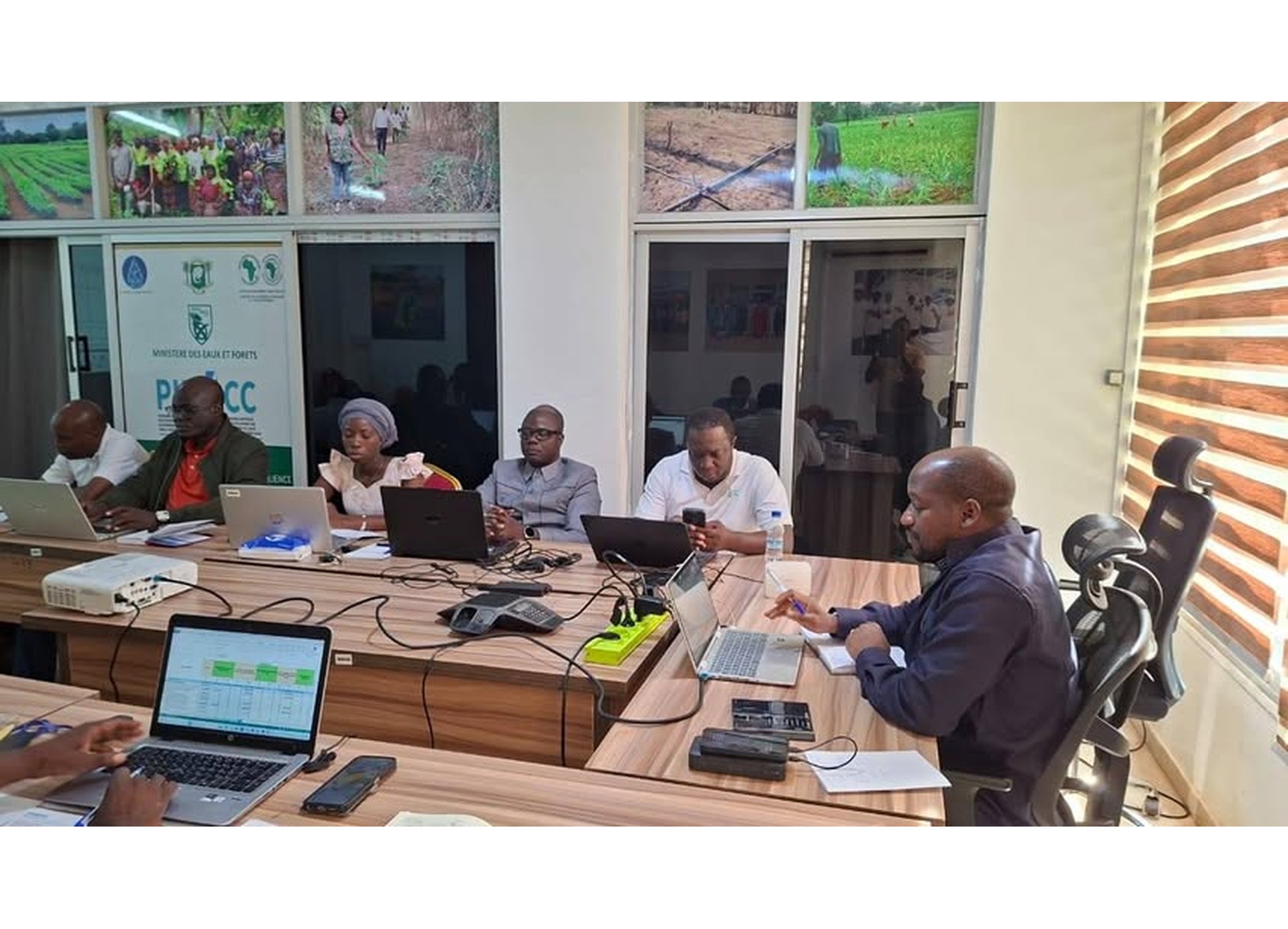
The buyer is the Côte d'Ivoire component of the Programme Intégré de Développement et d'Adaptation au Changement Climatique dans le Bassin du Niger, PIDACC/BN, the African Development Bank-financed climate programme run under the Ministry of Water and Forests and coordinated by Lieutenant-Colonel Ouattara Doyoumon Siaka. Its tender was for the supply and putting into circulation of pirogues and related equipment, and its specification was not ambiguous: pirogues in reinforced aluminium, ten of them on the programme's own account, flat-bottomed, six metres long, built for outboard motors of 15 to 25 horsepower. One clause of the tender's instructions stated in terms that variants were not authorised.
Bids were opened online on 4 September 2026, and only two companies came forward, Medaco and Fat Yassine, an Abidjan trading company registered in 2020. Fat Yassine did not file one offer. It filed two: a main financial offer of FCFA 173,590,000 before tax for the aluminium pirogues the tender asked for, and a second envelope it labelled an alternative financial offer, FCFA 117,090,000 before tax, for pirogues in reinforced polyester. Its single technical offer argued for the polyester boat, complete with a justification note praising the advantages of a fibreglass-reinforced polyester hull, its ease of repair and adaptation to the local context, and its behaviour on the water, the very substitution the tender had banned before a single envelope was opened.
The next day, 5 September 2026, the programme's tender commission applied a quantity-reduction mechanism and awarded the market to Fat Yassine at FCFA 121,513,000 before tax, about US$215,000 at FCFA 565 to the dollar. A SecretsReporters review of what followed shows the award lasted two days before it was challenged: on 7 September 2026 a user who asked to remain anonymous wrote to the Autorité de Régulation de la Commande Publique, the country's procurement regulator, denouncing the irregularities, and on 21 September 2026 the regulator's appeals and sanctions committee declared the denunciation admissible and took the file.
Given the chance to answer, the programme told the regulator that the alternative offer had been systematically rejected by its commission for non-conformity, that only the conforming offers for the ten aluminium pirogues had been read out publicly and retained for evaluation, that it had no interest in encouraging any act of collusion, and that the whole procedure had unfolded in strict respect of the applicable rules.
The regulator tested that defence against the programme's own paper, and the paper destroyed it. The minutes of the bid opening nowhere record any rejection of the alternative offer. The commission's own analysis report shows its evaluators scoring Fat Yassine on a flat-bottomed pirogue in polyester, six metres long, against a specification that demanded reinforced aluminium, and the one technical offer the company filed proposed the polyester boat's dimensions, its polyester and fibreglass materials and its hull thickness, not the aluminium craft the tender described. By taking into account and evaluating an offer carrying a variant the tender formally proscribed, the regulator held, the commission breached the public procurement code, and by failing to declare the company's two offers null, and awarding it the contract regardless, it breached the code a second time: one candidate may file only one offer for one lot, and where a candidate files two, every offer it made is struck by nullity.
Fat Yassine, invited by the regulator on 21 September 2026 to make its own observations on the complaints, gave no answer at all. Its earlier steps in public tenders were no cleaner: in published results of state agricultural tenders in 2022, its bids were thrown out for sample packaging that did not conform and turnover judged insufficient, and in another lot for a catalogue and sample that did not meet the specification.
On 12 October 2026 the committee upheld the denunciation in full, annulled the results of the tender attributing the market to Fat Yassine, and ordered PIDACC/BN to judge the tender again, drawing every legal consequence of the ruling. The decision goes not only to the programme: copies are served on the Presidency of the Republic and on the Minister of Economy, Finance and Budget, and it is to be published on the public procurement portal and inserted in the Official Bulletin of Public Markets.
The annulment has not slowed the programme's money. Eleven days after its tender board made the award the regulator would tear up, PIDACC/BN launched an additional financing round at Bouaké, about FCFA 8 billion for restoring forest cover, FCFA 4 billion for agricultural value chains and FCFA 1.2 billion for coordination and management, with Ouattara presenting ambitions of more than 6,000 direct green jobs. The torn-up tender at the centre of the ruling asked for pirogues in reinforced aluminium.
SecretsReporters contacted the PIDACC/BN programme and Fat Yassine for their responses ahead of publication, but they gave no response as at the time of publishing.
Get every exclusive first. Follow Secrets Reporters on WhatsApp:
Follow Secrets Reporters on WhatsAppFollow Secrets Reporters on WhatsApp: join the channel for every exclusive the moment it publishes.