
Investigation
Public Rehabilitation Infrastructure Gap Persists In Jos Despite Budgetary Provisions

Bulmun Dakwal
Authorities in Plateau State continue to face scrutiny over the absence of a fully standardized, government owned rehabilitation center, even as official records show ongoing financial commitments to rehabilitation infrastructure.
The concern increased following the inclusion of a 3.5 million Naira allocation in the 2025 approved state budget for the renovation of a rehabilitation center in Dong. While the budgetary allocation shows the need for rehabilitation services, findings indicate that the state still lacks a comprehensive public facility capable of delivering structured medical care, psychiatric care, long term therapy, vocational rehabilitation, and support within a government system.
Details from documents confirm that a government rehabilitation center exists along Zaria Road. The facility was originally established between 1981 and 1982 by the Plateau State government and designed for vocational and social rehabilitation, with later adaptation for substance abuse recovery. Its existence demonstrates that rehabilitation infrastructure has long been part of the state’s public health and social welfare framework.
However, despite its historical presence and continued recognition in the past government financial budgeting and planning, there is little to zero public evidence of a functional, modern rehabilitation facility operating at the expected standard a state facility should run. Investigations also show that there are no widely published or verified recent images documenting neither present nor improved condition of the rehabilitation centers at Dong or Zaria Road, even as concerns about neglect and underdevelopment persist and budgetary allocations but more images and websites to privately owned center keep surfacing.
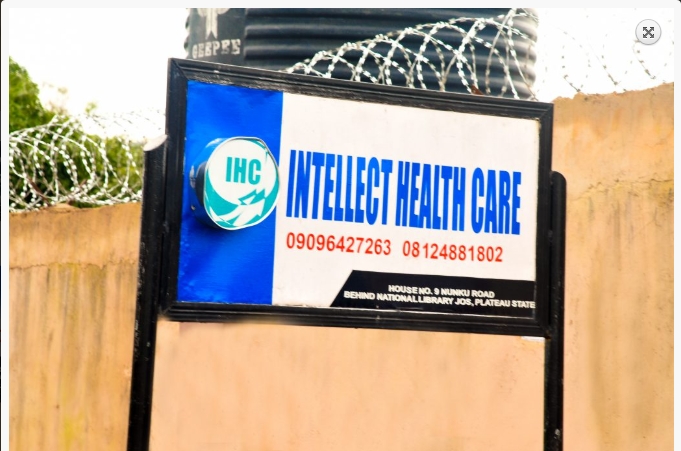
A signage of a private owned rehabilitation center (photo credit; IHC)
Health professionals and social support organizations say the current rehabilitation landscape is sustained largely by private providers and non-governmental organizations, which operate independently as a public treatment system. While these facilities provide essential services, they do not all represent a state managed institution with standardized treatment protocols, and full clinical infrastructure.
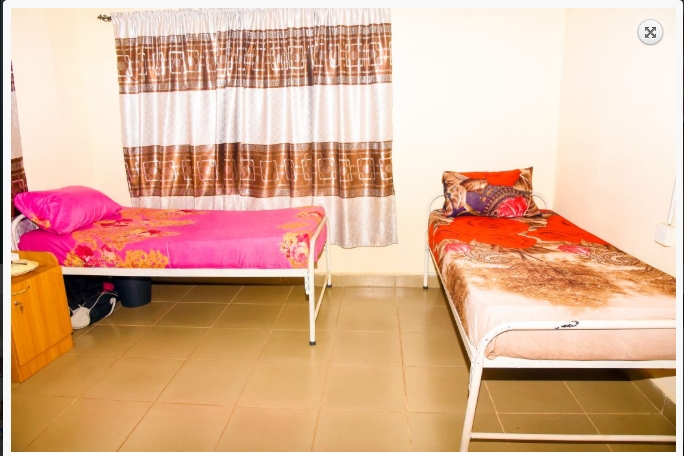
Patient’s ward at a private rehabilitation center (photo credit; IHC website)
The planned renovation of the Dong facility has further raised questions about the scale of government intervention. Observers note that renovation alone does not necessarily amount to the establishment of a fully functional rehabilitation center.
Public health advocates argue that the continued reliance on partial upgrades and fragmented service delivery reflects a wider structural gap in addressing substance dependence and mental health recovery. They warn that without a fully standardized government owned rehabilitation center, access to structured and affordable treatment will remain limited, especially for low income residents or an average farmer in Jos communities.
With demand for rehabilitation services rising, stakeholders maintain that budgetary allocations for renovation represent only concern and action on paper rather than physical and realistic institutional development for the people. The continued absence of a fully operational, standard public rehabilitation center represents what many describe as a persistent disconnect between policy acknowledgement and healthcare infrastructure delivery.



University of Ilorin, Kwara State: How ₦1.27bn in IGR and PAYE Remittances Went Unaccounted For
Spread the loveSecrets Reporters The University of Ilorin, Kwara State, has come under the radar of SecretsReporters over the...


FUT Minna Records N21.3m in Financial Irregularities Under 2019 Review
Spread the loveSecrets Reporters A review of the financial records of the Federal University of Technology, Minna, Niger State,...


Exclusive: Nyesom Wike’s Ally, Alabo George Whose DG BCDA Purchase Luxurious Mansion Worth $878,659
Spread the loveDocuments have exposed the purchase of a luxurious mansion by Dakorinama Alabo George, the Director-General of the Border...

EXCLUSIVE: HYPREP Coordinator, Zabbey Diverts Billions Of Ogoni Cleanup Funds To Personal Company
Spread the loveSecrets Reporters Corporate records and official project documents have raised fresh conflict of interest questions over the corporate...

FAAN Audit Report: $172,328 Foreign Trips Undertaken Without Appropriate Approval
Spread the loveSecrets Reporters An audit report has uncovered foreign travel expenses amounting to $172,328 allegedly incurred by the Federal...

Exclusive: Nigeria’s Defence Minister Daughter Matawalle Firdausi Acquires $329,402 Luxurious Mansion in US
Spread the loveSecrets Reporters Documents sighted by SecretsReporters have exposed the luxury lifestyle and acquisition of a mansion by...


Update: NNPC ANTAN Director Moses Tsado Declared US Mortgage Home in CCB Form
Spread the loveSecrets Reporters Following an exclusive report by SecretsReporters on alleged purchased of a US property by the Tsado...

FAAN Audit Report: N72.3m Contract Splitting Allegedly Used To Bypass Tenders Board
Spread the loveSecrets Reporters An audit report has uncovered alleged contract splitting amounting to N72,314,050 at the Federal Airports Authority...

EXCLUSIVE: Lagos Governor’s Chief of Staff Tayo Ayinde Builds Hotel, Owns, Web of Companies, Millions in Personal Bank Transfers in Violation of Code of Conduct
Spread the loveSecrets Reporters Corporate records and banking trails examined by this newspaper have revealed an extensive network of private...


Exclusive: How Senator Joel Onowakpor Purchased $2.6m US Mansion While Serving As FIRS South South Coordinator
Spread the loveSecrets Reporters A six-bedroom, eight-bathroom single-family residence at 11507 Bistro Lane in the Royal Oaks Country Club subdivision...

FAAN Spends N199.6m on Staff Professional Subscriptions Despite 2009 Government Directive
Spread the loveSecrets Reporters The Federal Airports Authority of Nigeria (FAAN) spent N199,605,849.86 on professional subscriptions and certifications for its...

Nigeria Embassy in Equatorial Guinea: $287,906.60 in Unutilised Funds, Four Unserviceable Vehicles Uncovered
Spread the loveSecrets Reporters Public funds allocated to Nigeria’s diplomatic missions abroad are meant to keep its buildings functional...

Audit Questions N49.98m Payment for Computers, Laptops Supplied to Four Northern Locations
Spread the love Secrets Reporters An audit of expenditure of Federal Airport Authority of Nigeria (FAAN), has raised concerns over the...

We Spend Private Money To Run NNPCL Not Public Funds, GCEO Ojulari’s Administration Tells Nigerians Despite Appointed By FG
Spread the loveSecrets Reporters The Nigerian National Petroleum Company Limited (NNPC Limited), under the leadership of its Group Chief Executive...


Washington Post Ordered to Reinstate Columnist Fired Over Charlie Kirk Posts
Spread the loveSecrets Reporters The Washington Post has been ordered to reinstate columnist Karen Attiah after an arbitrator ruled that...

Sacred Cow: How Nigerian Government Shields George SGF Akume Despite Involvement in Establishing Three Fake Agencies
Spread the loveSecrets Reporters A series of investigations by the Independent Corrupt Practices and Other Related Offences Commission has exposed...

Exclusive: Nigerian Secret Intelligence Agency Places Tinubu’s Campaign DG Abdulaziz Yari Under Secret Investigation For Laundering $500,200 Through New Bank Account In 7 Days
Spread the loveSecrets Reporters A Nigerian Secret Intelligence Agency has placed Senator Abdul’aziz Abubakar Yari, the newly appointed Director-General of...

₦394.86m Financial Irregularities: Nigeria’s Bata Consulate Paid Unapproved Subsidy, Retained Public Funds
Spread the loveSecrets Reporters Public funds allocated to Nigeria’s diplomatic missions are expected to be spent within approved limits and...


NBET Exposed: ₦259m Unrecovered, $69.3m Power Debt, Missing Vehicles as Agency Operated Without Audited Accounts
Spread the loveSecrets Reporters A confidential dossier obtained exclusively by SecretsReporters has exposed deep financial irregularities at the Nigerian Bulk...

Financial Mismanagement Rocks Federal College of Education, Yola, as SecretsReporters Uncovers ₦38.07m Worth of Financial Irregularities
Spread the loveSecrets Reporters A government institution entrusted with educating the next generation is expected to operate within the boundaries...