
Scandals
Delta State Sets Aside N600 Million for Hosting National Sports Festival in 2026 Budget Despite Enugu Confirmed as Host


Onoja Baba
Ahead of the preparations for Nigeria’s premier multi-sport event, the 23rd National Sports Festival (NSF), questions are arising over Delta State’s 2026 proposed budget, which includes a N600 million line item specifically for “Hosting of National Sports Festival” under budget code 053900100100.322.
This allocation appears in the sports overhead section of the Delta State Government Year 2026 Proposed Budget, even as official records confirm Enugu State as the designated host for the 2026 edition.
The National Sports Festival, a biennial showcase for athletes from Nigeria’s 36 states organized by the National Sports Commission (NSC), rotates hosting duties among states. The most recent edition, the Gateway Games, was held in Ogun State in 2025 and praised for its organization. Enugu State secured full hosting rights for the 2026 NSF through a formal host state agreement signed in January 2025 between the Federal Government (represented by NSC Director-General Hon. Bukola Olopade) and Enugu State Governor Peter Mbah.
Preparations in Enugu are advanced, with the Local Organising Committee (LOC) inaugurated in June 2025 by Governor Mbah, infrastructure upgrades underway, and public commitments to deliver a world-class event dubbed the “Coal City Games.”
Enugu’s hosting is widely reported and undisputed in recent sources, including statements from the Federal Ministry of Information, state officials, and national media. The event marks the first time Enugu will host the NSF, with emphasis on leveraging past experiences like the 2009 U-17 FIFA World Cup to elevate facilities and athlete experience.
In contrast, Delta State’s 2026 budget proposes N600 million for hosting the NSF, part of a larger sports overhead totaling N8.294 billion (compared to N4.335 billion approved in 2025). Other notable provisions include N1.8 billion for National Youth Games, N600 million for Youth Games, N1 billion for Warri Wolves, N900 million for Delta Queens, and N400 million for hosting/awards to victorious athletes and officials.
The budget, presented by Governor Sheriff Oborevwori as the “Budget of Accelerating the MORE Agenda,” was adjusted and passed by the Delta State House of Assembly at N1.73 trillion in December 2025.
The N600 million NSF allocation stands out because Delta is not the host. Hosting typically covers venue preparation, logistics, security, athlete welfare, ceremonies, and prizes, expenses borne primarily by the host state in collaboration with the NSC. Without hosting responsibilities, the rationale for a dedicated “hosting” line item remains unclear. It could theoretically support Delta’s participation (e.g., athlete preparation, travel, or contingencies), but the explicit wording “Hosting of National Sports Festival” suggests potential misalignment or over-provisioning.
Leading the Delta State Sports Commission is Chairman Onoriode Joshua Oborevwori (known as “Onos”), brother of Governor Sheriff Oborevwori. Appointed in late 2024, he has overseen significant sports investments, including Delta’s strong performances in recent national events (e.g., topping the 2022 NSF medal table as host and excelling in 2025). His leadership has earned international recognition, including awards in Paris. However, the family connection has drawn scrutiny in some quarters, with critics questioning whether such allocations reflect favoritism or optimism about influencing federal decisions.
No public explanation has emerged from the Delta State Sports Commission or Governor’s office on how the N600 million would be utilized if Enugu hosts. During budget hearings in late 2025, the Commission defended its estimates, but specifics on the NSF line item were not highlighted in available reports.
The NSC has not commented on state-level budgeting for non-host events or any potential Delta involvement beyond participation.
This situation echoes broader concerns in Nigerian sports funding, including occasional mismatches between federal/state allocations and actual event hosting (e.g., federal NSC budgeting issues noted in 2026 reviews). Delta’s consistent sports investment has built a strong talent base, but the hosting-specific provision raises transparency questions amid confirmed national arrangements.
Stakeholders in the sports community express varied perspectives. Supporters highlight Delta’s track record of excellence and argue the funds could bolster athlete support regardless of hosting. Critics call for clearer breakdowns and accountability to ensure public resources align with verifiable plans.
Efforts to reach the commissioner of Sports at the time of filing this report failed.



University of Ilorin, Kwara State: How ₦1.27bn in IGR and PAYE Remittances Went Unaccounted For
Spread the loveSecrets Reporters The University of Ilorin, Kwara State, has come under the radar of SecretsReporters over the...


FUT Minna Records N21.3m in Financial Irregularities Under 2019 Review
Spread the loveSecrets Reporters A review of the financial records of the Federal University of Technology, Minna, Niger State,...


Exclusive: Nyesom Wike’s Ally, Alabo George Whose DG BCDA Purchase Luxurious Mansion Worth $878,659
Spread the loveDocuments have exposed the purchase of a luxurious mansion by Dakorinama Alabo George, the Director-General of the Border...

EXCLUSIVE: HYPREP Coordinator, Zabbey Diverts Billions Of Ogoni Cleanup Funds To Personal Company
Spread the loveSecrets Reporters Corporate records and official project documents have raised fresh conflict of interest questions over the corporate...

FAAN Audit Report: $172,328 Foreign Trips Undertaken Without Appropriate Approval
Spread the loveSecrets Reporters An audit report has uncovered foreign travel expenses amounting to $172,328 allegedly incurred by the Federal...
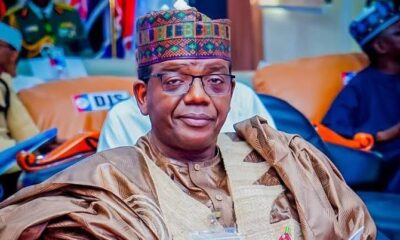

Exclusive: Nigeria’s Defence Minister Daughter Matawalle Firdausi Acquires $329,402 Luxurious Mansion in US
Spread the loveSecrets Reporters Documents sighted by SecretsReporters have exposed the luxury lifestyle and acquisition of a mansion by...

Update: NNPC ANTAN Director Moses Tsado Declared US Mortgage Home in CCB Form
Spread the loveSecrets Reporters Following an exclusive report by SecretsReporters on alleged purchased of a US property by the Tsado...

FAAN Audit Report: N72.3m Contract Splitting Allegedly Used To Bypass Tenders Board
Spread the loveSecrets Reporters An audit report has uncovered alleged contract splitting amounting to N72,314,050 at the Federal Airports Authority...
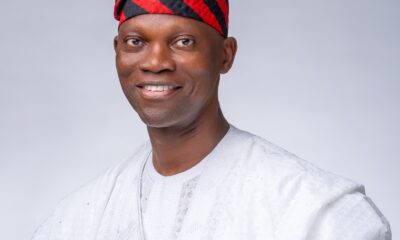

EXCLUSIVE: Lagos Governor’s Chief of Staff Tayo Ayinde Builds Hotel, Owns, Web of Companies, Millions in Personal Bank Transfers in Violation of Code of Conduct
Spread the loveSecrets Reporters Corporate records and banking trails examined by this newspaper have revealed an extensive network of private...
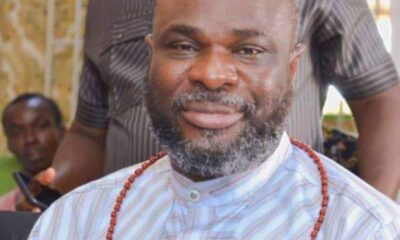

Exclusive: How Senator Joel Onowakpor Purchased $2.6m US Mansion While Serving As FIRS South South Coordinator
Spread the loveSecrets Reporters A six-bedroom, eight-bathroom single-family residence at 11507 Bistro Lane in the Royal Oaks Country Club subdivision...

FAAN Spends N199.6m on Staff Professional Subscriptions Despite 2009 Government Directive
Spread the loveSecrets Reporters The Federal Airports Authority of Nigeria (FAAN) spent N199,605,849.86 on professional subscriptions and certifications for its...

Nigeria Embassy in Equatorial Guinea: $287,906.60 in Unutilised Funds, Four Unserviceable Vehicles Uncovered
Spread the loveSecrets Reporters Public funds allocated to Nigeria’s diplomatic missions abroad are meant to keep its buildings functional...

Audit Questions N49.98m Payment for Computers, Laptops Supplied to Four Northern Locations
Spread the love Secrets Reporters An audit of expenditure of Federal Airport Authority of Nigeria (FAAN), has raised concerns over the...

We Spend Private Money To Run NNPCL Not Public Funds, GCEO Ojulari’s Administration Tells Nigerians Despite Appointed By FG
Spread the loveSecrets Reporters The Nigerian National Petroleum Company Limited (NNPC Limited), under the leadership of its Group Chief Executive...


Washington Post Ordered to Reinstate Columnist Fired Over Charlie Kirk Posts
Spread the loveSecrets Reporters The Washington Post has been ordered to reinstate columnist Karen Attiah after an arbitrator ruled that...

Sacred Cow: How Nigerian Government Shields George SGF Akume Despite Involvement in Establishing Three Fake Agencies
Spread the loveSecrets Reporters A series of investigations by the Independent Corrupt Practices and Other Related Offences Commission has exposed...

Exclusive: Nigerian Secret Intelligence Agency Places Tinubu’s Campaign DG Abdulaziz Yari Under Secret Investigation For Laundering $500,200 Through New Bank Account In 7 Days
Spread the loveSecrets Reporters A Nigerian Secret Intelligence Agency has placed Senator Abdul’aziz Abubakar Yari, the newly appointed Director-General of...

₦394.86m Financial Irregularities: Nigeria’s Bata Consulate Paid Unapproved Subsidy, Retained Public Funds
Spread the loveSecrets Reporters Public funds allocated to Nigeria’s diplomatic missions are expected to be spent within approved limits and...


NBET Exposed: ₦259m Unrecovered, $69.3m Power Debt, Missing Vehicles as Agency Operated Without Audited Accounts
Spread the loveSecrets Reporters A confidential dossier obtained exclusively by SecretsReporters has exposed deep financial irregularities at the Nigerian Bulk...
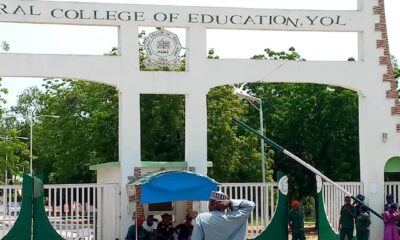

Financial Mismanagement Rocks Federal College of Education, Yola, as SecretsReporters Uncovers ₦38.07m Worth of Financial Irregularities
Spread the loveSecrets Reporters A government institution entrusted with educating the next generation is expected to operate within the boundaries...